


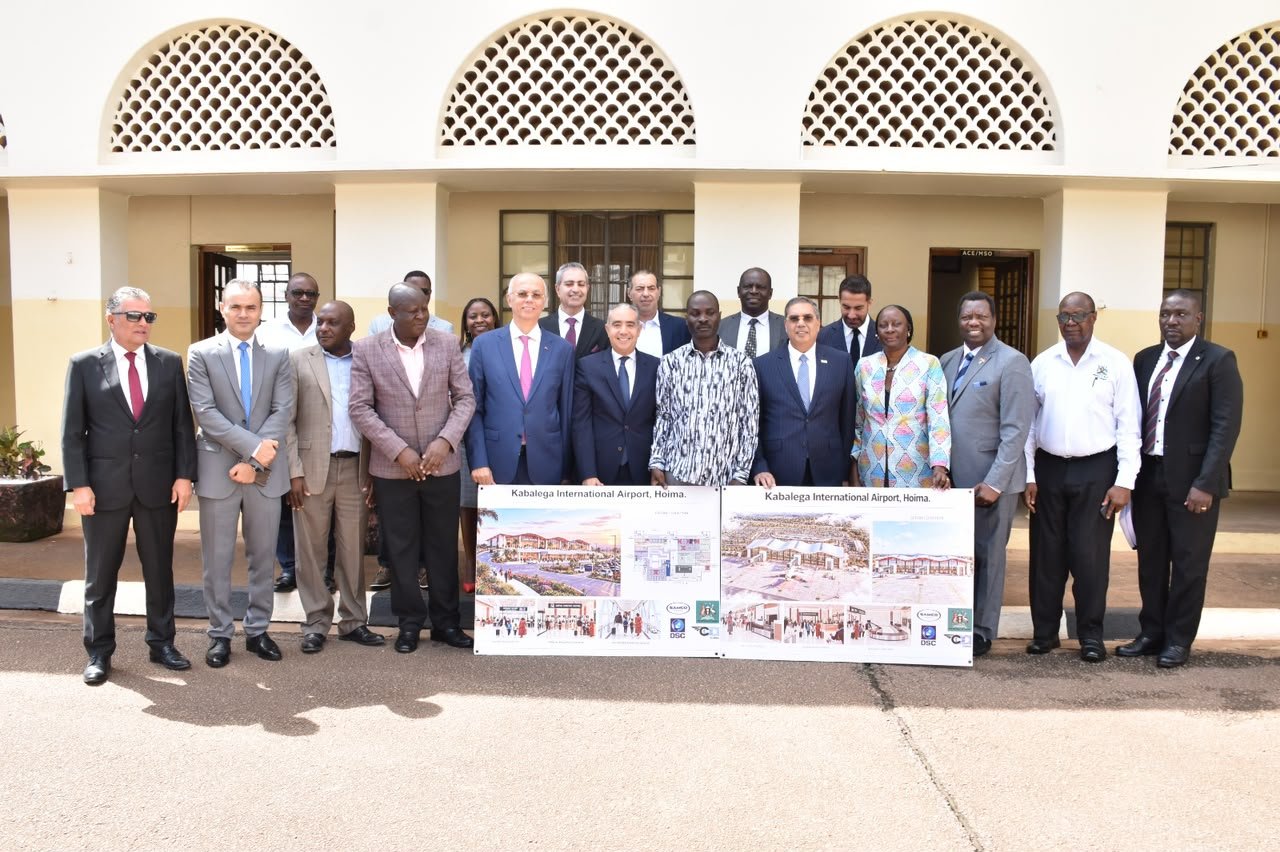
KAMPALA — The award of a Shs232 billion contract to Egypt’s SAMCO National Construction Company Ltd to construct the passenger terminal at Kabalega International Airport has renewed questions about the capacity of Uganda’s established construction companies to deliver major infrastructure projects on time and to the required standards.
The eight-month contract comes as Uganda races to complete critical infrastructure ahead of the 2027 Africa Cup of Nations (AFCON), which it will co-host with Kenya and Tanzania.
Although government and the Egyptian Embassy have described the procurement process as transparent and merit-based, the choice of a foreign contractor offers an opportunity to examine the performance records of established Ugandan construction firms, including Dott Services, Roko Construction and Abubaker Technical Services. Their records nevertheless provide important context to the debate about contractor capacity and value for money.
Dott Services: A history of disputes and performance questions
Dott Services, one of Uganda’s prominent indigenous construction companies, has previously faced criticism over the execution of major road projects.
In 2012, Parliament’s Committee on Physical Infrastructure reportedly recommended that government stop awarding the company new contracts, citing concerns about its performance and capacity.
The company subsequently encountered difficulties surrounding road projects, including the 102-kilometre Nakalama-Tirinyi-Mbale road rehabilitation contract, which was terminated by the Uganda National Roads Authority in 2015 over delays.
However, the company’s record must also be considered alongside a significant legal development. In January 2017, the High Court quashed findings of a commission of inquiry that had implicated Dott in financial losses and project delays, ruling that the inquiry had failed to properly evaluate evidence and give the company a fair hearing.
Roko: Government bailout amid delayed projects
Roko Construction has also attracted scrutiny over its handling of major public infrastructure projects.
In July 2022, government invested more than Shs266 billion in the company through preferential shares, partly to support its financial position and facilitate the completion of important projects.
However, in October 2024, Leader of Opposition Joel Ssenyonyi questioned the investment, demanding accountability over the public funds, particularly as projects such as the new Parliamentary Chambers remained incomplete beyond their original deadlines.
The Auditor General also documented Roko’s failure to complete civil works at the Uganda Cancer Institute within the original contractual period, citing cash-flow challenges. The contract was subsequently terminated and another contractor engaged to complete the works.
Abubaker: Questions over road construction
Abubaker Technical Services has similarly faced criticism over the execution of municipal road projects.
In Mbarara, councillors raised concerns about the quality of road rehabilitation works undertaken by the company, questioning whether some sections were receiving adequate excavation, drainage and road-base treatment.
The company also faced complaints over delayed completion of road works under the World Bank-funded Uganda Support to Municipal Infrastructure Development (USMID) programme.
In Apac, the Auditor General documented incomplete drainage, walkways and other outstanding works on a road rehabilitation project undertaken jointly by Abubaker Technical Services and Alnuaimi Group.
A test for SAMCO
The Egyptian company’s selection now places it under considerable pressure to demonstrate that the confidence expressed by government is justified.
During the signing ceremony, Works and Transport Minister Fred Byamukama challenged SAMCO to observe the eight-month deadline, maintain quality and avoid corruption, assuring the contractor that government would meet its obligations.
Egyptian Ambassador Sherif Mohamed Abdellattif Elgammal commended Uganda’s procurement process and expressed confidence in SAMCO’s ability to execute the assignment.
For Uganda, the bigger question is whether the contract will deliver value for money while strengthening the country’s capacity to undertake complex infrastructure projects.
SAMCO has an opportunity to demonstrate that international contractors can offer the speed, technical expertise and financial capacity required for strategic national projects.
Its real test, however, will not be the signing ceremony or promises made in Kampala. It will be delivering a functional passenger terminal within eight months, without compromising quality or escalating costs.