


DR Congo (UGNEWSLINE) – The battle for control of the Democratic Republic of the Congo is taking on a new political dimension after former president Joseph Kabila reportedly joined forces with a coalition linked to the M23 rebel movement, raising fresh doubts about whether diplomatic efforts can end the fighting in the country’s troubled east.
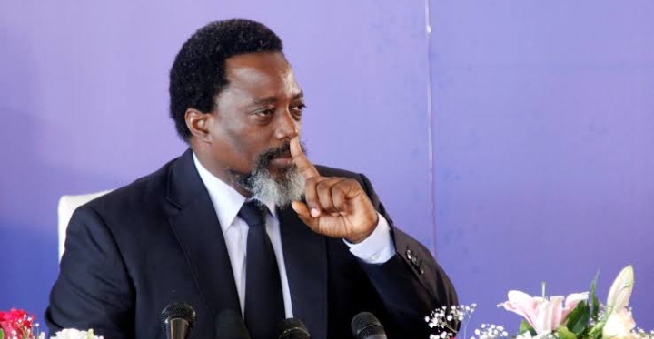
Kabila, who ruled the Central African nation for nearly two decades, has re-emerged as a central figure in the crisis through the Front for the Refoundation of the Nation (FRN), a political-military alliance associated with the March 23 Movement and the Congo River Alliance.
His decision to align himself with the coalition threatens to deepen the confrontation with President Félix Tshisekedi’s government, which is already struggling to contain an insurgency that has seized strategic territory and displaced large numbers of civilians.
The development also revives longstanding political tensions between the two leaders, whose rivalry has unfolded against a backdrop of disputed elections, regional mistrust and repeated failures to establish lasting peace in eastern Congo.
For Kabila, the move represents a dramatic return to the national political arena after leaving office in 2019. For Tshisekedi, it introduces a former president with extensive political experience into a conflict that has largely been defined by battles between government forces and armed groups.
The new coalition was announced in Goma, the capital of North Kivu province, which fell under the control of M23 and its allies in January 2025. The alliance says it wants to reshape the country’s political order, accusing the government of authoritarianism and failures of leadership.
Its emergence has raised concerns that the conflict could expand beyond a struggle over territory in the east into a broader contest for political power.
Kabila has not been a peripheral figure in Congolese politics.
He assumed the presidency in 2001 following the assassination of his father, Laurent-Désiré Kabila, and remained in office until 2019.
His departure followed years of political pressure over delayed elections and concerns about his continued hold on power.
The transfer of authority to Tshisekedi was widely seen as a significant moment for a country accustomed to instability and contested political transitions.
However, relations between the two camps have since deteriorated, with Kabila becoming increasingly critical of the current administration.
Congolese authorities have accused the former president of collaborating with armed groups seeking to destabilise the country. In 2025, a military court sentenced him to death in absentia over charges including treason and war crimes. Kabila has rejected the accusations, describing them as politically motivated.
His association with the new coalition is likely to intensify the confrontation between his supporters and the government, although it remains unclear how much influence he can exercise over the rebellion’s military operations or whether his involvement will attract significant support elsewhere in the country.
The M23 rebellion has become one of the most serious security challenges facing Kinshasa, with its advances exposing weaknesses in the government’s military response and raising questions about the effectiveness of international mediation.
The conflict has also strained relations between the Democratic Republic of the Congo and Rwanda.
Kinshasa and several international actors accuse Kigali of supporting M23, allegations Rwanda denies. The Rwandan government has repeatedly cited threats from armed groups operating in eastern Congo as a major security concern.
Kabila’s entry into the coalition adds another political complication to an already delicate regional crisis, particularly as neighbouring countries seek to prevent the fighting from escalating into a wider confrontation.
The conflict has significant implications for East Africa, where insecurity in eastern Congo affects border communities, trade and regional security cooperation. Uganda, which shares a longy border with the DRC, has economic and security interests tied to stability in the neighbouring country.
Any prolonged escalation could disrupt commercial activity, increase humanitarian pressures and make efforts to tackle armed groups operating across the region more difficult.
The latest development also comes as diplomatic initiatives seek to bring the Congolese government and armed opposition groups towards a negotiated settlement.
Talks facilitated by Qatar have focused on the AFC-M23 movement and the government, while separate US-backed efforts have sought to address tensions between Kinshasa and Kigali.
Kabila’s new political alignment could complicate those initiatives by changing the opposition’s leadership structure and raising questions about whether existing commitments will remain in place.
The coalition has indicated that it intends to respect obligations made during previous negotiations, but the durability of such assurances will depend on whether the parties can reduce violence and agree on enforceable arrangements.
The challenge is particularly acute for civilians in Goma and surrounding areas, where years of armed conflict have disrupted livelihoods, separated families and forced communities from their homes.
For many residents, another political alliance offers little reassurance unless it produces tangible improvements in security.
The return of Kabila to the centre of the crisis also presents a difficult choice for the international community: whether to treat the coalition primarily as a political movement capable of participating in negotiations or as an extension of an armed rebellion that continues to threaten the country’s territorial integrity.
That distinction could influence future diplomatic engagement, sanctions and efforts to secure compliance with any eventual peace agreement.
Tshisekedi’s government, meanwhile, faces the challenge of restoring authority in the east while preventing the conflict from becoming a vehicle for a wider struggle over national leadership.
The central uncertainty is whether Kabila’s involvement will create new opportunities for political negotiations or harden the divisions that have kept the country trapped in recurring violence.