



KAMPALA, Uganda (UGNEWSLINE) – Heifer International Uganda Country Director Mr. William Matovu has called for increased investment in solar energy to boost agricultural production, reduce operating costs and improve the incomes of smallholder farmers.
Matovu said Uganda needs to move from pilot projects to large-scale adoption of solar-powered agricultural technologies to transform rural livelihoods and strengthen the country’s green economy.
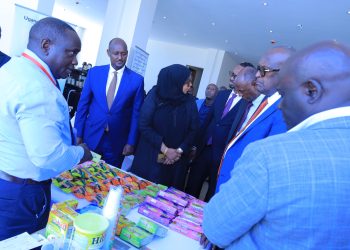
He made the remarks during a breakaway session at the 2026 Renewable Energy Conference in Kampala, where stakeholders discussed how solar energy can power Uganda’s next agricultural transformation.
He said the success of renewable energy should not be measured only by the number of solar systems installed, but also by how effectively farmers use them to increase production, access markets and earn better incomes.
“For a dairy farmer in Nakaseke, it may mean being able to deliver milk to a cooperative without worrying about spoilage. For a vegetable farmer in Kabale, it means having enough water to irrigate crops during the dry season and sell produce throughout the year,” Matovu said.
He added that reliable and affordable energy is essential for agricultural value addition, particularly for milk cooling, irrigation, crop drying and other activities that enable farmers to preserve their produce and increase its market value.
Matovu noted that although Uganda has made progress in improving access to electricity, many rural communities still lack reliable power, while some agricultural cooperatives depend on expensive diesel generators.
He said high fuel costs and unreliable electricity increase the cost of doing business, limiting the ability of farmers and cooperatives to benefit from increased agricultural production.
“Farmers can produce more milk, but if that milk cannot be collected, cooled and marketed, the additional production may not translate into additional income,” he said.
Matovu said Heifer International, in partnership with the Charles Stewart Mott Foundation and other organisations, is implementing the DREAM Hub to strengthen the ecosystem for productive use of solar energy in Uganda’s agricultural value chains.

The initiative brings together partners with different areas of expertise to address barriers preventing farmers from adopting solar technologies, including limited access to affordable financing, inadequate technical knowledge, lack of practical demonstrations and challenges related to maintenance and market access.
Under the partnership, Heifer International supports agricultural value chain development, cooperative strengthening and market linkages, while Joint Energy and Environment Projects (JEEP) provides community engagement, renewable energy awareness and demonstrations. The Advocates Coalition for Development and Environment (ACODE) contributes policy research and dialogue with government institutions, while Enterprise Uganda provides business development and entrepreneurship support, particularly for women and young people.
The Kabaka Foundation and Bethany Land Institute also support demonstration centres where farmers can learn about solar technologies and observe how they work under practical conditions.
Matovu said the approach recognises that providing equipment alone is insufficient to achieve widespread adoption, stressing that farmers also need guidance to identify suitable technologies, assess their economic benefits and operate and maintain the systems.
He cited the experience of dairy cooperatives in the cattle corridor, where solar-powered milk cooling systems have helped reduce dependence on diesel generators.
According to Matovu, some supported milk collection centres have reduced diesel consumption by about 93 per cent, with an estimated payback period of five years.
He said the savings can enable cooperatives to invest more resources in services for their members, including veterinary supplies, farm equipment and agricultural advisory support.
Matovu added that solar-powered cooling can also reduce carbon emissions, with estimates from the programme indicating that a cooperative switching to solar energy for its cooling operations can avoid approximately 71 tonnes of carbon emissions annually.
However, he emphasized that the success of such investments depends on reliable equipment, sufficient milk volumes, sound financial management and viable cooperative businesses.
He said scaling up the models would require coordinated action by government, development partners, financial institutions, technology providers and agricultural organisations to ensure that successful projects reach more farmers.
JEEP calls for community-centered adoption
Joint Energy and Environment Projects representative Ms. Ruth Kiwanuka said renewable energy organisations must communicate clearly with communities and help farmers understand how solar energy works, where it can be applied and how it can improve their livelihoods.
Kiwanuka said many rural households remain attached to traditional energy sources because they have used them for generations and may not understand the benefits of alternative technologies.
She cited the traditional Tadooba lamp as an example of the challenges involved in introducing new technologies to communities that are accustomed to familiar and affordable energy sources.
She explained that some communities initially questioned whether solar energy could generate electricity or charge batteries, demonstrating the need for practical demonstrations and simple explanations.
Kiwanuka said awareness programmes should begin with technologies that people can easily understand before introducing more advanced applications.
She added that solar energy can support several agricultural activities, including irrigation, crop drying and other farm operations, but farmers need practical guidance on how to select and use the appropriate systems.
Kiwanuka, a representative of an organisation that has worked in renewable energy and environmental conservation since 1983, said the sector must move beyond repeated pilot projects and focus on expanding successful models.
She called on government ministries, development partners and funders to support the scaling-up process by identifying the resources required, assigning responsibilities, monitoring implementation and addressing challenges that prevent farmers from adopting new technologies.
She also emphasized the need to identify who should lead efforts to promote technology adoption and ensure that farmers receive the support needed to transition from traditional practices to modern, cleaner energy solutions.
ACODE highlights the importance of policy support
The Advocates Coalition for Development and Environment (ACODE), one of the DREAM Hub partners, is playing a key role in strengthening policy dialogue, conducting research and engaging government institutions to support the wider adoption of productive-use solar energy. Anna Amumpiire Akandwanaho – research fellow ACODE, said through the partnership, policy engagement is intended to help address barriers affecting the adoption of renewable energy technologies and encourage stronger coordination between government, the private sector, development partners and farming communities.
The initiative seeks to connect lessons from communities with national policy discussions, ensuring that the experiences and needs of farmers inform decisions on renewable energy and agricultural development.
In his closing remarks, Mr. Richard Musota, the Assistant Commissioner for Water Resources Planning and Regulation at the Ministry of Water and Environment (MWE) said government, development partners and other stakeholders should work together to address challenges limiting the adoption of solar-powered irrigation, crop drying and other agricultural technologies.
He also emphasized the importance of sensitizing farmers about the benefits of renewable energy, strengthening financing mechanisms and ensuring that appropriate technologies reach rural communities.
Stakeholders at the session stressed that expanding solar energy use in agriculture requires more than the installation of equipment. It also depends on accessible financing, appropriate standards, practical training, reliable maintenance services and markets for agricultural produce.
They called for stronger collaboration to ensure that successful solar-powered agricultural models move beyond demonstration projects and reach more farmers across Uganda.
The broader goal is to make clean energy a practical tool for increasing agricultural productivity, creating business opportunities and improving rural household incomes while reducing dependence on costly and polluting energy sources