


KAMPALA, Uganda (UGNEWSLINE) – The government has pledged to strengthen collaboration with stakeholders to bridge the knowledge gap between landowners, land users and the existing regulatory frameworks to promote peaceful coexistence.
The pledge was made by Eunice Nabakwa, the Assistant Commissioner for Land Inspectorate at the Ministry of Lands, Housing and Urban Development, during a one-day sensitisation workshop on land rights and policy frameworks.
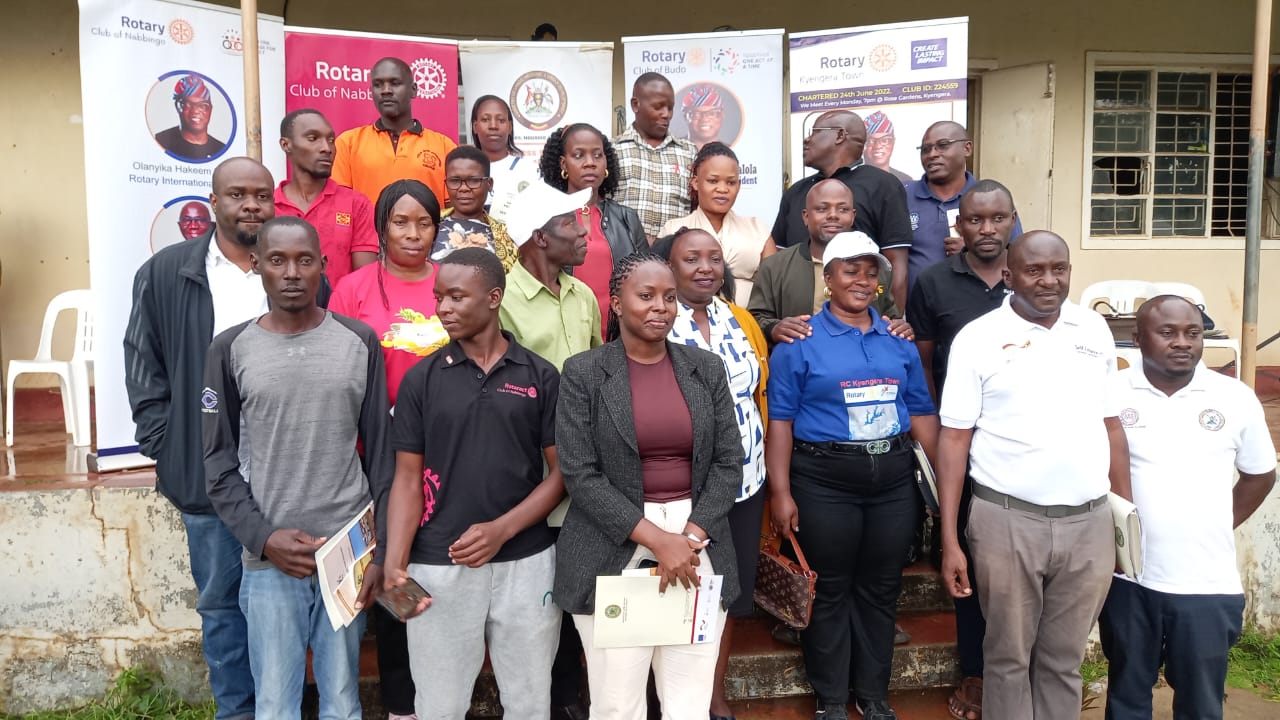
The workshop was organised by the Rotary Club of Nabbingo in collaboration with the Rotary Clubs of Budo and Kyengera Town, as well as the Rotaract Club of Nabbingo.
Held at Nabbingo Catholic Parish Church, the workshop aimed to sensitise residents of Nabbingo, Kyengera Town, Wakimese, Mugongo and Budo, among other areas, about land-related policies and regulations.
The workshop followed recent research conducted by Rotarians that highlighted increasing cases of land-related conflicts, violence, displacement and litigation, resulting in insecurity for both people and property.
Nabakwa said the government was committed to conducting strategic community sensitisation campaigns on land policies and conflict resolution mechanisms.
The ministry’s spokesperson, Dennis Obbo, made a presentation on the significance and differences between certificates of occupancy, which are widely used in Central Uganda, and customary certificates used in other regions outside Buganda.
He noted that the government was concerned about the increasing cases of mass evictions arising from communities’ limited knowledge of land laws.
Obbo said the government was conducting community sensitisation campaigns on land rights legislation to encourage prospective landlords and other land users to understand the laws governing land ownership and use.
Allan Ssesanga, a land officer at the ministry, encouraged residents to visit the ministry’s land offices regularly to verify the status of their land as a deliberate measure to strengthen land security and protect property from potential land grabbers.
The ministry officials thanked the president of the Rotary Club of Nabbingo, Agnes Namiiro Mugoya, and other Rotary leaders for organising the workshop. They said the participants had gained a better understanding of land laws and acquired skills to help them identify and guard against fraudsters.
In her remarks, Namiiro thanked the Ministry of Lands, Housing and Urban Development for honouring the invitation to sensitise community members about land-related laws. She said the initiative was timely, as Rotarians recognised the importance of educating citizens about the legislation governing land ownership and use.
The immediate past president of the Rotary Club of Kyengera Town, Cissy Zawedde, together with her counterpart from the Rotary Club of Budo, Rotarian Nsubuga Wilson, expressed concern over the rising cases of land disputes in their communities.
They said Rotarians were determined to ensure that communities lived in a violence-free environment.
“We shall continue to encourage residents to join the Rotary movement and serve their communities by mobilising resources to establish community-focused projects that improve the lives of vulnerable populations,” they said.
The LC1 chairperson of Ssumba Cell, Kisozi Ward, Kisozi Parish, Kyengera Town Council, Moses Mwanje, commended the Rotarians for bringing government land officials closer to the community.
He said the workshop was timely because land-related conflicts were increasing and contributing to instability.
Mwanje expressed concern that many families had lost their land to fraudsters who allegedly used money, forged documents and colluded with police and judicial officers to take land from residents.
He said such workshops were crucial in raising public awareness about land laws and equipping residents with the knowledge needed to defend their land rights through legal means.
Mwanje called on the police and the Judiciary to strengthen collaboration with stakeholders, including local council leaders, to reduce the backlog of land-related cases through dialogue and by building local leaders’ capacity to understand and effectively interpret land laws.