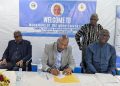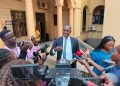



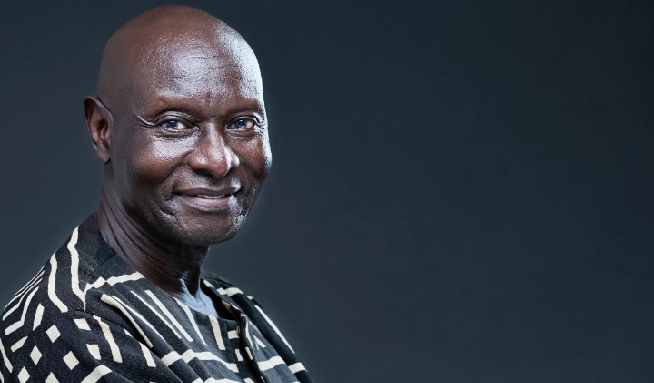
Former Senegalese president Macky Sall has withdrawn from the race to become the next United Nations secretary-general, leaving Uganda’s veteran diplomat Olara Otunnu as Africa’s sole remaining candidate in a contest increasingly shaped by geopolitical divisions and calls for regional representation.
Sall announced his decision on Saturday, a day after the United Nations Security Council conducted its sixth informal ballot to assess support for the candidates seeking to succeed António Guterres, whose second term ends on 31 December.
The former Senegalese leader said he had taken note of the voting trends and consulted Burundi’s President Évariste Ndayishimiye, who chairs the African Union, and Senegalese President Bassirou Diomaye Faye, the chair of the Economic Community of West African States.
He said he hoped his withdrawal would help the Security Council reach agreement on a candidate capable of securing broad international support.
The decision comes at a difficult moment for Africa’s campaign to occupy the UN’s highest executive office.
Both Sall and Otunnu had struggled to attract sufficient support during the successive informal ballots, exposing the limits of regional backing in a selection process ultimately controlled by the Security Council’s 15 members.
The latest vote on Friday, 16 October, put former Costa Rican vice-president Rebeca Grynspan among the leading contenders.
She received nine votes encouraging her candidacy, five discouraging it and one expressing no opinion, according to Reuters.
However, two of the negative votes came from permanent members of the council, leaving her vulnerable to a veto.
Guyana’s former foreign minister Carolyn Rodrigues-Birkett and International Atomic Energy Agency director-general Rafael Grossi of Argentina also emerged as prominent contenders, although both faced opposition from permanent members.
The other candidates in the field before Sall’s withdrawal were Ecuadorian diplomat Ivonne A-Baki and former Ecuadorian foreign minister María Fernanda Espinosa.
Their prospects, like those of the leading contenders, remain dependent on whether they can overcome resistance within the council.
Sall’s exit leaves six declared candidates in the race, but no clear successor has emerged.
Grynspan’s relative strength in the latest poll has intensified speculation that Latin America and the Caribbean could secure the position, particularly amid growing calls for the first woman to lead the United Nations.
The secretary-general is responsible for directing the UN Secretariat, representing the organisation internationally and using diplomatic influence to address conflicts, humanitarian emergencies and threats to international peace.
The next leader will inherit an institution under pressure over its effectiveness, funding and ability to respond to wars and growing divisions among major powers.
The selection process gives the Security Council decisive influence.
A candidate must secure at least nine votes from its 15 members and avoid a veto from any of the five permanent members: the United States, China, Russia, Britain and France.
The council then recommends a candidate to the General Assembly for appointment.
Friday’s ballot was particularly significant because colour-coded voting papers helped distinguish opposition from permanent members from that of the council’s elected members.
The results showed that none of the seven candidates had secured a clear path to the post.
For Otunnu, Sall’s departure removes a fellow African contender but does not automatically improve Uganda’s chances.
The former UN under-secretary-general and long-serving diplomat has substantial experience in international affairs, including work on the protection of children affected by armed conflict.
However, previous ballots indicated considerable resistance to his candidacy among Security Council members.
Uganda has continued to promote Otunnu’s credentials, with President Yoweri Museveni publicly backing his bid.
His campaign now faces the challenge of translating that support into the votes required from the world body’s most influential decision-making organ.
Sall’s candidacy had also encountered controversy over the process through which his name received African backing.
Nigeria and other critics questioned the procedure and argued that the expected regional turn should be respected, with Latin America and the Caribbean widely viewed as next in line under the UN’s informal regional rotation convention.
That convention is not a binding rule, but it has traditionally influenced diplomatic negotiations over the appointment.
The growing interest in a woman secretary-general has added another dimension to the contest, as Grynspan, Rodrigues-Birkett, A-Baki and Espinosa seek to build support.
Sall, who led Senegal from 2012 to 2024, had campaigned on strengthening multilateral cooperation and giving developing countries a stronger voice in global decision-making.
His withdrawal now shifts attention to whether the remaining candidates can bridge divisions between the major powers and the wider UN membership.
The Security Council must agree on a nominee before the end of Guterres’s term, leaving limited time for further negotiations.
Although additional candidates could still enter the contest, any new entrant would face the challenge of building international support in a process already deep into successive rounds of voting. For Africa, Sall’s departure marks a setback in a high-stakes diplomatic campaign.