


KAMPALA, Uganda (UGNEWSLINE)— As unpredictable rainfall and prolonged dry spells threaten agricultural production in Uganda, experts are urging farmers to embrace modern irrigation technologies to improve productivity, conserve water and strengthen resilience to climate change.
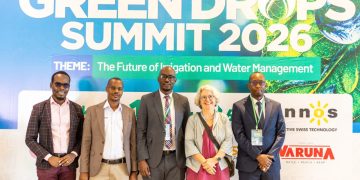
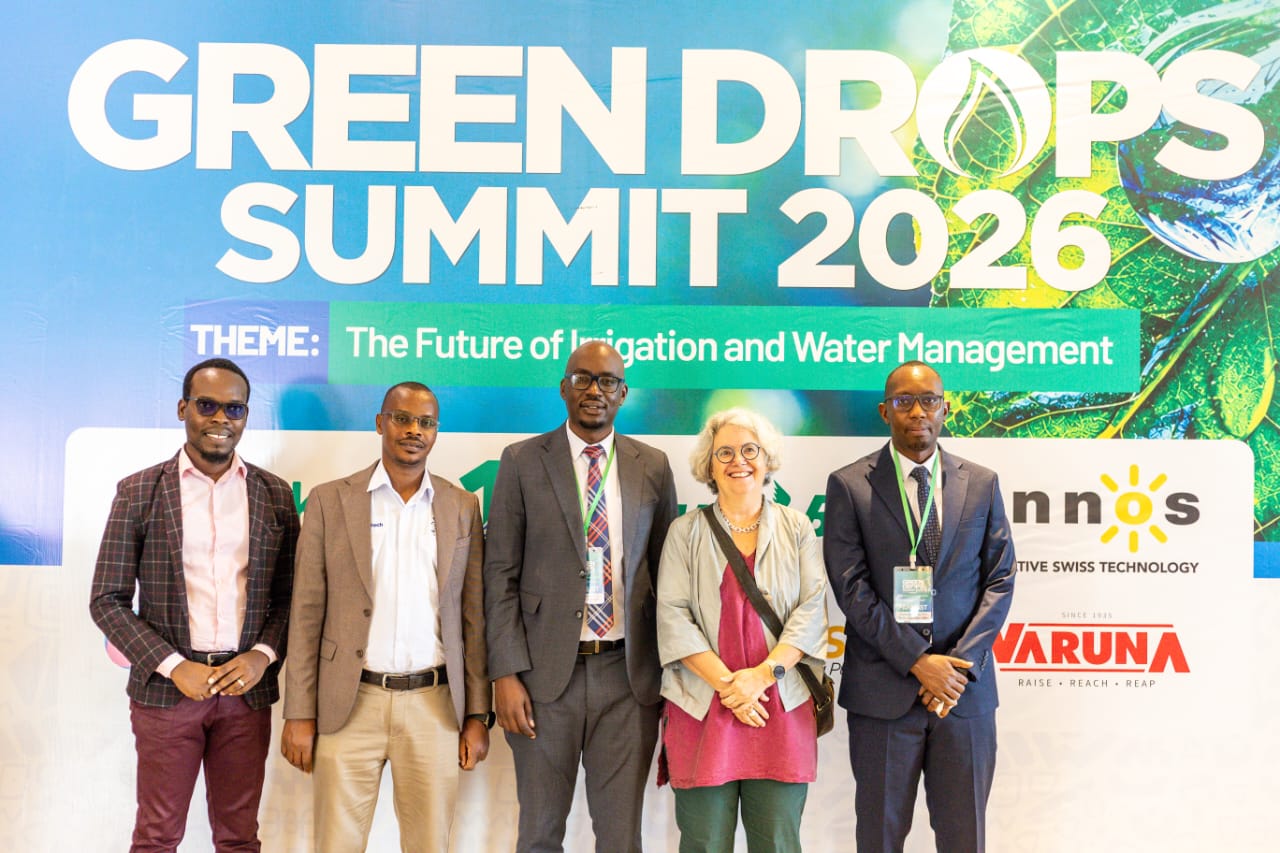
The call was made during the second Green Drops Summit, organised by Sprinktech, which brought together government officials, irrigation experts, international technology providers, development partners and private sector players to discuss innovative solutions for sustainable agriculture.
Sprinktech Chief Executive Officer Javan Mukundane said the company was established in 2017 to promote irrigation as a response to the growing challenges facing farmers due to changing weather patterns.
“We started Sprinktech in 2017 with the major aim of championing irrigation in Uganda because, in the recent past, there have been prolonged droughts and unpredictable weather. We realised that our farmers needed our services,” Mukundane said.
He noted that with approximately 80 per cent of Uganda’s population depending on agriculture, investing in reliable irrigation systems is increasingly important to protect livelihoods and ensure consistent food production.
Mukundane explained that modern irrigation technologies are making water management easier through automated systems, sensors and remote controls that allow farmers to determine when and how much water their crops require.
He added that farmers can operate irrigation equipment remotely using specialised controllers, reducing the need for manual labour while improving efficiency.
Sprinktech, which operates branches in Kampala, Mbarara and Gulu, provides technical support to farmers across different regions, including through female engineers. Mukundane encouraged farmers to take advantage of subsidised irrigation equipment available through government and World Bank-supported programmes, while emphasising the benefits of solar-powered systems.
Partnerships Driving Irrigation Innovation
Karin Jeannette, Chief Executive Officer of Swiss company ENNOS AG, highlighted the importance of partnerships in expanding access to efficient irrigation technologies.
She said ENNOS works with Sprinktech to provide water pumps and promote climate-smart farming practices tailored to the needs of Ugandan farmers.
“It is always a pleasure to partner with Sprinktech because together we deliver the best solutions for Ugandan farmers,” Jeannette said.
She also highlighted the development of a mobile application in Uganda to improve customer service and facilitate better management of irrigation systems.
Meanwhile, Gaurav Sharma of Kirloskar Fluid Dynamics, which operates under the Varuna brand, emphasised the importance of solar-powered water pumps in addressing electricity challenges, particularly in rural communities where access to reliable power remains limited.
Solar technology, he noted, provides an alternative energy source that can help farmers operate irrigation systems more reliably and reduce dependence on conventional electricity and diesel-powered equipment.
Water Management at the Centre of Sustainable Farming
Engineer Dominic Banaga Mucunguzi, Assistant Commissioner for Water Resources Planning and Management at the Ministry of Water and Environment, underscored the central role of water in agricultural production.
“There is no agriculture without water, but irrigation demands a reliable and well-managed supply,” he said.
Mucunguzi observed that farmers face several water-related challenges, including soil erosion caused by excessive water, shortages during prolonged dry seasons and poor water quality.
He stressed that sustainable water sources, appropriate technologies and effective water management practices are essential to addressing these challenges and ensuring the long-term viability of irrigation.
His remarks reinforced the need for farmers and other stakeholders to view irrigation not simply as a response to drought, but as a strategic investment in agricultural productivity and environmental sustainability.
Technology Transforming Irrigation Practices
Technical presentations at the summit showcased emerging technologies designed to make irrigation more affordable, efficient and accessible.
Among the innovations discussed was Irrigation as a Service, an approach that integrates water pumps with Internet of Things (IoT) technology, automated controls, mobile monitoring and water consumption tracking.
The systems allow farmers to monitor and manage water use more effectively, with solar energy increasingly being used to power equipment and reduce operating costs.
Participants also explored advances in irrigation controllers, from traditional valve-based systems to two-wire decoder technology and smart controllers that support two-way communication.
Engineer Philly Tumuramye of Laserspray demonstrated laser irrigation technology, which uses perforated pipes to distribute water in a fine, rainfall-like spray.
The technology operates at relatively low pressure and offers a potentially cost-effective option for farmers seeking irrigation solutions that require less maintenance.
Experts at the summit noted that conventional farming methods are becoming increasingly vulnerable to unpredictable rainfall, high labour costs and limited access to affordable irrigation equipment.
They argued that adopting modern irrigation technologies could help farmers improve yields, manage water resources more efficiently and reduce the risks associated with prolonged dry spells.
A Pathway to Food Security
The discussions at the second Green Drops Summit highlighted the growing importance of technology, partnerships and sustainable water management in transforming Uganda’s agricultural sector.
With millions of livelihoods linked to agriculture, speakers stressed that improving access to affordable irrigation systems could help farmers maintain production even when rainfall is unreliable.
The adoption of solar-powered pumps, sensor-based irrigation and automated water management systems was identified as an important step towards building a more resilient agricultural sector.
As Uganda continues to confront changing weather patterns, the message from the summit was clear: investing in smart irrigation is not merely an option for modern farming, but an increasingly important strategy for protecting food security, improving farmers’ incomes and sustaining agricultural production.