



KAMPALA, Uganda (UGNEWSLINE) – The Agribusiness Market Ecosystem Alliance (AMEA) has marked 10 years of promoting collaboration, learning and improved business support services for agricultural small and medium enterprises (agri-SMEs) and farmer organisations.
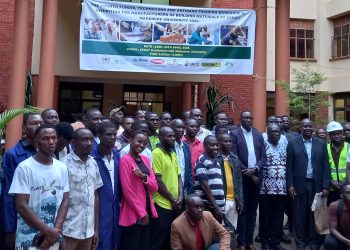
The anniversary was celebrated on Tuesday during a global conference held at Kabira Country Club in Kampala-Uganda, bringing together government officials, development partners, business development service providers and other actors in the agribusiness sector.
 Harrison Kaziro, the AMEA Local Network Facilitator in Uganda, said the Uganda network was established to bring together actors who had previously worked separately, often duplicating interventions and failing to share information and data.
“AMEA created a platform through which actors in the agribusiness sector can collaborate, learn together and share their learning for the improvement of agri-SMEs and farm organisations,” Kaziro said.
He said the network has contributed to the development of a professional platform for Business Development Service (BDS) providers, which is intended to support self-regulation, advocacy and certification of professionals in the sector. Kaziro said AMEA has also worked with the Ministry of Trade, Industry and Cooperatives on the development of a BDS policy and standards aimed at improving the quality of services provided to agricultural businesses and farmer organisations.
State Minister for Trade and Industry David Bahati, whose remarks were delivered by Assistant Commissioner for Human Resource Management Atwebembere Dez, said the government considers AMEA a partner in strengthening Uganda’s enterprise development ecosystem.
Bahati said Uganda has made progress in developing a framework for professional business development services, including standards, a professional association and a certification framework.
He said the quality of business support services is important because many small businesses struggle not only with access to finance but also with proper records, governance, management systems and market relationships.
“Financing and enterprise support are not alternatives to one another. Support is what makes financing work,” Bahati said.
He added that improving agri-SMEs and cooperatives is also important for Uganda’s food security because challenges in storage, processing, transportation and aggregation affect the performance of the entire food system.
The minister pledged continued government cooperation with AMEA, the United Business Support Professionals platform and other partners to complete and operationalize the certification framework for BDS providers.
He said the government also intends to ensure that enterprise support programmes procure quality services based on established standards.
Mark Blackett, AMEA Network Director, said the alliance was established in 2016 to accelerate the growth of agri-SMEs after recognizing that many development projects were not delivering the expected results.

He said AMEA has developed and promoted a peer-reviewed toolbox of approaches that have been used across different countries and value chains, benefiting millions of farmers and thousands of enterprises.
Blackett said an assessment conducted in Uganda found that many stakeholders and enterprises lacked confidence in the quality of business development services available in the country.
He said the new BDS standards and the establishment of a professional association are intended to build trust and make it easier for enterprises to access appropriate support.
“We are on the right track,” Blackett said, while calling on government, donors and financiers to support efforts to professionalize the BDS sector.
AMEA Uganda brings together organisations and partners including the International Finance Corporation, IDH, Farm Africa, Self Help Africa, Cordaid, Aceli Africa and government institutions.
Blackett said the network’s members and partners have collectively reached millions of farmers in Uganda through the use of improved tools, approaches and learning.
He said AMEA’s next phase will focus on accelerating the adoption of proven approaches and strengthening the systems that support agri-SME growth.
Rather than setting another 10-year target, Blackett said the alliance wants to see measurable progress by 2030, particularly in the growth, sustainability and competitiveness of agricultural enterprises.