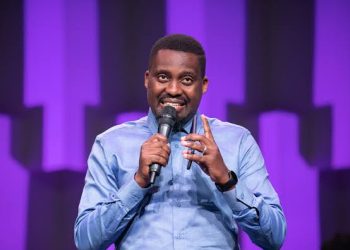



SEOUL, South Korea — The detention and prosecution of 95-year-old Chairman Lee Man-hee, founder of the Shincheonji Church of Jesus, has drawn growing international attention, with religious freedom advocates questioning the handling of the case and recent remarks by South Korea’s Justice Minister.
Chairman Lee was taken into custody on June 24 on charges of violating South Korea’s Political Parties Act. Prosecutors allege that between July 2021 and January 2024, he organized the enrollment of approximately 50,000 Shincheonji members into the People Power Party (PPP) in an effort to influence the party’s presidential and parliamentary primary elections. He was formally indicted while still in detention on June 30.
The case has attracted criticism from Massimo Introvigne, an Italian sociologist of religion, who has written extensively on religious freedom issues. In two articles published by Bitter Winter on June 24 and July 2, Introvigne questioned both the decision to detain the elderly religious leader and comments made by South Korea’s Minister of Justice, Jeong Seong-ho.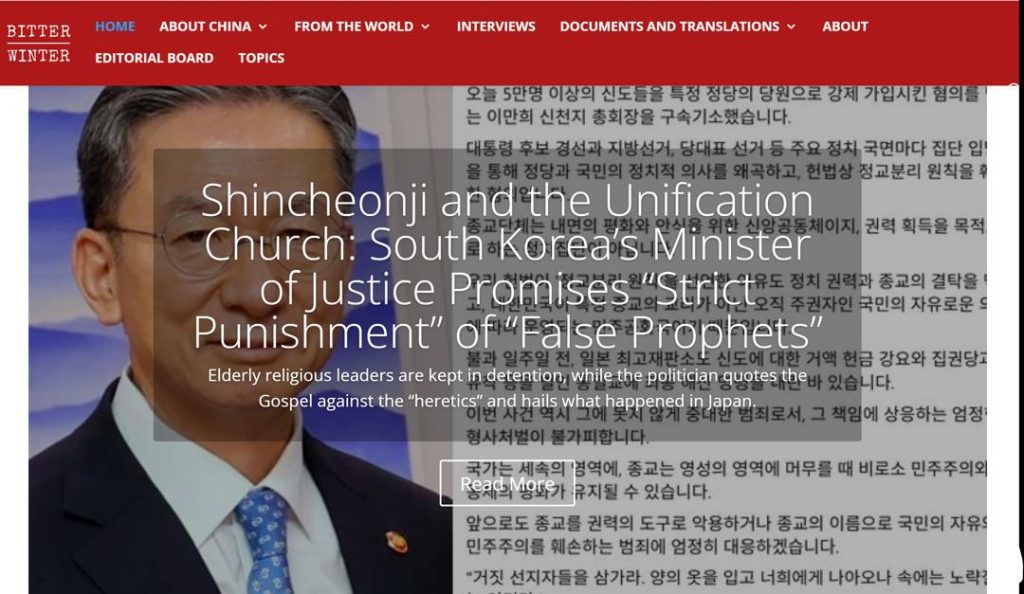 According to Introvigne, detaining a 95-year-old religious leader in a case that does not involve allegations of violence raises concerns about proportionality under international human rights standards, including the UN Standard Minimum Rules for the Treatment of Prisoners, commonly known as the Mandela Rules, and principles established by the UN Working Group on Arbitrary Detention.
He described the detention as “a stain on South Korea’s democratic credentials,” arguing that the case reflects broader concerns about the treatment of religious minorities.
The scholar also compared Lee’s case with that of Han Hak-ja, the 83-year-old leader of the Family Federation for World Peace and Unification, formerly known as the Unification Church. He suggested the cases indicate what he views as an emerging pattern of detaining elderly religious leaders.
Following Lee’s arrest, the Shincheonji Church said it had cooperated fully with investigators throughout the inquiry, including during search and seizure operations. The church described the detention as “in effect a physical punishment imposed on a 95-year-old suspect.”
Justice Minister’s Remarks Draw Criticism
Additional controversy arose after Justice Minister Jeong posted on social media on June 30 that “strict criminal punishment corresponding to its responsibility is inevitable” following Lee’s indictment. The minister concluded his post by quoting Matthew 7:15: “Beware of false prophets.”
Introvigne argued that the timing and wording of the minister’s statement could be interpreted as prejudging an ongoing judicial process. He also questioned whether quoting scripture to characterize a defendant from a specific religious movement was consistent with the principle of state neutrality toward religion.
According to the scholar, public comments by a sitting Justice Minister carry greater weight than personal opinions and therefore require particular caution to avoid undermining confidence in judicial independence.
Central Legal Question
At the center of the case is whether Shincheonji members were coerced into joining the political party.
Prosecutors maintain that the evidence points to an organized campaign of forced enrollment. The Shincheonji Church rejects that allegation, insisting that members joined voluntarily and were not compelled by church leadership.
Introvigne said the trial is likely to hinge on whether prosecutors can demonstrate coercion. He argued that citizens retain the right to join political parties regardless of their religious affiliation and warned against criminalizing political participation solely because individuals belong to a minority faith.
International Attention
Religious freedom observers are closely monitoring the proceedings, viewing the case as a broader test of South Korea’s commitment to the rule of law, judicial independence, and the protection of minority religious groups.
Introvigne said the case extends beyond the question of Lee’s guilt or innocence, arguing that it will demonstrate whether democratic institutions apply equal legal protections to religious minorities.
He warned that if statements by senior government officials appear to influence judicial proceedings or undermine the rights of defendants, public confidence in the justice system could be weakened. A democratic society, he said, must ensure equal legal protections and due process for all citizens, including members of minority religious communities.