


For nearly seven decades, Tuzukuke Primary School has served as a pillar of hope for children in Kitovu, Kajjansi Town Council, Wakiso District. Established in 1958 under the Church of Uganda, the school has educated generations of learners and remains one of the few affordable education centres serving children from low-income families.
Today, however, the school faces significant challenges that continue to affect learners’ academic success and overall well-being.
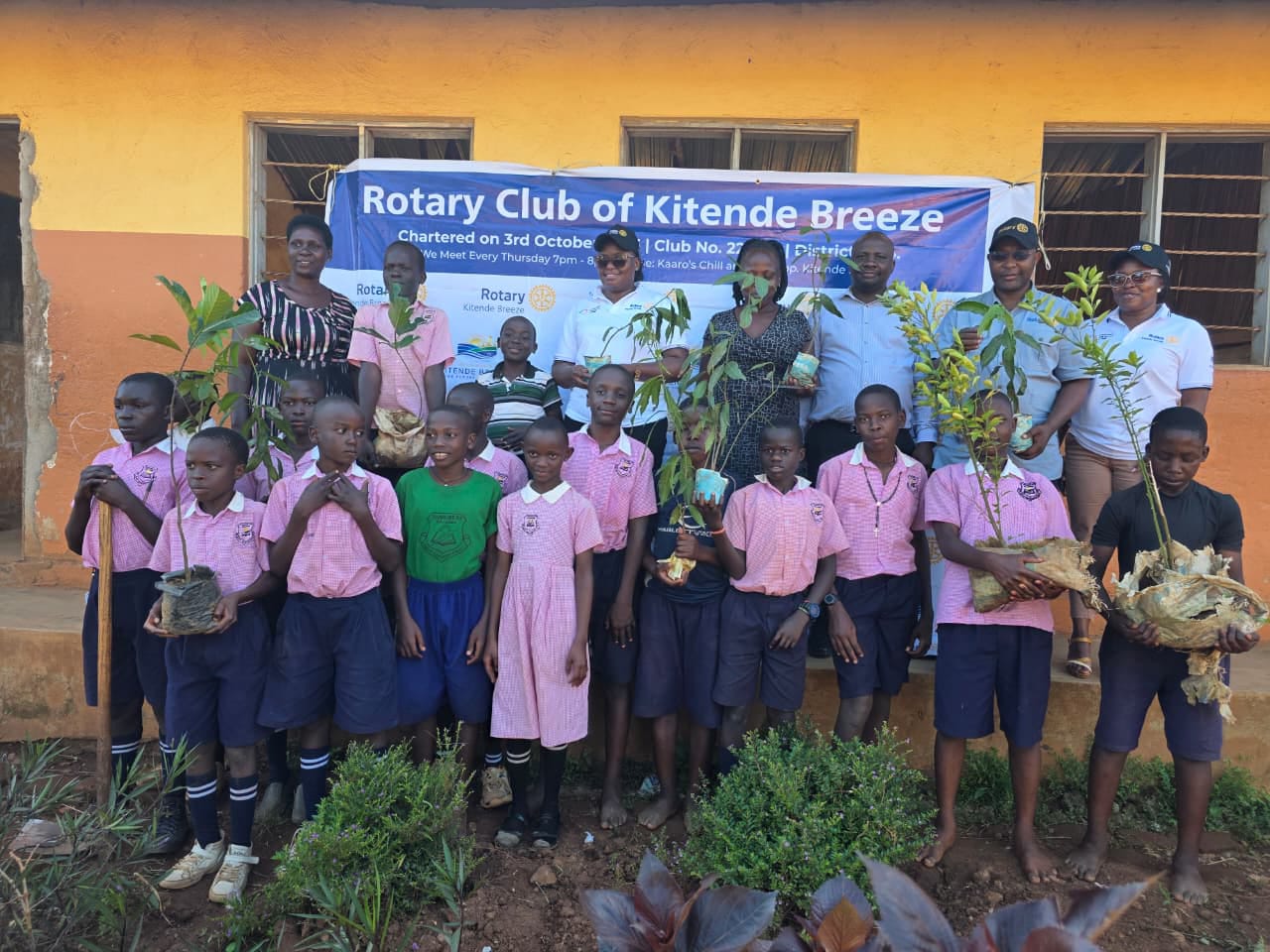
Recognising these challenges, the Rotary Club of Kitende Breeze has unveiled an ambitious intervention aimed at transforming the lives of the school’s 242 pupils through investments in education, health, sanitation, infrastructure, and teacher development.
The incoming President of the Rotary Club of Kitende Breeze, Richard Mujjuzi, revealed the club’s plans during an interview on the sidelines of his installation ceremony held at Nican Resort Hotel in Kajjansi, where he officially took over leadership from the club’s Charter President, Rotarian Harriet Nakaweesa.
Mujjuzi said the club believes every child deserves an opportunity to learn in a safe, healthy, and supportive environment. He noted that by integrating health, hygiene, education, sports, teacher empowerment, and improved infrastructure, the club hopes to create sustainable change that extends beyond the classroom.
According to school records, Tuzukuke Primary School registered 26 learner dropouts in 2025, representing an annual dropout rate of approximately 10.7 percent. This means that more than one in every ten pupils who began the academic year failed to complete it, exposing many of them to risks such as child labour, early marriage, and lifelong poverty.
School administrators attribute the high dropout rate to persistent absenteeism, poor health, inadequate sanitation facilities, limited learning resources, and widespread socio-economic challenges facing many families in the community.
The school’s academic performance has also remained below expectation. Analysis of Primary Leaving Examination (PLE) results over the past five years shows that only one learner attained a First Grade during the entire period, highlighting the urgent need for targeted interventions.
To address these challenges, the Rotary Club has developed a comprehensive improvement programme beginning with learner health.
The project will provide periodic school health outreaches offering basic medical screening, health education, deworming services, and referrals for specialised treatment where necessary. The initiative aims to detect and manage common childhood illnesses that often contribute to absenteeism and poor academic performance.
The club will also prioritise menstrual hygiene management to ensure adolescent girls do not miss school because of menstruation. The intervention includes the provision of sanitary pads, menstrual hygiene education, improved sanitation facilities, and support systems that enable girls to manage their menstrual health with dignity.
In addition, boys and teachers will participate in awareness programmes designed to eliminate stigma and promote a supportive school environment for girls.
Recognising that quality education depends on well-equipped teachers, the Rotary Club plans to establish partnerships with international schools to provide mentorship, professional development, exchange visits, and training in modern learner-centred teaching methods.
The initiative will also improve access to scholastic materials by mobilising learning kits for pupils and supplying curriculum-aligned textbooks, library resources, teaching aids, and supplementary reading materials to strengthen literacy and numeracy.
Infrastructure development forms another key component of the project. The club intends to construct improved sanitation facilities, build a hygienic kitchen, rehabilitate classrooms, and install a perimeter fence to improve safety and security within the school.
The Rotary Club expects the interventions to significantly reduce absenteeism, improve learner retention, strengthen academic performance, enhance health outcomes, and promote gender equality while creating a safe and conducive learning environment.
Beyond benefiting Tuzukuke Primary School, the initiative is expected to serve as a sustainable model that can be replicated in other resource-constrained schools across Uganda.
Ultimately, the project represents more than improving school facilities—it is an investment in the future of 242 children, ensuring they are empowered through education rather than limited by the circumstances of their environment.