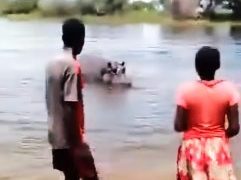



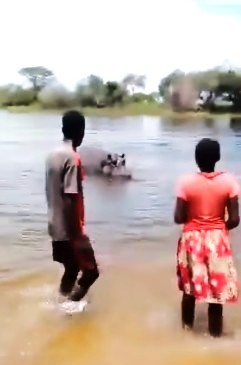
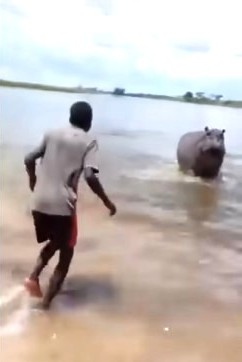
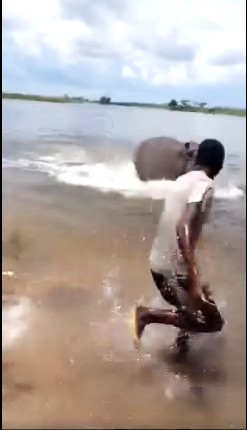
LUSAKA – A viral video showing children harassing a hippopotamus has sparked outrage and alarm from the Ministry of Tourism, which has condemned the behaviour as both illegal and life-threatening.
In the widely circulated clip, the children are seen chasing a hippo in shallow water, a scene the Ministry describes as “deeply disturbing” and “recklessly dangerous.” Officials warn that such encounters can turn fatal within seconds.
Hippos, classified under Zambian law as dangerous animals, are among the continent’s most unpredictable and territorial wildlife.
Their attacks have claimed 36 lives across the country since January alone, with many incidents occurring after people provoked or approached the animals.
“These preventable tragedies are a painful reminder of the need to respect wildlife and practise safe behaviour,” the Ministry said in its statement.
Citing the Wildlife Act, authorities reiterated that harassing, disturbing, or chasing wild animals is strictly prohibited and carries legal consequences.
Such behaviour, they say, disrupts ecosystems, undermines conservation efforts, and places communities at unnecessary risk.
The Ministry also issued a separate, urgent warning about an increase in crocodile activity as rising water levels push the reptiles closer to human settlements.
Communities, especially those relying on rivers for daily activities such as fishing and water collection, are urged to exercise heightened caution.
Parents and guardians have been asked to keep children away from rivers and streams, while residents are encouraged to immediately report stray or aggressive crocodiles to the Department of National Parks and Wildlife (DNPW).
Community leaders, Resource Boards and families are being called upon to step up education efforts on wildlife safety and to intervene early to prevent children from engaging in dangerous interactions with wild animals.
“Zambia’s wildlife is a national treasure, one that must be protected, respected and enjoyed responsibly,” the Ministry said, adding that it will continue working with law-enforcement and conservation partners to curb such incidents and safeguard communities.