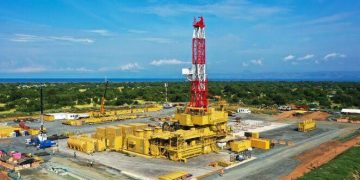



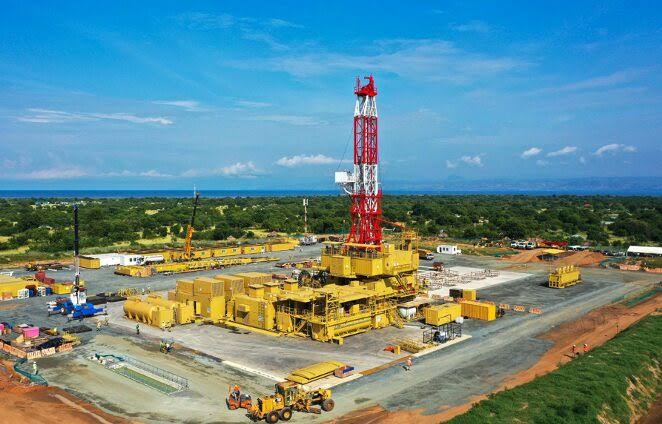
BULIISA, UGANDA — Uganda’s oil ambitions are fast taking physical shape in the Lake Albert basin, where the Tilenga Upstream Services Project has surged past 63% overall completion. Rigs are drilling ahead of schedule, and the central processing facility in Buliisa is on track to deliver first oil by July 2026. Yet, a quiet economic crisis is unfolding just beyond the perimeter of this high-tech industrial enclave.
It is a crisis of cash flow that threatens the foundation of the national local content ambitions. The financial strain centers on the Tilenga EPC construction camp, a 4,000-person modular mini-city built in Kasenyi to safely house the project’s massive multinational workforce. While the camp stands as a triumph of fast-tracked civil deployment, the domestic supply chain that built it faces unprecedented financial distress.
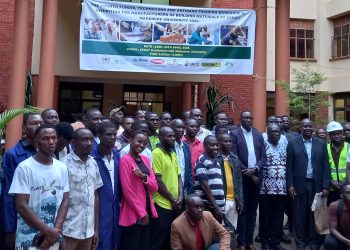
Between 2021 and 2023, more than 60 local Ugandan subcontractors were engaged by the fabrication and assembly specialist, KarmodBeta Joint Venture, a Tier 2 contractor operating under the primary Tier 1 consortium led by McDermott and SINOPEC. These local companies delivered specialized electrical installations, air conditioning, plumbing, ICT networks, fire safety systems, catering, security, and heavy lifting services.
Project documentation and stakeholders indicate that subcontractors successfully executed and delivered all contracted assets to the full satisfaction of the main contractors. Yet today, over three years since some of the work concluded, a collective debt of approximately $9.7 million remains unpaid to these local businesses.
To understand why a $9.7 million delay is catastrophic for these companies, one must look at the immense financial hurdles Ugandan firms overcame just to enter the oil enclave.
To meet the strict global compliance, environmental, and safety requirements mandated by international oil companies, these domestic subcontractors invested heavily. They upgraded operational systems, imported specialized machinery, built compliant facilities, and funded expensive certifications and training for their workforce.
These were not casual outlays; they were deep, capital-intensive investments made in good faith, based on the promise that participating in the Tilenga project would elevate local industry to international standards.
Instead, the prolonged payment backlog has turned those investments into a trap. With capital tied up in unpaid invoices, these high-performing local companies are finding themselves unable to service the bank debts taken out to fund their initial compliance upgrades.
The financial strain has triggered a destructive domino effect that extends all the way to the national treasury.
Chief among the creditors knocking on contractors’ doors is the Uganda Revenue Authority. Because invoices remain stuck in an unresolved multi-year logjam, local companies are struggling to meet their tax obligations. This cuts deeply both ways: the Ugandan government is deprived of vital revenue needed for wider national development, while the subcontractors lose their tax clearance certificates.
Without full tax authority compliance, these otherwise highly competent local firms are legally barred from bidding on other major commercial opportunities. A pool of technically certified, highly trained Ugandan contractors—built up through years of deliberate national policy—is now on the brink of winding up due to bankruptcy. Rather than growing into formidable competitors capable of challenging large foreign corporations, many are being forced out of the petroleum sector entirely just to survive, causing a worrying sector flight that actively undermines local content goals.
The impasse has not gone unnoticed. The Petroleum Authority of Uganda has actively intervened, mediating between the licensee, the main contractor McDermott, and KarmodBeta Joint Venture. This oversight has yielded vital progress, successfully unlocking and settling a significant portion of an original, broader claim that once sat at approximately $31 million.
To address the specific $9.7 million currently claimed by the approximately 60 remaining subcontractors, the regulatory authority tasked the licensee with conducting a forensic audit, which was undertaken by the consulting firm Deloitte Kenya. Subcontractors fully cooperated with the process, handing over thousands of pages of verified records. While the scope of the audit had to be revised and expanded to address emerging matters effectively—requiring additional time to ensure all claims were thoroughly vetted—local companies understand that this rigorous process has reached its conclusion. Because the fieldwork and documentation windows have closed, the affected subcontractors are operating on the clear understanding that the audit is complete and are now anxiously looking forward to TotalEnergies EP Uganda acting swiftly on the findings to release the long-awaited payments due to them.
But for local businesses operating on razor-thin margins, time is the one commodity that has completely run out.
This is where the plight of these local companies becomes a direct appeal to the stewardship of TotalEnergies EP Uganda. As the global operator and majority shareholder of the Tilenga project, TotalEnergies has consistently championed its commitment to sustainable development, ethical supply chains, and the economic empowerment of its host nation.
The current bottleneck may sit legally within the lower tiers of the contracting hierarchy, but its real-world consequences stop at the gates of the Tilenga project. Local partners are not calling for aggressive legal combat or disruptive disputes; they are appealing for administrative urgency, corporate empathy, and leadership.
With the forensic audit process understood to have reached its conclusion, the mandate for action now rests squarely with the licensee. For interim relief to be deployed and fast-tracked payment resolutions to finally be executed, direct and active intervention by TotalEnergies is urgently needed.
Resolving this matter is no longer just about balancing a construction ledger; it is about protecting the livelihoods of hundreds of Ugandan workers, safeguarding millions in domestic investments, and ensuring that the story of Tilenga’s first oil is a shared victory for both international investors and the Ugandan companies that helped build it from the ground up.