


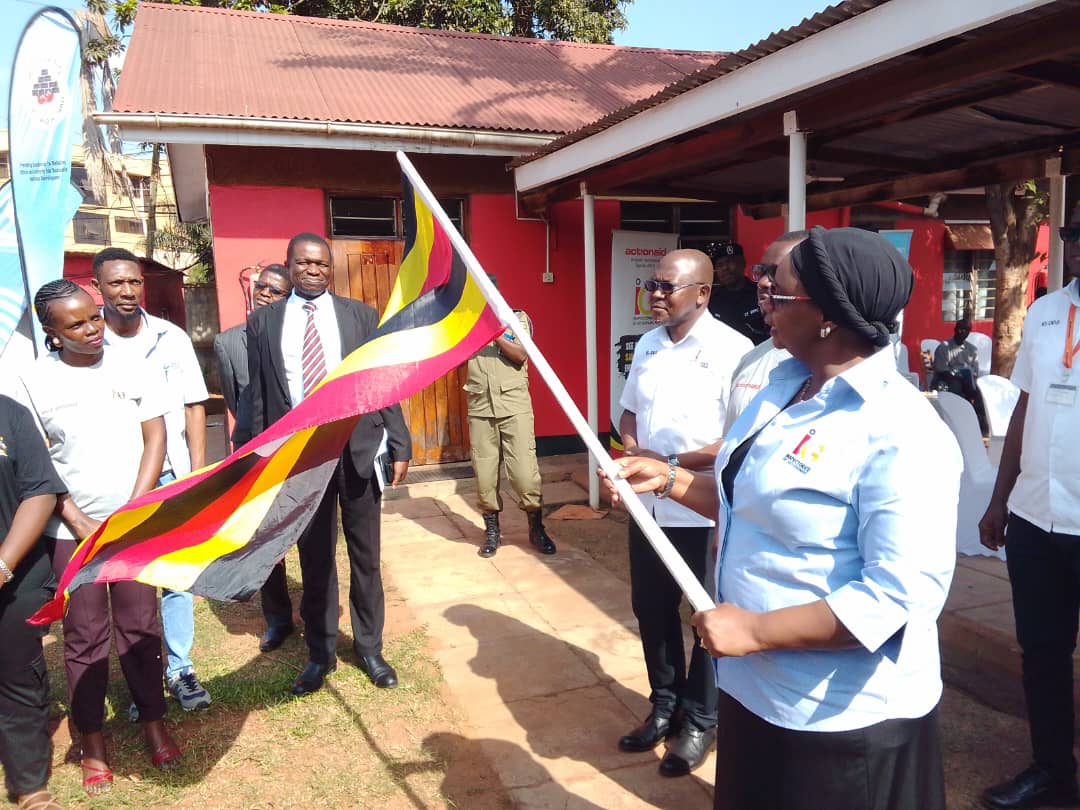
The Inspectorate of Government (IGG), in partnership with civil society organizations, development partners, and accountability institutions, has officially launched the Bunyoro Sub-region leg of the Anti-Corruption Caravan, marking the return of a nationwide citizen engagement campaign that had been halted for several years, largely due to the COVID-19 pandemic.
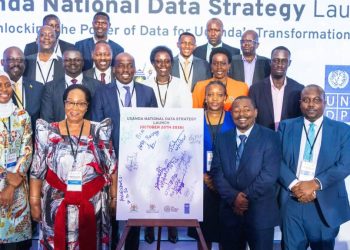
The launch, held at ActionAid International Uganda head offices, brought together representatives from government anti-corruption agencies, civil society organizations, development partners, local leaders, and members of the media.
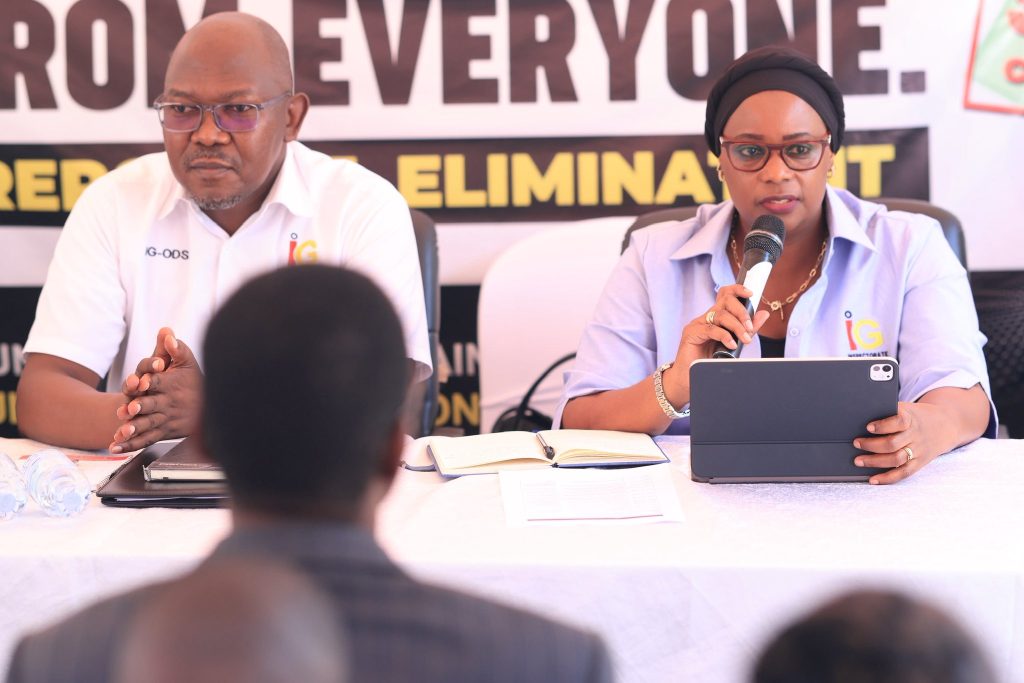
The caravan aims to strengthen citizen participation in the fight against corruption through public dialogues, awareness campaigns, community engagements, and accountability forums across the Bunyoro sub-region.
Speaking during the launch, Inspector General of Government (IGG), Ms. Aisha Naluzze emphasized that corruption remains one of the greatest obstacles to Uganda’s social and economic transformation.
“Every shilling lost to corruption is a classroom not built, medicine not delivered to hospitals, a road not maintained, and a livelihood opportunity denied,” the IGG said.
She noted that corruption undermines the social contract between citizens and the state, slowing the realization of Uganda’s national development goals. She stressed that combating corruption is not only a legal obligation but also a moral and developmental responsibility that requires collective action from all Ugandans.
The IGG acknowledged that anti-corruption efforts cannot be left solely to enforcement agencies, despite the critical roles played by investigations and prosecutions.
“Sustainable change can only be achieved when citizens actively participate in demanding accountability and transparency from duty bearers,” she said.
The Bunyoro Anti-Corruption Caravan will traverse several districts and administrative units, including Kiryandongo, Masindi, Buliisa, Kagadi, Kikuube, Hoima District, and Hoima City. Activities will include community dialogues, public awareness campaigns, media engagements, barazas, and joint monitoring exercises aimed at promoting transparency and exposing corruption.
According to the IGG, the initiative will provide a platform for citizens to directly engage with accountability institutions, raise concerns about corruption, report cases of maladministration, and receive information on corruption prevention.
She further reassured citizens that the Inspectorate of Government remains committed to protecting whistleblowers and ensuring that complaints are handled professionally, fairly, and expeditiously.
The IGG also applauded the media for its vital role in exposing corruption and promoting public awareness.
“The media serves as a bridge between institutions and citizens and remains a pivotal partner in promoting transparency and encouraging civic engagement,” she said.
ActionAid Calls for Citizen Action
Addressing the gathering, Mr. Samuel Ntale, the Country Director of ActionAid Uganda, described corruption as a form of theft that robs citizens of opportunities and undermines national development.
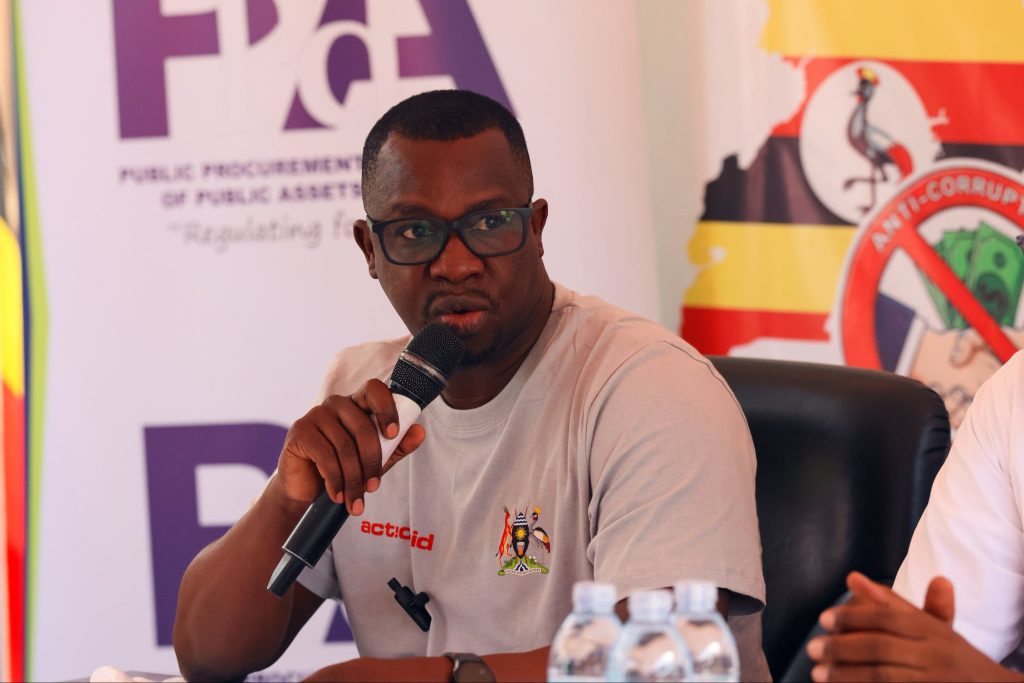
“We are here to flag off the fourth leg of the Anti-Corruption Caravan, a citizen-led campaign that has traversed the country from the north to the east and west, and now returns with renewed energy to amplify the voices of people who have been silenced for too long,” Ntale said.
He argued that corruption should be viewed beyond financial loss, describing it as the theft of a child’s future when school resources are misappropriated and the theft of a mother’s dignity when medicines meant for public health facilities are diverted and sold on the black market.
“Corruption kills trust, it kills opportunity, and it undermines our dream of a just and prosperous Uganda,” he stated.
Ntale emphasized that the caravan belongs to ordinary citizens and is designed to empower communities to report corruption and demand accountability from public institutions.
To government agencies participating in the initiative, including the Inspectorate of Government, Office of the Auditor General, Directorate of Public Prosecutions, State House Anti-Corruption Unit, and local government leaders, Ntale called for concrete action based on evidence presented by citizens.
“We expect investigations, prosecutions where evidence exists, and the honoring of commitments made to citizens,” he said.
He urged Ugandans not to remain silent in the face of corruption, describing citizen reporting and participation as critical tools in the fight against graft.
Transparency International Raises Alarm Over Corruption Trends
Meanwhile, Ms. Lilian Zawedde of Transparency International Uganda painted a sobering picture of the country’s corruption landscape, warning that corruption continues to undermine Uganda’s social, economic, and democratic development.
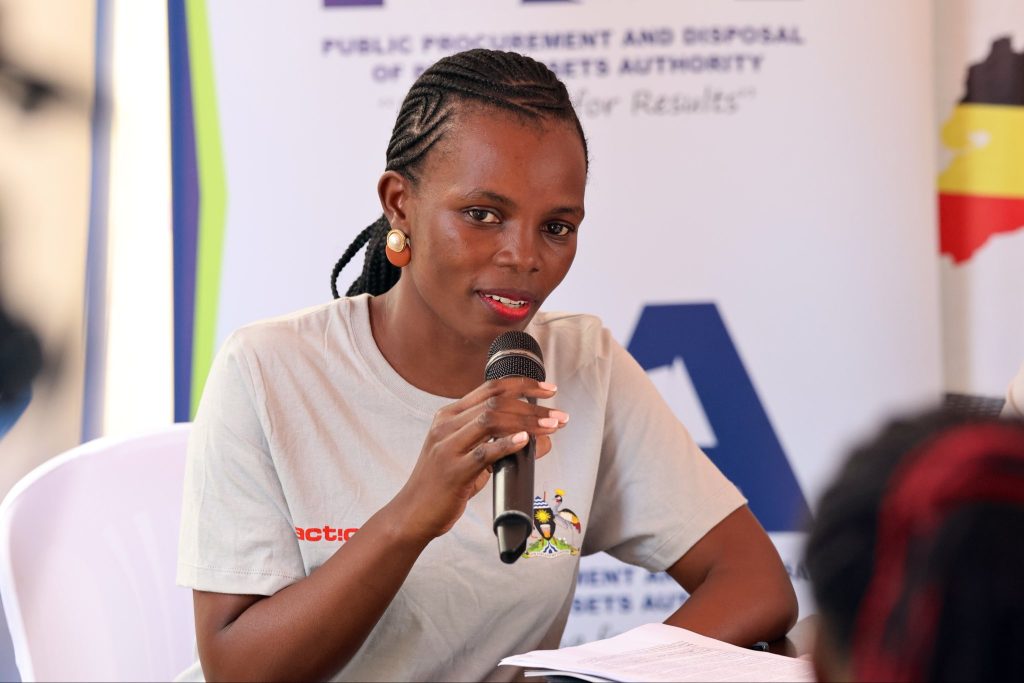
She said corruption diverts scarce public resources away from essential services, weakens institutions, erodes public trust, discourages investment, and disproportionately affects the country’s poorest and most vulnerable citizens.
“Every act of corruption represents a missed opportunity for better healthcare, quality education, improved infrastructure, and decent livelihoods,” Zaawedde said.
While acknowledging progress made through policy reforms, legal frameworks, and public awareness campaigns, she noted that corruption remains persistent and requires renewed commitment from all stakeholders.
Citing findings from Transparency International’s latest Corruption Perceptions Index (CPI), Zaawedde revealed that Uganda’s score has continued to decline, dropping from 28 points in 2019 to 25 points in 2025.
According to Transparency International, the CPI measures perceived levels of public sector corruption on a scale of zero to 100, where zero represents a highly corrupt public sector and 100 represents a very clean one.
Uganda’s score of 25 remains significantly below the global average of 42 and the Sub-Saharan Africa regional average of 32, highlighting the magnitude of the challenge facing the country.
Zaawedde also referenced findings from the National Integrity Survey conducted by the Inspectorate of Government, which indicate declining public confidence in Uganda’s integrity systems. The survey found that 76 percent of respondents believe corruption is increasing within the public sector, while 59.5 percent identified greed as the leading driver of bribery and corrupt practices.
Additionally, the Uganda Bribery Index produced by Transparency International Uganda revealed that the Uganda Police Force recorded the highest likelihood of bribery at 71 percent, making it one of the institutions where citizens are most likely to encounter demands for unofficial payments.
Call for Collective Action
Zaawedde stressed that the fight against corruption cannot be won by government institutions alone and called for a whole-of-society approach involving Parliament, the Judiciary, constitutional bodies, law enforcement agencies, local governments, civil society, the private sector, religious and cultural institutions, development partners, the media, and citizens.
Among the recommendations made were strengthening access to information through full implementation of the Right to Information Act, improving coordination among anti-corruption actors, enhancing access to justice through stronger investigations and prosecutions, and protecting the independence of anti-corruption institutions.
She also called for stronger political commitment, ethical leadership, and greater citizen participation through whistleblower protection, civic education, and the creation of safe spaces for citizens to report corruption.
“The fight against corruption is not merely about enforcing laws. It is about protecting the future of our country,” she said.
Renewed Momentum Against Corruption
The launch of the Bunyoro Anti-Corruption Caravan signals renewed momentum in Uganda’s efforts to combat corruption through citizen engagement and multi-stakeholder collaboration.
As the caravan begins its journey across the Bunyoro sub-region, organizers hope it will not only raise awareness but also empower citizens to become active participants in safeguarding public resources and demanding accountable governance.
With anti-corruption agencies, civil society organizations, development partners, local leaders, and communities working together, stakeholders believe the initiative can contribute significantly to building a culture of integrity, transparency, and accountability across Uganda.