




KAMPALA – SchoolPay has celebrated a decade of transforming education through digital innovation, announcing that its platform now serves more than 16,000 active schools and over six million students across Uganda.
The milestone was announced during the SchoolPay Regional Workshop held at Silver Springs Hotel in Kampala under the theme, “Beyond Payments: Empowering Schools with Smart Digital Solutions.” The workshop aimed to equip school proprietors, head teachers, bursars, and administrators with practical knowledge on using technology to improve school management and service delivery.
Speaking at the event, Patrick Muhumuza, Group Head of Operations at SchoolPay Africa, described the anniversary as the beginning of a new era for the company. “Today is a very important milestone for us as SchoolPay because we are celebrating 10 years of innovation in education. We are grateful to our clients, partners and staff who have made this journey possible,” Mohomuza said.
He noted that while SchoolPay has been widely known for digitising school fees payments, the company is now expanding its focus through a comprehensive suite of digital solutions designed to modernise school operations.
“For the past decade, many people have known us as a payment processing company, but SchoolPay does much more than that. Today we are launching our next chapter, which is beyond payments,” he said.
Muhumuza said the new digital ecosystem includes the SchoolPay ERP, which integrates accounting, academics, attendance management, SMS communication and other administrative functions into one platform to help schools operate more efficiently.
The company has also introduced S-Wallet, a digital pocket money solution that enables parents to securely send money to learners, particularly those in boarding schools, while exposing young people to financial literacy and modern banking services.
“It is not just about sending pocket money. We are building a generation that understands financial services, saving, card transactions and digital payments. This is about financial inclusion for the youth,” he explained. Other innovations include dedicated school fees savings products and fully digitised school financing, allowing schools to apply for loans from financial institutions through an end-to-end digital process.
Muhumuza said the company currently operates in every district through regional teams that train schools on the effective use of its digital solutions. “We are currently serving more than 16,000 active schools with over six million students on the platform. We have staff across all regions, and these workshops are only the beginning. We shall be hosting more regional workshops to Masaka, Jinja, Mbarara, northern Uganda and other parts of the country to spread out the same massege ,” he said.
He added that SchoolPay’s vision for the next decade is to drive a complete digital transformation of school management through one integrated platform.
The regional workshops also provide a platform for schools to share experiences, exchange best practices and shape the future of digital education in Uganda. Participants are introduced to SchoolPay’s expanding ecosystem, including ERP solutions, report cards, S-Wallet, school fees savings and school financing.
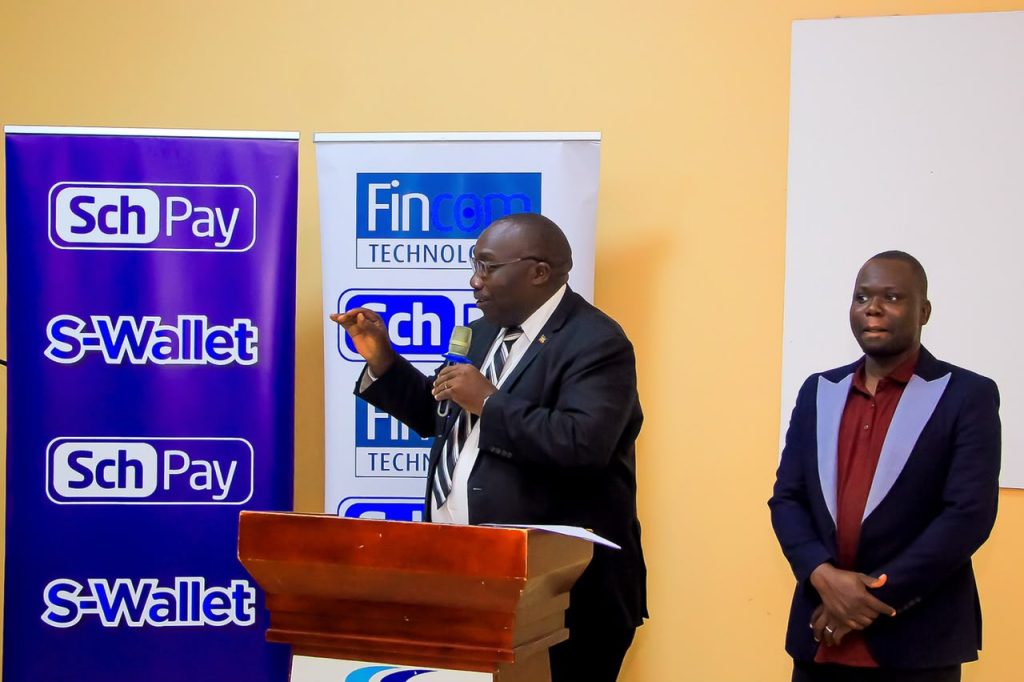
George Mutekanga, the outgoing Commissioner for Private Schools and Institutions, who was the guest speaker commended SchoolPay for its achievements over the past decade but challenged the company to expand its reach beyond the central region.
“We have seen good results over the last 10 years, but these should not remain concentrated in a few schools. Uganda has 20 sub-regions, and schools in Arua, Gulu, Soroti, Mbale, Hoima and other areas should equally benefit from these innovations,” Mutekanga said.
He encouraged SchoolPay to promote benchmarking by enabling schools to learn from institutions that have successfully adopted digital systems. “If one school is doing exceptionally well, let others visit and learn those best practices. That is how we improve education management across the country,” he said.
Mutekanga also urged schools to embrace international exposure, noting that SchoolPay has already expanded into several African countries, including Ethiopia, Zambia, Malawi, Mozambique, Nigeria, the Democratic Republic of Congo, South Sudan, Tanzania and Kenya.
He further emphasised the importance of financial literacy, urging schools to teach learners how to earn, save and spend responsibly from an early age.
Drawing from his experience as a school proprietor, Mutekanga said SchoolPay has significantly improved financial accountability in schools. “In the past, there were cases of financial mismanagement where money could be spent before reaching the bank. Today, every transaction is traceable, withdrawals follow proper procedures, and there is greater transparency and accountability,” he said.
He added that the platform has also strengthened trust between schools and parents by providing accurate records of fee payments and reducing disputes over school fees.
Mutekanga encouraged schools that have not yet adopted digital payment systems to embrace the technology and participate in the ongoing regional workshops.
Through the initiative, SchoolPay says it remains committed to partnering with schools to build smarter, more efficient and future-ready learning institutions powered by innovation and digital transformation.