


Uganda’s Education Ministry has reaffirmed plans to expand access to government schools while warning that communities seeking new seed secondary schools must first secure land before construction can begin.
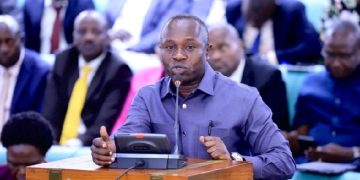
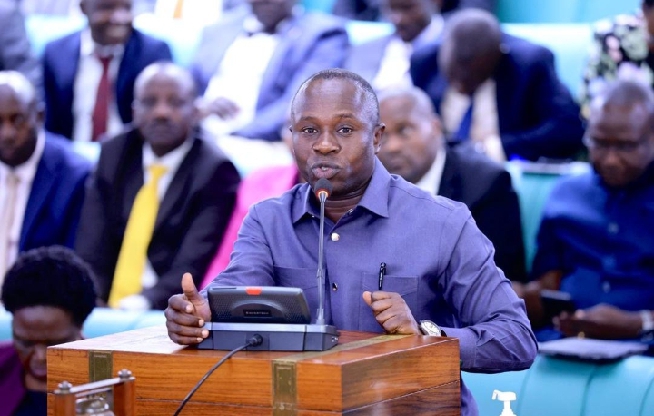
Minister of State for Education and Sports, Peter Ogwang, told Parliament that government remains committed to establishing seed schools in underserved sub-counties, but said proof of land ownership is a key requirement for funding new construction.
Ogwang was responding to MPs during a parliamentary sitting in which concerns were raised over delays affecting a proposed seed secondary school in Nakasongola County.
He attributed part of the delay to the late submission of the required land titles and urged legislators representing areas without seed schools to secure land documentation early.
He invited the Nakasongola representative to engage the ministry on the status of the proposed school and possible ways of moving the project forward.
The minister also addressed demands from community schools seeking to become government-aided institutions. He said government’s policy remained to have at least one government secondary school in every sub-county, adding that eligible community schools could be considered for coding and grant-aiding where a government-aided school is not already available and funding permits.
The ministry is also seeking to expand government support at primary level, with plans to code 300 schools across Uganda.
Ogwang said the ministry was working with the Ministry of Finance, Planning and Economic Development to secure funding for the exercise in the next financial year.
He encouraged MPs to submit details of qualifying schools, including annex schools, for consideration.
The announcements come as Uganda continues to face pressure to expand access to public education while ensuring that new institutions have the staff and resources needed to operate effectively.
In technical and vocational education, Ogwang confirmed that Cabo Technical Institute had received modern machinery but acknowledged a critical gap: the institution does not yet have enough appropriately trained instructors to operate the equipment.
He said the ministry was pursuing the necessary wage allocation to recruit technical instructors and pledged to visit the institute with officials responsible for Technical and Vocational Education and Training.
The staffing challenge highlights a broader issue facing Uganda’s technical education sector, where investment in equipment must be matched by skilled personnel capable of training students and maintaining modern machinery.
Ogwang also reaffirmed the government’s ambition to establish a public university in every sub-region, saying efforts were continuing to address remaining geographical gaps in access to public higher education.
The Speaker of Parliament commended Ogwang for responding to the questions raised by MPs and urged other government ministers to attend parliamentary sittings regularly and respond to legislators’ questions in line with parliamentary rules.
The government’s position signals an effort to widen the reach of public education, but the success of the plans will depend on land availability, funding and the recruitment of qualified teachers and technical instructors.