




The government of Uganda, through the Ministry of Trade, Industry and Cooperatives, in collaboration with the National Sugar Stakeholders Council, has developed a new Information Technology system that will create a centralized platform that facilitates the efficient management and utilization of data and information related to the sugar industry.
This was revealed during the two stakeholder engagement meetings organised by the Ministry of Trade to introduce and brief the members of the Sugar Council, the sugar millers, and sugarcane farmers about the new system.
While addressing the sugarcane farmers, millers, and memners of the Sugar Council, the Minister of Trade, Industry and Cooperatives Hon. Sanjay Tanna said the new Sugar Industry Information Management System (SIIMS) will facilitate the registration of all sugarcane farmers in the country and will help to address most of the challenges in the sugar sector
“This system will help us to gather and centralize all the data on the sugar sector, integrating the data from the different stages of the sugar value chain, including cane cultivation, harvesting, milling, processing, distribution, and market trends, to provide a holistic view of the industry,” said Tanna
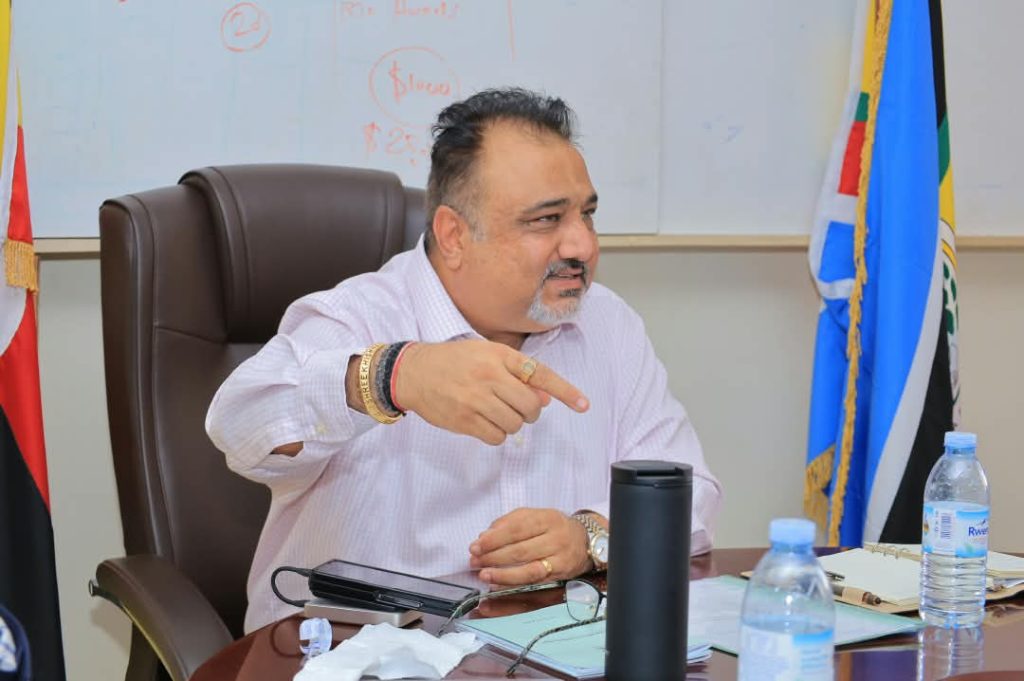
He added that through the system which is connected to the satellite, government will be able to know all the sugarcane growers in the country, the acreage of sugarcane across the country, the capacity of the sugar millers, and will be used to conduct real-time monitoring to identify bottlenecks, and respond promptly to critical issues. The data collected will help the government to plan better for the sugar industry.
This is one of the initiatives we are putting in place to address some of the outstanding challenges in the sugar sector, including the low sugarcane yields, harvesting of immature cane, sugarcane poaching, and poor farmer – miller relationships.
As government plans to roll-out the implementation of the new system, Hon.Tann has warned sugar millers against underpaying cane farmers and buying sugar cane from unregistered growers, saying failure to follow industry regulations could undermine the sustainability of Uganda’s sugar sector.
He said licensed millers must comply with the law governing the registration of outgrowers, the weighing of sugar cane and payments to farmers, warning that those who contravene the requirements could face fines and imprisonment.
“Those of you who are licensed millers should therefore not procure or buy sugar cane from unregistered growers,” Tanna said.
He also raised concern over deductions and price reductions affecting cane farmers, saying some millers were deducting between 5% and 10% at the factory gate despite an agreed price of 125,000 shillings.
“Before the elections, you agreed on a price of UGX 125,000. However, it has come to our attention that some millers are unilaterally deducting 5 or 10 percent at the factory gate, citing various charges,” Tanna said.
He said other millers had reduced the price up to 90,000, which is unfair to farmers. “This defeats the whole purpose of having rules and regulations in place,” he said.
To the farmers, Tanna warned them of unscrupulous behaviors, especially the harvesting of premature cane, breach of contracts they sign with the millers, among others.
“We are losing 20 percent of our GDP because of unscrupulous farmers who are not registered. They harvest premature cane and sell it to the millers at night.”
“We are adults. If we can not regulate ourselves, and greed drives us into unlawful and unscrupulous practices, then we are damaging the entire industry,” he said.
He said the law provides for the registration and qualification of outgrowers, as well as requirements concerning the weighing and pricing of sugar cane.
Tanna also called for closer cooperation between the industry and the ministry over permits relating to the importation and exportation of sugar.
He said the Council has powers to inspect, issue release orders, and receive monthly returns relating to sugar imports and exports, including the repackaging of consignments.
The Chairperson of the Sugar Council Rajbir Singh Rai welcomed the new IT system, saying it will help to streamline operations in the sugar sector and improve the relationship between farmers and millers.
Jimmy Kabeho, the Chairperson of Uganda Sugar Manufactierers Association, noted that the majority of the sugar mills are operating at half capacity because of the low yields of sugarcane in most parts of the country.
The farmers also welcomed the system, saying it would help them to get rid of the dishonest farmers who are spoiling their business.
Farmer welfare
Minister Tanna said that improving the welfare of cane farmers should be central to efforts to strengthen the sugar industry.
“My vision is that if you are my cane farmer, it is my responsibility to ensure that you are happy and prosperous because I live off your sweat,” he said.
“It is your responsibility as the parent of the value chain to ensure that the people at the foundation of your business are doing better,” he said.
“When the farmer prospers, the miller prospers. When the farmer suffers, the entire industry eventually suffers.”
Long-term industry
Tanna said sugar factories should be viewed as long-term investments that contribute to Uganda’s economy, regardless of the nationality of their owners.
“As the President has said, the factory is not Indian; the factory is Ugandan. The owner may be Indian, but the factory belongs to Uganda’s economy and contributes to the country’s development,” he said.
He urged industry players to identify weaknesses within the value chain and work with the government to address them rather than allowing individual operators to undermine the sector.
“If you identify a miller or farmer as the weakest link in the industry, bring that matter forward. Tell us. We can engage them and find a solution,” Tanna said.
He said the government would support farmers who lack resources to plant cane, while those who deliberately fail to follow regulations should face enforcement.
Tanna also called for increased cane production, saying the industry should target at least 10% more cane than its requirements while avoiding significant overproduction that could exceed market demand.
He urged millers, farmers, industry bodies, and government institutions to work together to enforce the law, protect businesses, and improve farmer welfare.
“That is how we will build a stronger, more sustainable, and truly Ugandan sugar industry,” Tanna said.