



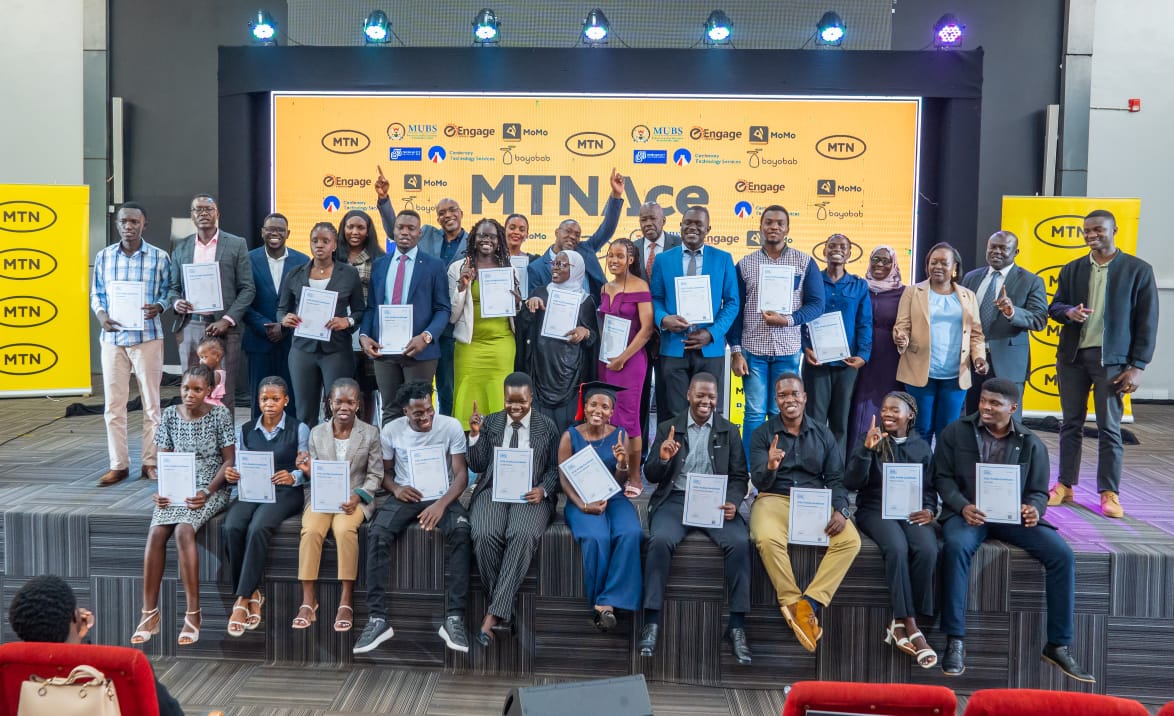
MTN Uganda has graduated 503 young people from its ACE digital-skilling programme, adding to efforts to build a workforce capable of supporting businesses and jobs as the country seeks to accelerate economic growth through technology.
The latest cohort brings the number of people who have completed the programme to more than 1,190, who consist of people with disabilities and refugees.
The graduates were trained through a hybrid learning model in computer and online essentials, digital marketing, e-commerce, cybersecurity and artificial intelligence. They are eligible to progress to the ACE Career & Enterprise track, which provides advanced digital and entrepreneurship training aligned with MTN’s Ambition 2030 strategy.
George William Egaddu, Chairperson of the Board of Trustees of MTN Foundation, said the MTN ACE programme was designed to help young people turn access to technology into economic opportunities.
“At MTN Foundation, we believe that investing in young people is an investment in Uganda’s future. Digital access creates the opportunity, but it is skills that enable people to turn that access into livelihoods, businesses and solutions,” Egadu said.
Uganda is targeting a tenfold expansion of its economy to $500 billion by 2040, with ICT, science, technology and innovation identified among the drivers of economic transformation under the Fourth National Development Plan.
The country’s demographics add urgency to the skills push. Three-quarters of Uganda’s population are below the age of 30, creating pressure to expand employment opportunities while giving the economy a large pool of potential workers and entrepreneurs.
“The opportunity before us is to ensure that our young population is equipped not only to participate in the digital economy, but also to shape it,” said Amos Mpungu, assistant commisioner, who represented permanent secretary, Dr. Aminah Zawedde, in the Ministry of ICT and National Guidance.
Mpungu said programmes such as ACE complemented government efforts to build a digitally empowered society in which young people can use technology to develop businesses, create jobs and address local challenges.
MTN Uganda said expanding connectivity would have limited economic impact without the skills required to use digital services productively.
The MTN Foundation receives 1% of MTN Uganda’s net profit for social investment and focuses on economic empowerment, education, health and humanitarian response.
In 2025, the Foundation invested more than Shs 5.1 billion in various programmes impacting more than 60,000 people across Uganda.
An independent assessment of Foundation economic empowerment projects implemented between 2022 and 2024 found that 88% of youth participants secured employment after training, while 93% reported improved business performance. More than 22 startups were supported.
The ACE programme now gives the latest graduates a pathway into more advanced digital and entrepreneurship training, with the focus shifting from acquiring basic skills to applying them in jobs, businesses and new ventures.