



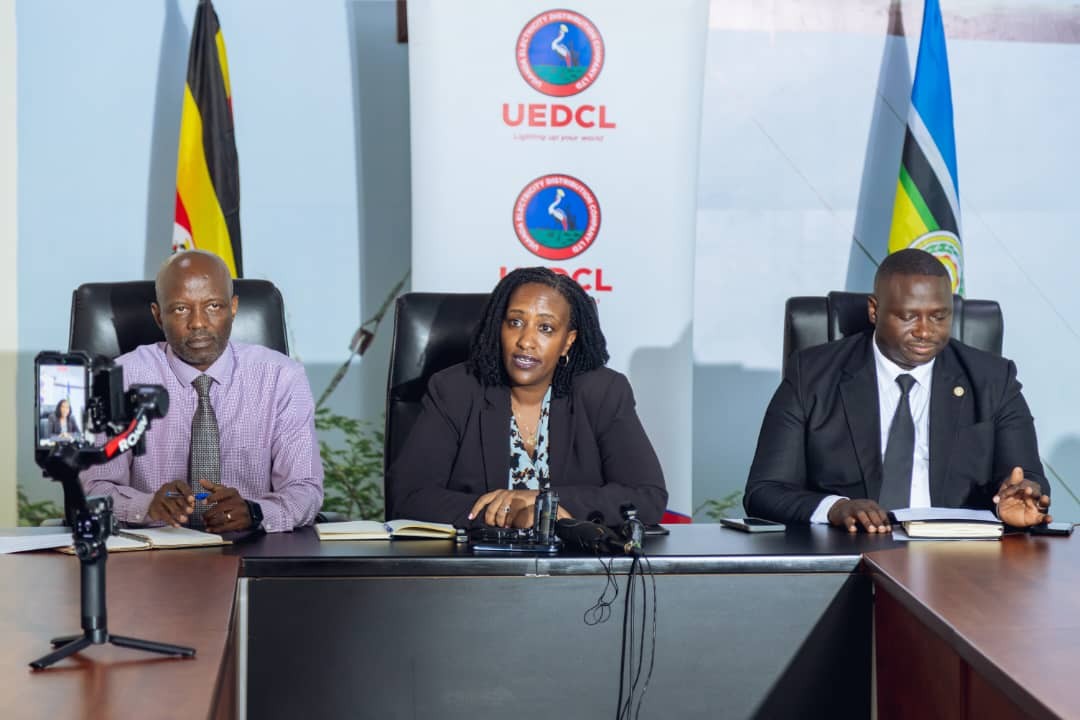
ELECTRICITY DISTRIBUTION (UGNEWSLINE) – Uganda Electricity Distribution Company Limited (UEDCL) has outlined measures being implemented to strengthen electricity supply and address infrastructure constraints amid rapidly growing demand.
UEDCL’s customer base has grown by approximately 71% over the past five years, from 1.64 million customers in 2021 to approximately 2.8 million today. This rapid expansion has placed increasing pressure on the electricity distribution network, particularly in areas where infrastructure investment and capacity expansion have not kept pace with growing demand.
Addressing the media during a press briefing in Kampala, UEDCL’s Acting Managing Director, Eng. Joselynne R. Rwabwogo, outlined targeted interventions being undertaken to address these constraints, alongside longer-term investments to strengthen the network.
“We are focusing on addressing capacity constraints in several priority areas. In Gayaza, for example, we have initiated work on an additional eight-kilometre electricity line that will allow us to transfer demand to a substation with available capacity. We are also working closely with UETCL on interventions to relieve pressure on the network along Masaka Road,” she said.
Other priority areas include Namugongo, the Gayaza corridor covering Nakwero, Kiwologooma, Kitukutwe, Kijabijjo and Busukuuma, and the Kakiri corridor, stretching from Kabulengwa to Wamala.
UEDCL has already implemented network improvements in Seeta, Bukerere, Kawanda, Mbarara and Bombo, addressing previous supply constraints and improving reliability. In Mubende, network reconfiguration reduced recorded outages from 12 in one month to three the following month, while emergency repairs to underground cables affecting Entebbe, Namasuba and Kisubi have been completed.
Eng. Rwabwogo explained that the company is prioritising immediate interventions to address the most pressing supply challenges while pursuing longer-term infrastructure improvements.
“Some of the challenges affecting electricity supply require significant infrastructure investment and cannot be resolved overnight. However, we are implementing targeted measures to address immediate constraints while working towards more sustainable improvements. We recognise the concerns customers have raised and remain committed to improving the reliability of the electricity they receive,” she said.
UEDCL is also strengthening its capacity to respond to faults affecting electricity supply by increasing the number of technicians supporting network operations and providing additional standby personnel when required.
During the year ending July 2026, the company replaced 1,110 distribution transformers, exceeding its target of 853. Average transformer replacement times also reduced from 38 days at the end of June to under 14 days by the end of August.
However, transformer availability remains a challenge as rapid growth in electricity connections has increased demand beyond the current production capacity of some local manufacturers supplying equipment under the Buy Uganda, Build Uganda (BUBU) framework.
To address this, UEDCL is improving procurement planning and exploring ways to increase transformer availability in the short term while supporting local manufacturers to expand their production capacity. This includes engaging the Public Procurement and Disposal of Public Assets Authority (PPDA) on supplementary sourcing options to ensure that essential equipment is available when needed.
These measures are intended to reduce delays in replacing faulty transformers and restoring electricity supply to affected customers.
The company is also undertaking preventive maintenance, including vegetation clearance and replacement of ageing equipment, while strengthening efforts to address vandalism and theft of electricity infrastructure.
UEDCL Chief Commercial and Operations Officer, Isaac Katewanga, highlighted measures being taken to address the backlog of electricity connections and improve customer service.
The company is addressing the inherited backlog of electricity connection applications, which was compounded by previous constraints in meter supply.
“We have sufficient meter supplies at the moment and are working closely with the Uganda National Bureau of Standards (UNBS) to accelerate meter testing and clearance. This is helping us make more meters available for installation and increase the number of customers being connected,” Katewanga said.
UEDCL connected approximately 80,000 customers over the past two months and is working towards increasing monthly connections to 50,000 by December.
Katewanga added that the company is also strengthening coordination between its commercial, customer service and technical teams to reduce delays in processing applications and resolving customer concerns.
These measures include increasing frontline customer service capacity and improving communication between technical teams and customer support channels to ensure customers receive clearer updates on reported faults and restoration efforts.
UEDCL has identified an estimated USD 994 million in infrastructure investment requirements over the next five years to expand electricity access, improve network reliability and modernise ageing infrastructure.
This includes approximately USD 107 million identified for priority projects through December 2027, focusing on network rehabilitation and capacity expansion.
Eng. Rwabwogo emphasised that strengthening electricity distribution infrastructure will be essential to supporting Uganda’s growing energy needs and the country’s Tenfold Growth Strategy.
“Reliable electricity is essential to supporting industrial growth, healthcare, agriculture, businesses and households. As demand continues to increase, our responsibility is to strengthen the distribution network while improving the quality of service customers receive,” she said.
The return of electricity distribution to public management presents a unique opportunity for Uganda to bolster local technical expertise and reinvest resources into infrastructure improvements. This shift has already resulted in tangible benefits for consumers, including a reduction in the end-user electricity tariff from approximately UGX 486 to UGX 396 per unit, a decrease of nearly 19%.