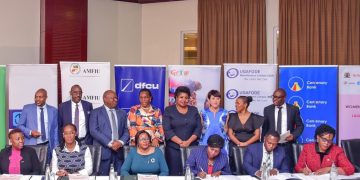



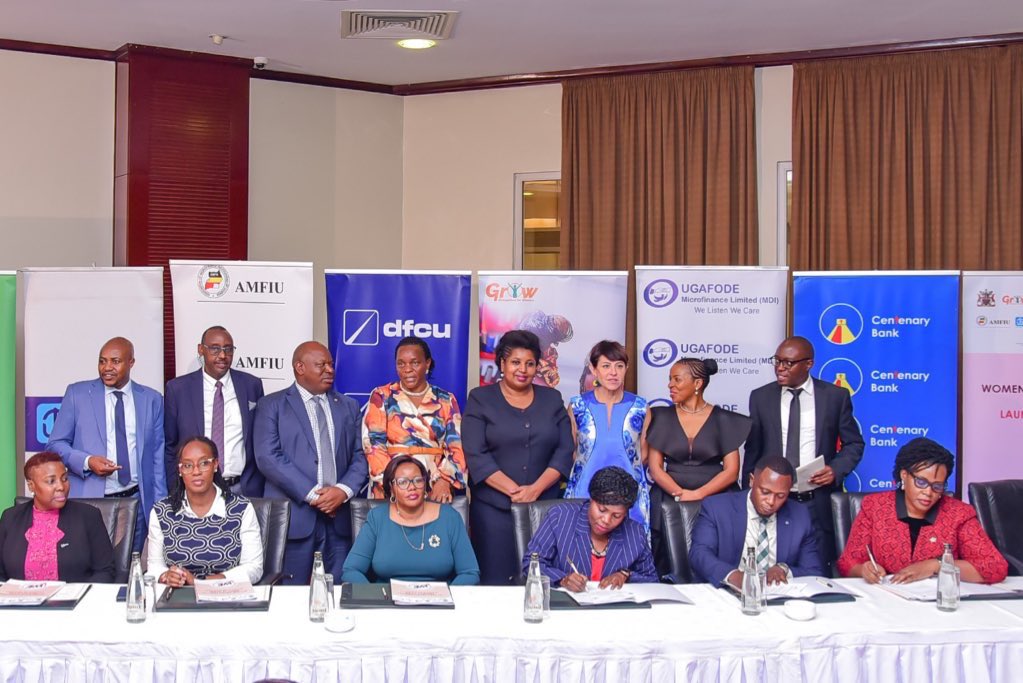
KAMPALA,Uganda : The Government of Uganda has launched the Women Entrepreneurs Finance Code (WE Finance Code), a national initiative aimed at expanding women’s access to affordable finance, strengthening financial inclusion, and accelerating the growth of women-owned businesses. The launch took place at the Serena Hotel in Kampala.
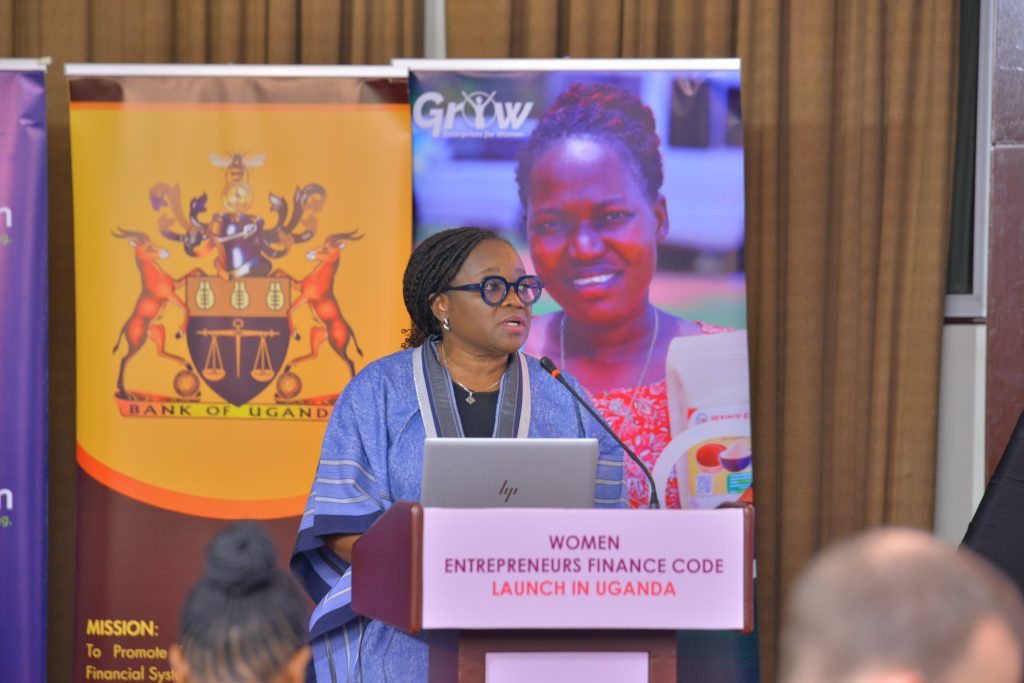
Speaking at the event, the Minister of State for Gender and Culture, Hon. Peace Regis Mutuuzo, urged financial institutions to make women’s access to finance a core strategic priority, rather than a side initiative. She emphasized that with women making up 52% of Uganda’s population, supporting women entrepreneurs is a direct pathway to reducing poverty and driving national development.
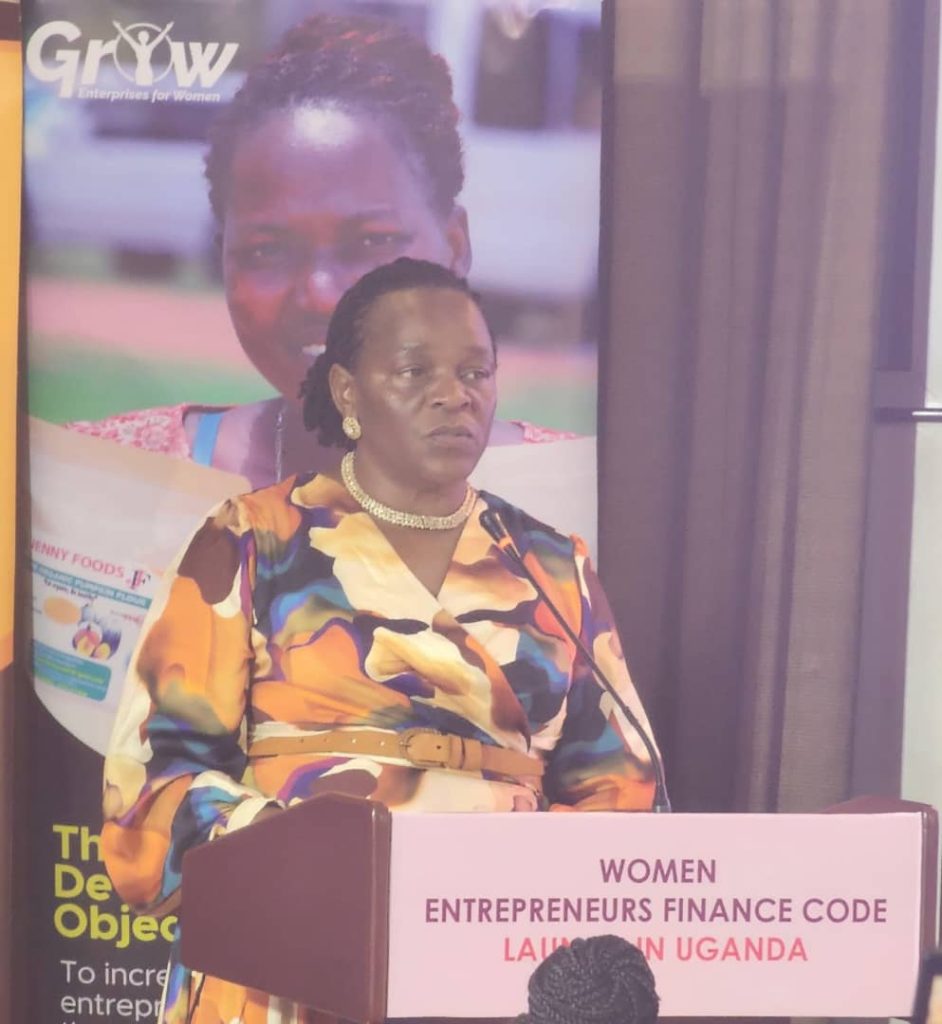
Mutuuzo called on financial institutions to design innovative financial products, including not only credit facilities but also financial literacy programs, business development support, and alternative forms of collateral.
She further encouraged government agencies to continue removing barriers to women’s economic participation by streamlining regulations, easing access to markets and technology, and promoting the formalization of women-owned enterprises.
The Minister also highlighted the importance of digital inclusion, urging women entrepreneurs to embrace technology and platforms such as TikTok to market their enterprises. She encouraged women to take advantage of the opportunities presented by the WE Finance Code to acquire financial resources, build skills, and expand their businesses with confidence.
The Ministry of Gender, Labour and Social Development, she noted, remains committed to integrating gender-inclusive metrics into financial sector reporting, regulation, and product design.
Global Stakeholders Welcome the Initiative
Ms. Francisca Ayodeji Akala, World Bank Country Manager for Uganda, hailed the WE Finance Code as a major step forward for the International Finance Corporation (IFC).
In her remarks, Ms. Francisca Ayodeji Akala, said “ it is a great pleasure to join you for the launch of the Women Entrepreneurs Finance Code in Uganda.” She noted that the event represents a major milestone in the collective effort to expand access to finance for women-led enterprises, strengthen the financial ecosystem, and accelerate inclusive economic growth.
She emphasized that around the world, governments, regulators, and financial institutions increasingly recognize that women’s economic empowerment is not a peripheral issue, it is central to development, prosperity, and sustainability. When women thrive in business, economies grow faster, families become healthier, and communities are more resilient. Yet globally, women entrepreneurs continue to face significant barriers to accessing affordable credit and customized financial services.
According to the International Finance Corporation, women-owned small and medium enterprises face a financing gap estimated at more than US$1.7 trillion worldwide.
She noted that the Women Entrepreneurs Finance Code launched at the 2023 World Bank–IMF Annual Meetings in Marrakech—was designed to directly address these barriers. The WE Finance Code is a global, data-driven initiative that unites financial service providers, regulators, policymakers, and development partners under a common framework. It promotes the collection, analysis, and use of sex-disaggregated data to understand how women are being served and to identify persistent gaps.
“To date, more than 350 financial institutions across over 30 countries—including Kenya, Rwanda, Nigeria, Senegal, and Morocco—have joined the Code. Each has committed to taking measurable steps to expand financing for women-led businesses. Uganda’s launch today adds a strong and influential voice to this global coalition for financial inclusion.” She said.
Uganda is well positioned to lead, she said that “Women drive much of the country’s entrepreneurial energy, owning or leading more than half of Uganda’s 2.5 million enterprises—one of the highest rates in Africa. Yet only one in four of these businesses currently has access to formal credit. Many women entrepreneurs still depend on personal savings, informal borrowing, or short-term, high-interest loans. In Uganda, the average loan size for women-led MSMEs ranges from US$280 to US$2,800, often at interest rates as high as 22 percent.”
These figures tell a compelling story—not of weakness, but of vast untapped potential. Closing Uganda’s gender financing gap could generate an additional US$277 million in revenue for the financial sector, with 90 percent coming from women-led enterprises. The opportunity is clear and substantial.
The Government of Uganda has already established a strong policy foundation for inclusive finance through the National Financial Inclusion Strategy (2023–2028).
The WE Finance Code builds on this progress by providing a structured and transparent framework for collaboration—aligning data systems, targets, and accountability measures to ensure that women-led MSMEs can grow and succeed.
Ms. Akala emphasized that this initiative goes beyond expanding access to finance. “This is not just about financial inclusion; it is about transforming Uganda’s growth story so that women and men have equal opportunity to contribute to and benefit from the economy,” she said.
She noted that the World Bank’s engagement in Uganda reflects a deep commitment to this vision. Gender equality is not simply a cross-cutting theme but a core pillar of the World Bank’s development strategy. She also thanked the Argidius Foundation for funding Phase 1 of the WE Finance Code readiness and setup. Through the GROW Project—Generating Growth Opportunities for Women Enterprises—the Bank continues to work closely with the Ministry of Gender, Labour and Social Development and other partners to advance this agenda.
“Ladies and gentlemen, today’s launch marks the beginning of a new journey. The Women Entrepreneurs Finance Code is a collective commitment to use evidence and partnership to dismantle the systemic barriers limiting women’s participation in the economy. The shared responsibility is to ensure that every woman entrepreneur—whether in Kampala, Gulu, or Kabale—can access affordable, flexible, and appropriately designed financial services,” she noted.
Data must guide decisions. Institutions must be accountable for their commitments. And progress must be tracked and celebrated.
“The World Bank will continue to work with the Government of Uganda, the Bank of Uganda, PSFU, and all partners to ensure that the WE Finance Code delivers real and measurable impact. When a woman entrepreneur succeeds, her community prospers—and when communities prosper, nations rise,” she concluded
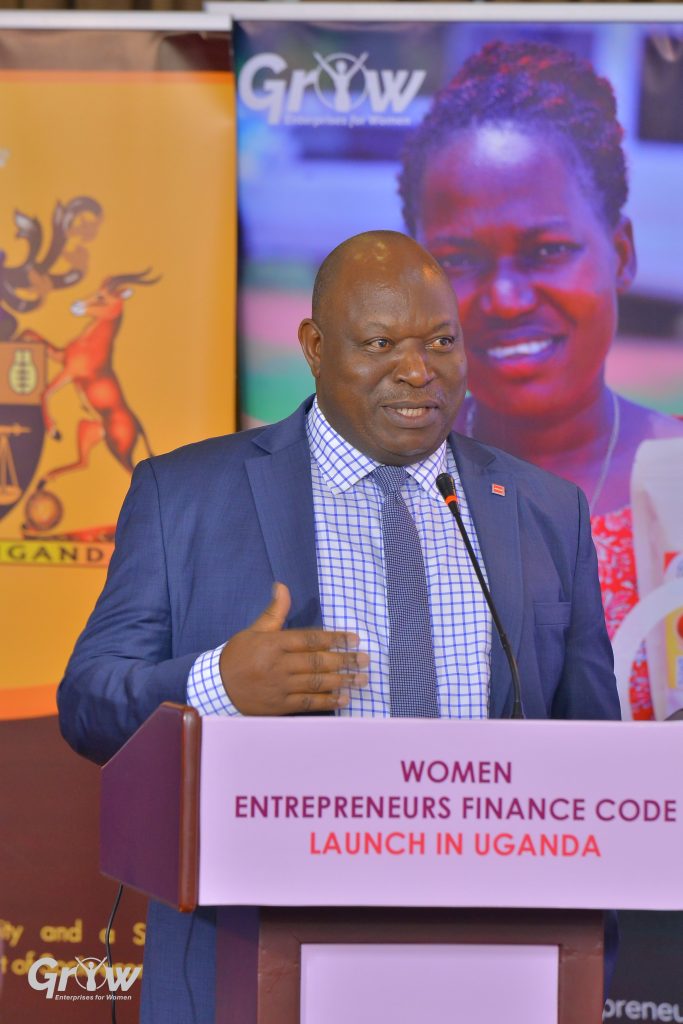
Byarugaba highlighted government interventions including the GROW Project, Agricultural Credit Facility, Small Business Recovery Fund, and Parish Development Model that have expanded financial inclusion, helping raise Uganda’s inclusion rate to 81% in 2023, with a narrow gender gap of just 2 percentage points.
He also pointed to new models such as the Broker Location Model, which allows women and small enterprises to borrow up to UGX 20 million without collateral, significantly easing access to affordable credit.
Women-Owned Businesses: A Major Untapped Economic Force
Women-owned or led enterprises account for 1.32 million businesses, representing 52% of all enterprises in Uganda, yet only a quarter currently access credit. According to financial sector projections, expanding credit to women-owned SMEs could generate an additional USD 277.6 million in financial-sector revenue nearly 90% of which would come directly from women-led businesses.
About the WE Finance Code
First launched globally in October 2023 during the World Bank–IMF Annual Meetings in Marrakech, the WE Finance Code is now implemented in over 30 countries, including Kenya, Rwanda, Nigeria, Tanzania, Senegal, and Egypt, with more than 350 financial service providers signed on.
In Uganda, the Code will;
Strengthen national and institutional leadership on women’s financial inclusion, Improve collection and use of sex-disaggregated data on financing for women-led enterprises, Drive coordinated public-private actions to close financing gaps for women ententrepreneur
Further, the initiative aims to embed gender-sensitive principles into financial regulation, national financial inclusion strategies, and digital infrastructure—ensuring women-led MSMEs can access the capital they need to grow.