



An international human rights organization has raised concerns before the United Nations Human Rights Council over what it describes as growing discrimination and stigma against members of the Shincheonji Church of Jesus in several countries.
The Shincheonji Church of Jesus, the Temple of the Tabernacle of the Testimony, announced on July 9 that the international human rights organization CAP LC (Coordination des Associations et Particuliers pour la Liberté de Conscience) submitted a joint written statement to the U.N. Human Rights Council highlighting concerns about the treatment of the church and its members.
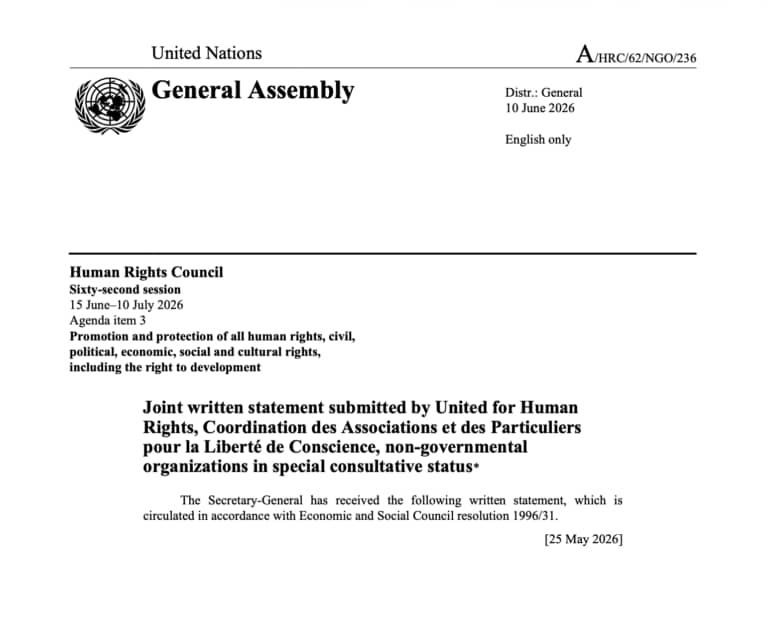
Rather than focusing on the church itself, CAP LC emphasized the standards used by governments and institutions when assessing cases involving religious groups. The organization warned that negative perceptions and unverified information originating in South Korea could influence public opinion abroad and affect administrative and judicial decisions in other countries.
The group urged governments to ensure that any decisions concerning the Shincheonji Church of Jesus are based on verifiable evidence and established legal standards.
According to the church, the statement highlights broader concerns that allowing unverified claims to shape public policy could expose other religious minorities to similar treatment. It stressed that governments have a responsibility to safeguard the rights of all religious communities.
CAP LC, which holds Special Consultative Status with the U.N. Economic and Social Council (ECOSOC), has previously raised international concerns regarding religious freedom, including the treatment of the Church of Almighty God in China and issues surrounding Japan’s request for the dissolution of the Unification Church, officially known as the Family Federation for World Peace and Unification.
The church said the involvement of such an international organization demonstrates that concerns surrounding Shincheonji have attracted attention beyond South Korea and are increasingly being viewed through the lens of international human rights standards.
Discrimination Reported in Several Countries
The statement also cited cases in the United Kingdom and German-speaking countries, alleging that negative perceptions of Shincheonji members have resulted in administrative actions and social discrimination.
In the United Kingdom, CAP LC noted that the Charity Commission rejected the church’s application for charitable registration after describing it as a “cult.” The organization argued that using such terminology without a clear legal definition in official administrative processes can reinforce social stigma.
In Germany and other German-speaking countries, the statement claimed that some church members have experienced workplace discrimination linked to negative publicity from certain media outlets and church figures. CAP LC also referred to a book published in 2025 by evangelical activists, which it said contributed to the spread of negative perceptions.
The Shincheonji Church said these incidents demonstrate that unverified claims can have practical consequences for members in their workplaces, families and communities. It reiterated its call for administrative and judicial decisions to rely on objective evidence and clear legal standards.
Concerns Over South Korea Investigation
The statement also addressed developments in South Korea, where investigations involving church members’ political party memberships are ongoing.
CAP LC criticized suggestions by some political groups that the participation of Shincheonji members in political parties amounts to inappropriate collaboration between religion and politics. The organization argued that membership in a religious group should not, on its own, be grounds for suspicion regarding political participation.
It called on the South Korean government to uphold freedom of religion, non-discrimination and the principle of state neutrality toward religion.
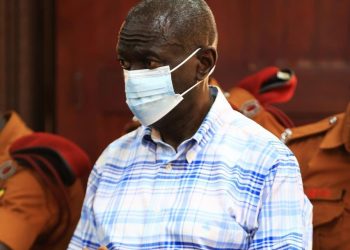
The investigations have also involved Shincheonji Chairman Lee Man-hee. A court issued an arrest warrant on June 24, citing concerns including the possible destruction of evidence. He was later indicted while in detention on June 29 on charges that include alleged violations of the Political Parties Act.
While the legal proceedings remain before the courts, the Shincheonji Church maintains that the case should be determined through due process and objective evidence rather than public opinion or political controversy.
The church also questioned the necessity of Lee’s continued detention, noting that he is 95 years old, has cooperated with investigators, and that key evidence has already been secured through searches and seizures.
According to the church, both the reported discrimination abroad and the ongoing investigation in South Korea raise broader questions about how governments and judicial authorities should treat religious minorities.
It said the issue extends beyond a single religious organization and reflects the broader commitment of states to uphold equal protection, due process and internationally recognized human rights standards for all religious communities.