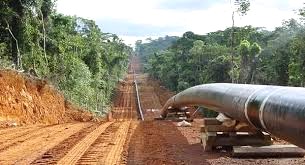



Uganda is gearing up for a potential economic breakthrough as the country prepares to bring its western oil and gas fields into commercial production, a milestone expected to fuel double-digit growth from 2026.
President Yoweri Museveni expresses optimism, highlighting that the first commercial oil output could transform Uganda’s economic trajectory.
Oil and gas development is one of four strategic pillars of Uganda’s long-term plan to expand the economy tenfold, from about $50 billion today to $500 billion by 2040. The other pillars are agro-industrialization, tourism, and science, technology, and innovation.
The Bank of Uganda boss, Michael Atingi-Ego, told journalists at a presser last year, that prudent management of oil revenues could be transformative.
“Oil revenues should be used to finance human capital, infrastructure, and institutions, assets that endure long after the oil has been depleted. This is how we turn finite resources into infinite possibilities,” he said.
The World Bank echoed this positive outlook in its latest Uganda Economic Update, noting that growth is expected to accelerate as oil production ramps up in the 2026/2027 financial year, with substantial revenue gains in the following year.
Despite global economic headwinds, Uganda’s economy recorded robust and broad-based growth in 2024/2025, supported by strong domestic demand and solid performance across agriculture, tourism, industry, and services. Inflation remained below the central bank’s 5 percent target, the shilling was stable, and exports of coffee and gold strengthened the country’s external position. The World Bank reported that real GDP rose to 6.3 percent in 2024/2025, up from 6.1 percent the previous year.
Government projections are even more ambitious. In the National Budget Framework Paper for 2026/2027–2030/2031, the Ministry of Finance forecasts growth of 10.4 percent by the end of 2026/2027, up from an estimated 6.6 percent in 2025/2026. Officials expect oil production to generate significant revenue and boost productivity across sectors, lifting the economy from over $70 billion to more than $81 billion within a year.
Sustained growth is also projected to reduce poverty. The World Bank noted that poverty declined in 2024/2025 and is likely to continue falling in 2026 and 2027 if current trends hold.
However, the bank cautioned that rising fiscal pressures, including a widening deficit and increasing debt-servicing costs, require careful fiscal consolidation to ensure long-term economic stability.
With the first barrels of oil set to flow soon, Uganda stands at a pivotal moment, with the potential to turn natural resources into lasting prosperity.