



As the ruling National Resistance Movement (NRM) tribunal starts to release its verdicts on contentious parliamentary primary disputes, the party faces growing internal unrest.
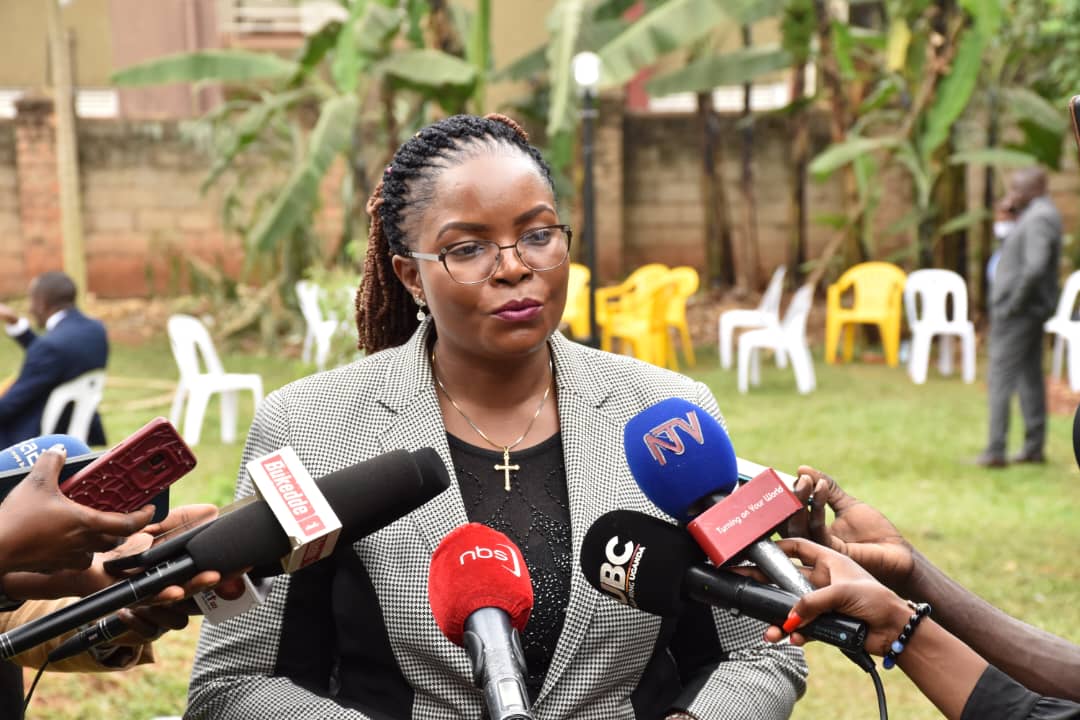
At the center of this crisis is State Minister for Housing, in the Ministry of Lands, Housing and Urban Development, Princess Persis Namuganza, who has publicly threatened to run as an independent if the party’s electoral tribunal fails to address her grievances.
Her warning is more than personal, it’s symptomatic of deeper fractures within the NRM’s internal electoral machinery.
Namuganza, who was contesting for the flag of Bukono County seat in Namutumba District, claims her primary loss was the result of a flawed and chaotic process.
She alleges that tallying never occurred at the designated center, that her agents were assaulted and chased away, and that Declaration of Results (DR) forms were either missing or manipulated.
Further, she implicates NRM Electoral Commission chairperson Dr. Tanga Odoi in the abrupt halting of the process, raising questions about procedural integrity and transparency.
“The tribunal must go on ground and see for themselves,” Namuganza urged, hinting at a wider distrust of the internal mechanisms designed to resolve such disputes.
This plea is not isolated. Across multiple constituencies, candidates have alleged vote rigging, ballot stuffing, ghost polling stations, and intimidation tactics.
Namuganza is just among the 381 petitioners who presented their cases before the tribunal from July 29, 2025 to August 5, 2025 for the parliamentary aspirants.
All these petitioners are challenging the results and want the tribunal to declare them winners or hold fresh primaries.
What emerges is not just a pattern of isolated disputes, but a systemic credibility crisis threatening the legitimacy of the NRM’s internal democratic processes.
A litmus test for NRM cohesion
The NRM’s tribunal, under the Legal Affairs Directorate headed by Enoch Barata, urged all petitioners and respondents to respect the verdicts of the tribunal, defending the process being transparent, inclusive, and fact-driven to resolve disputes fairly.
The verdicts are to be released starting this week for the parliamentary petitioners, with 56 rulings per day.
He explained that the tribunal is more than a technical adjudication body, it is a political safety valve meant to preserve unity within the party ranks.
“The NRM takes its democracy in absolute terms, it takes its pursuit for justice in absolute terms. Even when it may appear flimsy, if a member has a grievance arising out of an election, we will listen,” Barata said.
He encouraged members to view the process not as harassment or punishment, but as a necessary dispute resolution mechanism designed to protect the party’s long-term cohesion.
Barata expressed concern over candidates issuing threats to go independent, saying that in an election, there can be only one winner and there has to be a loser.
The tribunal’s real challenge lies in demonstrating impartiality, transparency, and a willingness to confront the structural weaknesses exposed during these primaries.
Namuganza’s ultimatum, to run as an independent if the tribunal fails to deliver justice, underscores the stakes.
Her threat reflects not only personal frustration but a broader sense of disenfranchisement among candidates who believe the party has failed to protect internal democracy.
While she maintains faith in the process “for now,” her tone suggests conditional loyalty, a position shared by many others waiting to see if the tribunal can restore confidence.
Justice or justification?
The tribunal now sits at a crossroads: either it affirms its credibility by addressing valid grievances, or it risks becoming a mechanism for rubber-stamping predetermined outcomes.
Should the tribunal be perceived as partial or ineffective, the likely fallout is a wave of defections, independent candidacies, and internal fragmentation ahead of the 2026 general elections.
There is also the risk of escalating public disillusionment. If voters see the party’s internal processes as compromised, they may question the NRM’s broader governance ethos.
This, in turn, could embolden opposition forces, both within and outside the party.
Can the tribunal defuse the crisis?
The NRM tribunal’s ability to de-escalate tensions will depend not only on the technical soundness of its rulings but also on its perceived independence and responsiveness to genuine electoral malpractices.
It must go beyond legalism and engage in political damage control, offering reconciliatory pathways to aggrieved candidates without appearing partisan.
Namuganza’s case has become a flashpoint, not just for Bukono County but for the broader health of the NRM’s internal democracy.
If her concerns, and those of others, are dismissed without transparent due process, the tribunal risks becoming a catalyst for more fragmentation rather than cohesion.
In the end, the tribunal’s rulings will do more than settle who holds the party’s flag.
They will determine whether the NRM can still govern itself.
Internal-democracy: should the NRM rethink its primary system?
Political analysts are beginning to ask deeper questions: is the problem with the candidates, the process, or the system itself?
One emerging view suggests that the NRM’s mass party primary model, where all card-holding members vote to select candidates, may be inherently prone to manipulation, chaos, and logistical failure.
Some political observers are now proposing a shift toward a more controlled and streamlined process: a vetting committee model, where a select group of party officials or elders screens and endorses candidates based on merit, credibility, and loyalty, a method currently used by some opposition parties.
Proponents argue this model could reduce the incidence of voter bribery, intimidation, and ghost polling stations, all of which have marred the NRM’s recent primaries.
With fewer moving parts and clearer oversight, such a system, they argue, could ensure more competent and credible candidates are selected, without tearing the party apart every election cycle.
However, this proposal is not without criticism, and raises fundamental questions about internal democracy and accountability.
Critics of the vetting model used by some political parties, warn that it risks replacing mass manipulation with elite imposition.
Party primaries are crucial
Jeff Andrew Lule, a seasoned political writer and analyst, with “The New Vision”, Uganda’s leading government-owned newspaper, who has been covering these elections, contends that stripping party members of the right to vote for their preferred flagbearers undermines the very essence of democratic participation.
“Excluding grassroots participation undermines the fundamental principles of democratic engagement within political parties,” he noted.
“Constituencies do not belong to political parties,” he asserted in a phone interview with this publication.
“It’s akin to someone entering your home and dictating who your heir should be or what you must eat. It’s simply unacceptable,” he said.
He emphasized that beyond the electoral outcome, internal primaries foster a sense of belonging among party members by involving them in the critical process of selecting leaders of their choice for various reasons to represent them at various levels.
While acknowledging the potential efficiency of vetting committees, Lule warned that these mechanisms often concentrate power in the hands of a few individuals, making the process vulnerable to gatekeeping, favoritism, and elite capture.
“We’ve heard allegations, especially in opposition parties like the National Unity Platform (NUP), of candidates being favored by party leaders or required to pay large sums of money to secure nominations. These claims may be difficult to prove, but the lack of transparency only fuels public suspicion,” he noted.
He argued that shifting candidate selection from the grassroots to party headquarters risks alienating local communities and diminishing voter enthusiasm.
Lule noted that all political parties must adopt NRM’s methodology of selecting flag bearers. He added that for a party like the NRM, which positions itself as a broad-based, people-centric movement, adopting a more exclusive selection model could erode its credibility and contradict its core narrative.
Strengthen the process
He advised the ruling NRM to focus on strengthening mechanisms. “The NRM is on the right track with its open participation model but the system lacks the institutional integrity to safeguard the process,” he said.
He pointed to persistent issues such as vote rigging, voter intimidation, manipulation of registers, and altered tally sheets as key sources of internal disputes.
To restore confidence in party primaries, he recommended reforms including enhanced voter registers, real-time digital tallying, independent oversight, and stricter enforcement of internal electoral laws.
“Many NRM members are losing trust in the process, as seen in the growing number of petitions. Without these reforms, both the open primaries and vetting-based models remain susceptible to abuse. Incumbents and entrenched actors will manipulate open elections, while elites may impose candidates through vetting,” he explained.
While acknowledging that internal tribunal decisions may temporarily resolve specific disputes, the political journalists warned that unless broader systemic reforms are implemented, deeper fractures within the party will remain, and likely to worsen, ahead of the 2026 general elections.