


Uganda will on October 25th, 2025 join the rest of the world in observing International Dwarfism Awareness Day, with a strong call to raise awareness, combat stigma, and advocate for the full inclusion of Little Persons in society.
The national celebrations, themed “Raising Awareness about Dwarfism and Promoting Inclusion of Little Persons in Uganda,” will take place at Kampala School for the Disabled in Mengo.
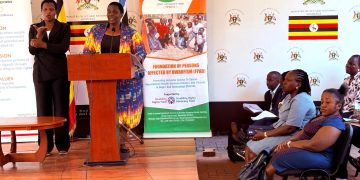
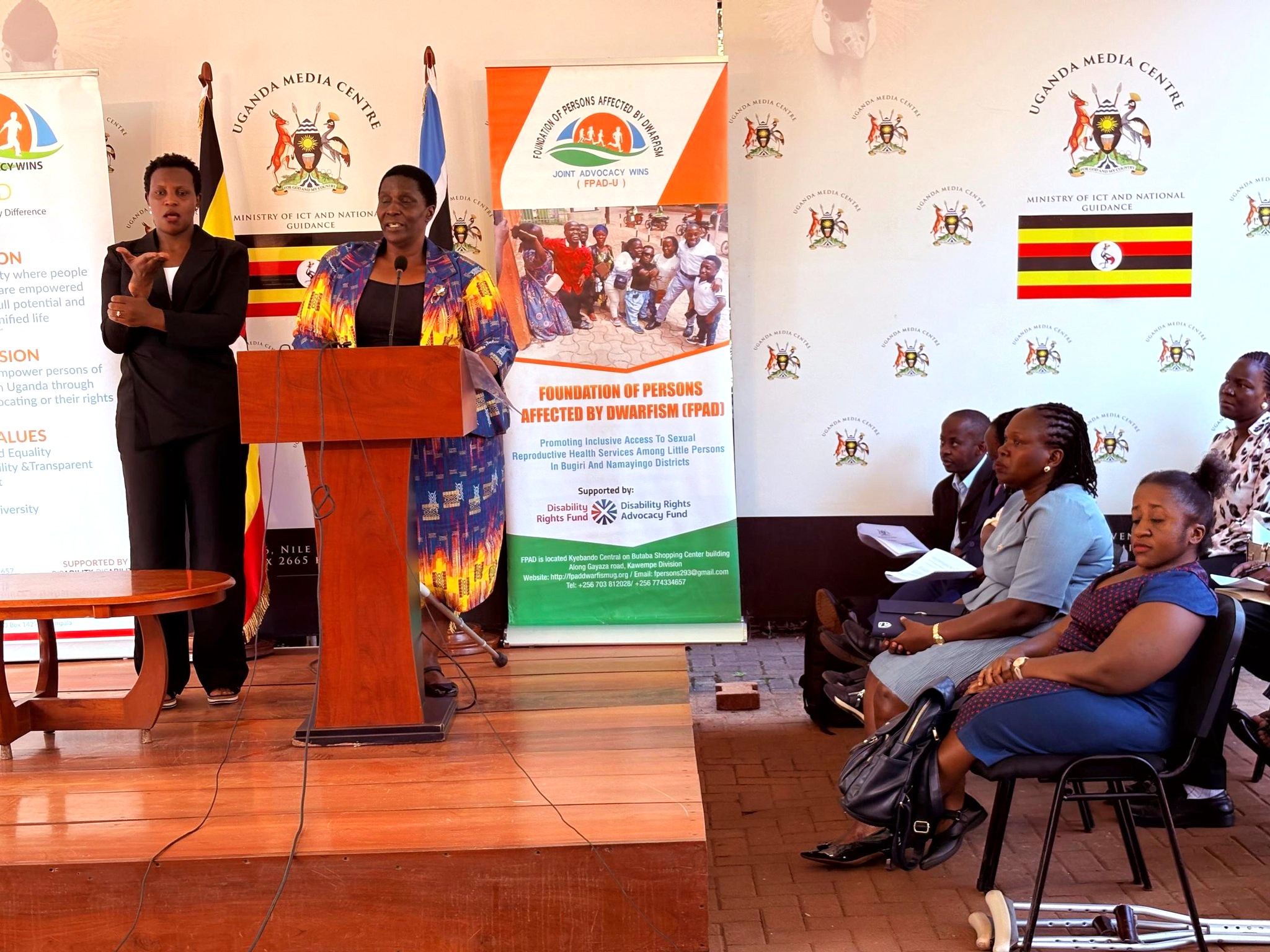
Addressing the journalists at the Uganda Media Centre in Nakasero, Kampala, Hellen Grace Asamo, Minister of State for Disability Affairs, delivered a compelling statement that both celebrated progress and highlighted the persistent challenges faced by Little Persons in Uganda.
“This day is not just about recognition, it is about justice, dignity, and visibility,” Asamo said.
“It is about acknowledging the humanity and capability of persons with short stature, and reaffirming our national commitment to leave no one behind,” she added.
Globally, Dwarfism Awareness Day is an opportunity to educate the public about conditions such as achondroplasia, a genetic disorder affecting bone growth, often resulting in short stature.
Uganda, according to the 2024 National Population Statistics, is home to over 194,000 Little Persons aged 18 and above.
Despite legal protections, most still struggle with systemic neglect, social stigma, and physical inaccessibility.
Asamo didn’t shy away from exposing the everyday barriers Little Persons face, from being refused entry on public transport, to being mocked in schools, ignored in courtrooms, and misjudged in hospitals.
“In some churches, adults with dwarfism are sent to Sunday school simply because of their height,” she noted, highlighting the social infantilization that still haunts this community.
She stressed that much of the struggle faced by Little Persons is embedded in the built environment.
Infrastructure, she explained, is largely designed without consideration for those with short stature, citing walkways, public transport, and even medical examination tables which often disregard their specific needs.
She noted that elevators with high buttons, ATM machines, and biometric scanners placed out of reach add to the list of everyday obstacles.
The minister also noted that improper medication dosages, lack of trained specialists, and assumptions made by healthcare workers create serious risks for the Little People.
For Little women, especially, childbirth becomes a life-threatening experience due to poorly designed maternity facilities and deep-rooted myths about their reproductive health.
Classrooms with desks too tall, blackboards too high, and teachers who tolerate bullying contribute to feelings of exclusion and alienation.
“Even a simple school notice board becomes inaccessible,” the minister said. “It sends a message: you don’t belong here.”
Much to do
However, Asamo noted that the Persons with Disabilities Act (2020) recognizes Little Persons as a distinct disability category, and Uganda has ratified the UN Convention on the Rights of Persons with Disabilities.
She noted that government initiatives such as the National Special Grant for Persons with Disabilities, and the Parish Development Model (PDM), have begun allocating funds specifically for this group.
She said shs50m have already been earmarked for a national SACCO (Savings and Credit Cooperative) for Little Persons, while inclusive education policies and healthcare reforms are being developed to address gaps.
But she noted that many driving schools reject learners with dwarfism, citing the need for customized vehicle modifications.
She said affirmative action remains underutilized, and legal provisions are rarely enforced.
“There is a difference between writing the law and living it. What we need now is deliberate, sustained enforcement and awareness to make inclusion a lived reality,” Asamo stressed.
A Culture Shift Begins
Perhaps the most difficult barrier to dismantle is the one rooted in culture. Harmful myths, linking dwarfism to witchcraft or viewing Little Persons as objects of entertainment, persist, particularly in rural areas.
These stigmas often result in social isolation, mental health struggles, and discrimination even in spaces meant to be safe, like homes, churches, and schools.
The minister said the ministry’s efforts are now focused on shifting societal attitudes alongside structural reforms.
Awareness campaigns, school sensitization programs, and partnerships with organizations like the Foundation of Persons Affected by Dwarfism (FPAD) are part of a broader strategy to challenge the misconceptions that continue to harm Little Persons in Uganda.
Asamo called on all stakeholders, government ministries, civil society, the media, and the general public, to take part in the movement for change.
She urged stronger enforcement of existing laws, improved data collection, and more active involvement of Little Persons in policy-making processes.
“Disability is not inability,” she emphasized. “When we remove the barriers, when we build a world where every person has access, dignity, and voice, we do not just empower Little Persons, we strengthen our entire nation.”
The celebration will include educational sessions, cultural exhibitions, panel discussions, and the launch of an informative booklet on dwarfism, designed to dispel myths and promote inclusion.
Asamo noted that every citizen, no matter their stature, deserves a place at the table, equal in rights, dignity, and opportunity.