


When discussions about Western Uganda’s cuisine arise, attention often settles on well-known delicacies such as eshaabwe and karo (millet paste/bread). Yet beyond these familiar flavors, deep in the rural landscapes of Tooro, exists a rare traditional dish that few outsiders know and even fewer have tasted.
Quietly preserved through generations, this delicacy reflects patience, skill, and cultural identity. Known as Enkuru, it is a unique dish prepared from cattle hides, an unusual yet deeply meaningful food that continues to intrigue first-time visitors and adventurous food enthusiasts alike.
As the saying goes, travelling is discovering. That truth revealed itself during my recent journey through Ibanda, Kamwenge and Kitagwenda districts.
While strolling through a quiet village in Kitagwenda district, I noticed an unusual scene: villagers emerging from their homes and rushing to the roadside, eager and excited.
At the centre of the commotion stood a trader carrying a basket filled with circular, pancake-like pieces. Curiosity got the better of me.
The items were selling fast, each piece going for Shs300 or Shs500 depending on size. Within moments, everything was gone, leaving some buyers disappointed. The seller promised to return after three days.
Determined to know what had caused such excitement, I approached the trader, only to discover that he was not just a seller, but the very maker of the delicacy.
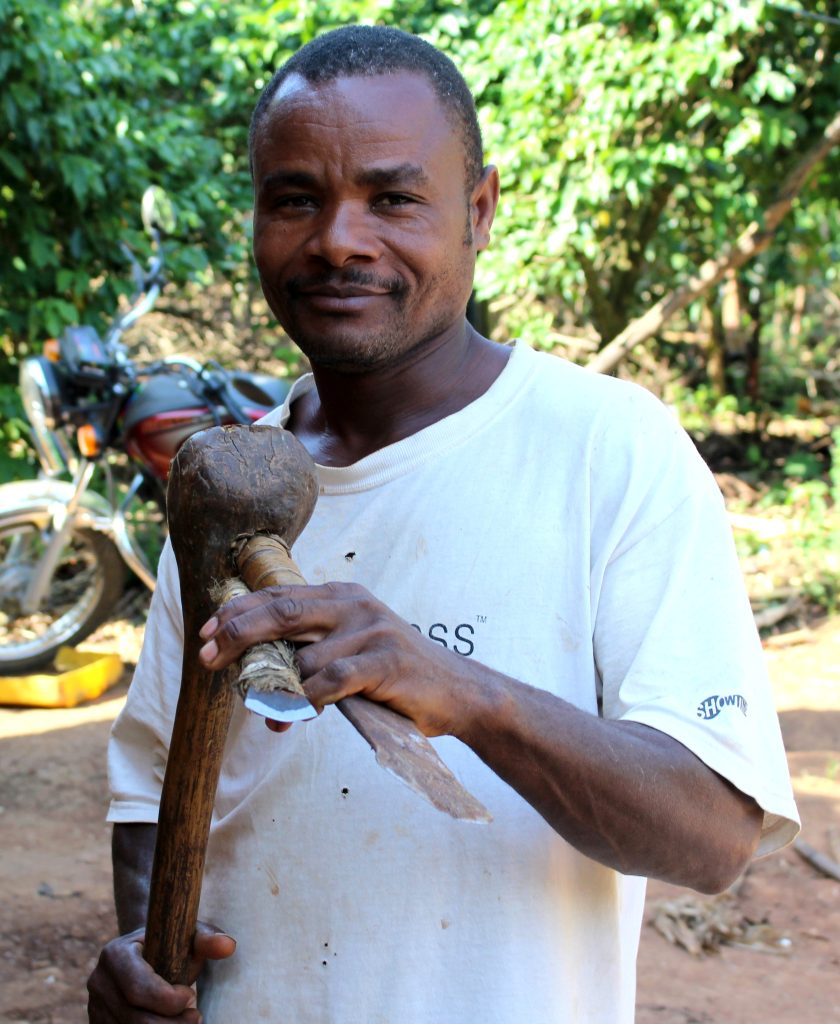
Elisa Kiiza, 56, a resident of Kakyenge Village in Kantuji Parish, Kicece Sub-county, has been making Enkuru for the past 16 years. Calm, confident and deeply proud of his craft, Kiiza explains that Enkuru is a treasured dish among the Batooro of Tooro Kingdom, though it has gradually spread to other parts of greater Western Uganda.
From raw hide to respected cuisine
Enkuru begins its journey from fresh cattle hides. Kiiza explains that immediately after slaughter, the hides are stretched tightly on a tarp and left under the sun for three days to a week.
The aim is to dry the remaining flesh and fats so that the hide doesn’t rot or tear during the rpocess of scraping.
Unlike some learners who soak hides in water to soften them, a practice Kiiza strongly discourages, he insists on sun-drying. “Water affects the quality. It causes rotting and a bad smell, which ruins the final product,” he adds.
Once properly dried, the hide is moved to a special place known as eihaaro. Here, it is stretched vertically on a wooden rack to begin the scraping process, locally called okuhara.
Using sharp, specially made tools known as empango (like an axe), Kiiza carefully scrapes off the remaining dried flesh and fats.
The tools, he explains, must be crafted by skilled local blacksmiths to work effectively. “The hide must be tightly stretched. If you’re not strong enough or careless, you won’t get the results you want,” he notes.
Cleanliness is treated with the seriousness of a professional kitchen. Before scraping, Kiiza thoroughly washes his feet, and clean mats and skins are spread beneath the hide to collect the scrapings.
“This is food,” he says firmly. “No one is allowed near my workspace. Customers wait until I am done. If your food is bad, you lose customers.”
The scraping alone takes between two and three hours.
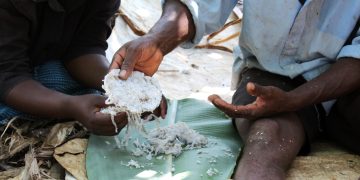
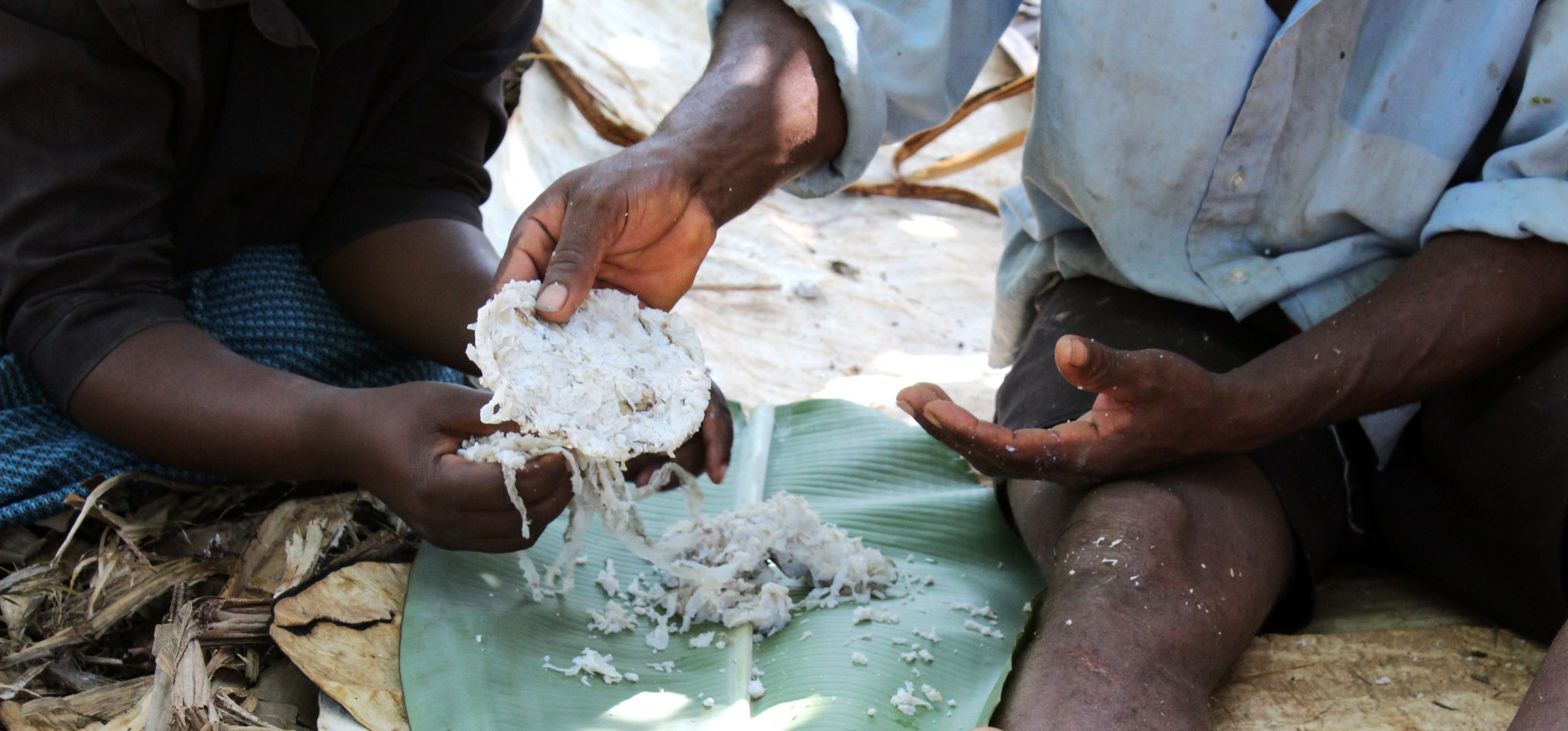
After scraping, the material is soaked in water for about an hour, then baked into pieces, often with help from his wife and children. The pieces are later dried and sold the following day.
To prepare Enkuru, Kiiza explains, it is first boiled like beef for 15 to 25 minutes. After that, it can be cooked with groundnuts or enriched with eshaabwe. The dish is best enjoyed with karo, making it a perfect companion to Western Uganda’s most beloved staple.
From a single hide, Kiiza can make between 90 to 150 pieces, depending on thickness and size. He prefers Ankole cattle hides, which yield more pieces due to their thickness compared to exotic breeds.
He sources hides from butcheries across villages like Kabujogera, Rwabujingo, Kanara, Rwenjaza, Omuruhiga, Rwengeya, and several trading centres.
Parts of the hide that cannot be scraped are not wasted. Instead, they are smoked and turned into another product called emihote, which is also cooked in a similar way but takes longer due to its thickness.
A dish discovered by dogs born by accident
The origins of Enkuru are as fascinating as the dish itself. Kiiza recounts that in the past, hides (encheeto) were used in the Omukama’s (King of Tooro) palace. The king would sit on the head of the hide, while subjects approached from the tail.
Because of the hide’s thickness, palace attendants would scrape some parts to make it flatter and lighter. The scraped-off pieces were initially thrown to dogs in the palace, until it was noticed that the dogs ate everything.
“That’s when people decided to taste it themselves,” Kiiza says with a smile. “They realised it made good sauce, and they started keeping it.”
As migrations and intermarriages spread across the region, Enkuru found its way into other parts of Rwenzori, and other parts of Ankole.
For Kiiza, the craft runs in the family. His grandfather, Ezekiel Byakwaga, made drums for the Omukama, a skill passed down through generations.
Today, Kiiza still makes drums alongside Enkuru at his home.
Beyond preserving culture, Enkuru has transformed Kiiza’s life. Through this trade, he has educated his children and bought an additional piece of land worth Shs6.5 million.
In a region known for its rich traditions, Enkuru stands as a reminder that some of the most extraordinary delicacies are hidden in plain sight, waiting for a curious traveller to stop, look, and taste.
KNOW YOUR UNIQUE FOODS!