


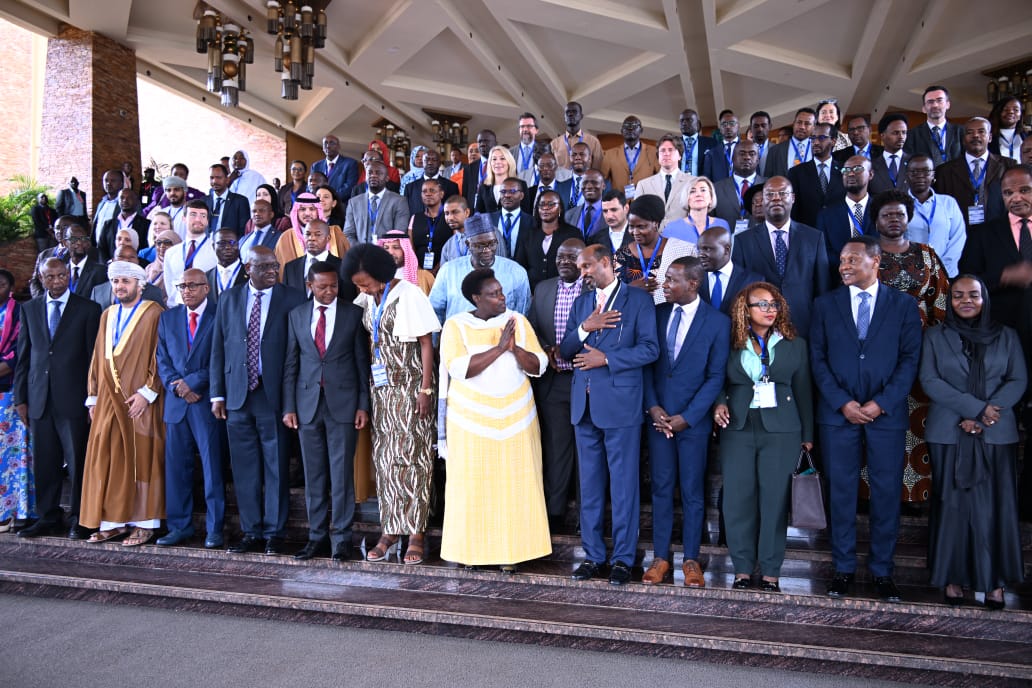
Uganda’s VICE President Maj (Rtd) Jessica Alupo has closed the Four-day 7th Regional Ministerial Forum on Migration which brought together delegates from 11 member states to deliberate on issues of harmonising labour migration policies across Africa.
The meeting focused on promoting safe, orderly, and regular labour migration, with officials emphasising the need to strengthen frameworks that support skills mobility and protection migrant workers.
Speaking during the closing ceremony, VP Alupo said Government is committed to combatting irregular migration in all its forms and Trafficking in Persons.
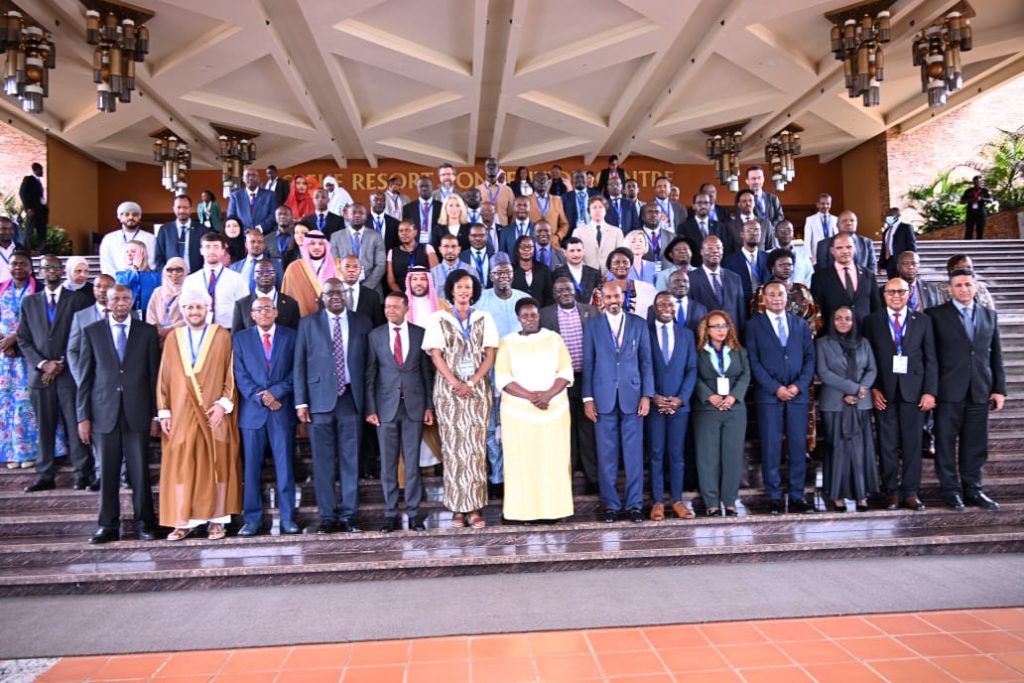
“We have established support systems for Ugandan migrant workers in distress and efforts are underway, with support from development partners to establish a safe return and reintegration program,” she said
Alupo who represented President Yoweri Museveni Tibuhaburwa, at the conference under theme: “Expanding Regular Labour Migration Channels to Promote Skills Mobility, Decent Employment, and Safe Alternatives to Irregular Migration”, noted that the theme demonstrates shared priority for dynamic labour mobility driven by a growing workforce.
She added that by working together to improve skills matching, strengthen recruitment systems, and enhance cooperation with destination countries, we can build migration systems that are fair, predictable, and beneficial for migrants, their families, and our economies.
Most importantly, Alupo noted that the issue of providing consular support to migrant workers is not negotiable and called upon Ministries of Foreign Affairs of Member States to take on frontline roles on matters of migrant workers.
She assured fellow members states of Uganda’s strong support for RMFM and its self-financing approach sought to be adopted. “Uganda is committed to the collaborative approach espoused under RMFM of acting as one region while negotiating Bilateral Labour Migration Agreements, Sharing Consular support, common standardization of employment contracts, skills partnerships, promoting ethical recruitment, job creation and youth employment,” she said.
The vice president said Uganda is strongly committed to international cooperation and regional integration which are considered central to the country’s foreign policy, development, and economic transformation. Uganda’s foreign policy is anchored on peaceful coexistence, non-alignment, and regional security.
Worth noting is that Uganda operates one of the world’s most progressive, open-door refugee policies, allowing refugees freedom of movement, the right to work, and land for farming. Refugees access public services, including healthcare and primary education, on par with Ugandan nationals.
As of February 2026, Uganda hosts 1.98 million refugees and asylum seekers, making it the largest refugee-hosting country in Africa.
Alupo said Uganda is formally committed to creating decent jobs, aiming to address high youth unemployment and underemployment through the National Employment Strategy (NES) 2023-2028 and the Third Decent Work Country Programme (DWCP III) 2025/26-2029/30.
The Government, guided by Vision 2040 and National Development Plan IV (NDP IV), aims to create 4.4 million new jobs with an annual average of 884,962 2.5 jobs over five years by fostering sustainable industrialization and promoting private sector growth.
Uganda’s 10-fold growth strategy aims to expand the national economy from roughly USD 50 Billion (as of 2023) to USD 500 Billion by 2040, targeting a 10% annual GDP growth rate to elevate the country to upper-middle-income status.
The strategy, integrated into the Fourth National Development Plan (NDPIV), focuses on accelerated investment in agro-industrialization, tourism, minerals (including oil and gas), and science/technology. She deeply appreciated all Member States of the Regional Ministerial Forum on Migration for the trust and confidence placed in Uganda to serve as Chair of this important regional platform.
She noted that during our tenure as Chair, Uganda has worked closely with Member States, development partners and the Secretariat to strengthen the institutional and policy frameworks that guide migration governance in the East and Horn of Africa region.
“We are proud that under this leadership, the forum has continued to serve as a critical platform for dialogue, cooperation and coordinated action on migration issues that affect our region,” she said.
State Minister for Labour, Employment and Industrial Relations, Esther Anyakun, said the forum has provided a critical platform for member states to align policies that respond to emerging labour market demands while safeguarding the rights of migrant workers.
She said labour migration, if well managed, can significantly contribute to economic growth, reduce unemployment, and deepen regional integration.
The Acting Director of Health and Social Development of the Intergovernmental Authority on Development (IGAD), H.E Ambassador Moussa Meigague reiterated the importance of regional cooperation in addressing migration challenges, highlighting the need for data sharing, joint policy frameworks, and capacity building among member states.