




VATICAN CITY — Pope Leo has called on Christians and Muslims to work together to restore compassion in an increasingly disconnected world, warning that constant exposure to suffering through technology risks hardening people’s hearts rather than inspiring action.
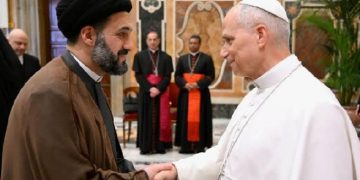
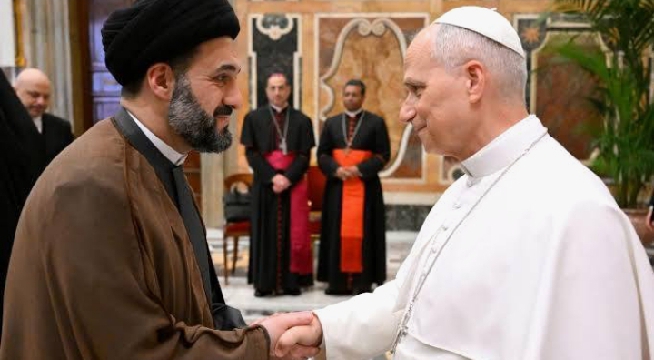
Speaking at the Vatican during a meeting with members of Jordan’s Royal Institute for Inter-Faith Studies and officials from the Holy See’s Dicastery for Interreligious Dialogue, the pontiff said followers of both faiths share a sacred responsibility to “revive humanity where it has grown cold” and transform “indifference into solidarity.”
The gathering focused on “Human Compassion and Empathy in Modern Times,” bringing together religious scholars and dialogue advocates under the patronage of Jordanian Prince Hasan bin Talal.
Pope Leo described compassion as a core value deeply rooted in both Islam and Christianity.
Referring to the Islamic concept of ra’fa, he said compassion is understood as a divine gift placed in the hearts of believers, while one of God’s ninety-nine names in Islam, al-Ra’uf (“The Ever-Compassionate”), reflects mercy as an essential attribute of God.
In Christianity, he said, compassion becomes fully visible in the life of Jesus Christ, whom he described as “the living embodiment of compassion” through God’s decision to share directly in human suffering.
According to Vatican News, the Pope stressed that empathy and care for the vulnerable are not optional virtues for believers but obligations with profound social consequences.
He praised Jordan for its continued support of refugees, calling the country’s humanitarian efforts an example of compassion in action.
Turning to the modern digital age, Pope Leo warned that people risk becoming emotionally numb despite unprecedented global connectivity.
The nonstop stream of online images and videos showing war, poverty, and human suffering, he said, can desensitize societies instead of motivating them to respond.
Echoing remarks previously made by Pope Francis, Leo cautioned against a growing mindset in which suffering is dismissed as someone else’s problem.
He concluded by urging Christians and Muslims to draw from their shared spiritual traditions to defend human dignity and give voice to those enduring hardship, saying faith communities must become a force capable of restoring empathy in a fractured world.