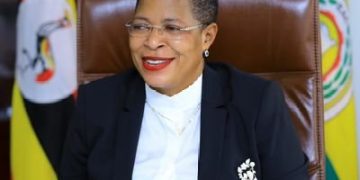



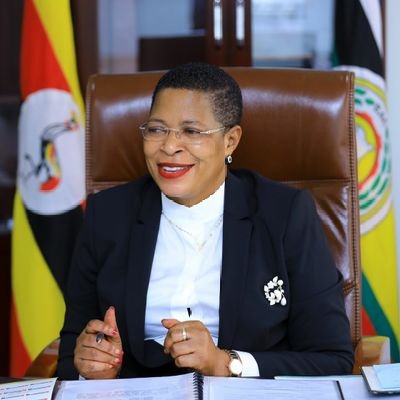
In a dramatic political development that signals shifting power dynamics within Uganda’s ruling establishment, Anita Annet Among has formally withdrawn from the race for Speaker of the 12th Parliament, ending months of intense speculation over her political future and marking a stunning retreat for one of the country’s most influential figures.
Among, once celebrated inside the ruling National Resistance Movement (NRM) as a fierce political mobiliser and loyal defender of President Yoweri Kaguta Museveni, announced her decision through a statement published on her X platform account, formerly Twitter. Her withdrawal comes after a turbulent political season that has increasingly isolated her within sections of the ruling party and exposed deep fractures during the 2026 general elections.
“I wish to categorically and unequivocally state that I will not be offering myself for the Speakership race of the 12th Parliament,” Among wrote, describing the decision as the result of “wide consultations and deep introspection.” She added that her move was intended to preserve “harmony and clarity” within the NRM as the party prepares for another high-stakes electoral cycle.
The announcement effectively ends a powerful chapter in Uganda’s parliamentary politics.
Since rising from Deputy Speaker to Speaker following the death of Jacob Oulanyah in 2022, Among had consolidated enormous influence over Parliament and the ruling party’s legislative agenda.Her leadership style, often described by allies as decisive and by critics as combative, earned her the nickname “Iron Lady” within Uganda’s political corridors.
Yet her grip on power began to weaken during the tense NRM internal political manoeuvres that intensified through 2025.
The Speaker increasingly found herself battling allegations of corruption, misuse of public funds, and accusations tied to extravagant parliamentary expenditure at a time when many Ugandans were grappling with economic hardship. Opposition politicians, civil society activists, and even some voices within the ruling party questioned the image of Parliament under her leadership, accusing it of becoming detached from ordinary citizens.
The pressure escalated when state agencies reportedly intensified investigations into several allegations surrounding parliamentary administration and procurement practices.
Although Among consistently denied wrongdoing, the controversy dented her once-formidable political image and triggered growing unease among senior NRM strategists concerned about the party’s public standing ahead of 2026.
In her statement, Among sought to strike a tone of loyalty and humility, thanking President Museveni, the NRM leadership, and Members of Parliament for entrusting her with leadership responsibilities in both the 11th Parliament and earlier as Deputy Speaker.
“I am greatly indebted to H.E. @KagutaMuseveni, my party @NRMOnline, and Members of the 11th Parliament for giving me the opportunity to serve as Deputy Speaker and Speaker,” she stated.
She also pledged support for whichever candidate would eventually receive President Museveni’s endorsement, a clear indication of the central role the veteran leader continues to play in shaping top parliamentary positions within the ruling movement.
Political observers interpret the declaration as an attempt to project party discipline while avoiding a potentially divisive contest that could further expose internal rivalries inside the NRM.
Among further stated that she would continue cooperating with ongoing investigations by relevant state agencies to establish the truth behind the accusations levelled against her.
While she did not directly address specific claims, her remarks appeared designed to reassure both supporters and party leadership that she remains committed to accountability and institutional processes.
Her withdrawal is already reshaping calculations within Uganda’s political establishment, with several senior NRM figures expected to position themselves for the powerful Speakership role.
The office remains one of the most influential constitutional positions in the country, controlling parliamentary business and often serving as a critical pillar of the ruling party’s legislative dominance.
For many analysts, Among’s exit from the race represents more than a personal political setback. It reflects the increasingly delicate balancing act inside the NRM as President Museveni seeks to maintain cohesion within a party facing generational tensions, corruption concerns, and growing public scrutiny after nearly four decades in power.
Only a few years ago, Anita Among appeared politically untouchable. Today, her withdrawal from the Speakership race underscores how quickly fortunes can shift in Uganda’s deeply competitive political landscape, where loyalty, public perception, and internal party calculations often determine survival at the highest levels of power.