


KAMPALA, UGANDA – Uganda has suspended the internationally renowned Martyrs Day pilgrimage following growing fears over the spread of Ebola from neighboring Eastern Democratic Republic of Congo, in a move that has stunned millions of Christian faithful across worldwide.
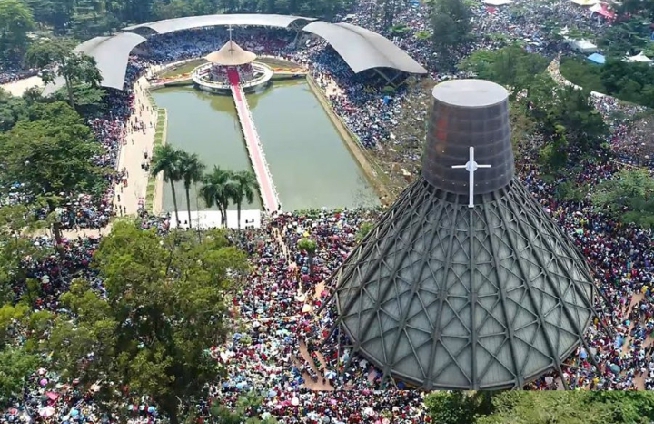
President Yoweri Kaguta Museveni announced the decision after consultations with the national epidemic response task force and religious leaders, citing the urgent need to protect lives as Uganda prepares to host one of the world’s largest annual Christian pilgrimages at Namugongo, Kira Municipality, in Wakiso District.
In a national statement addressed to Ugandans, President Museveni confirmed that the annual June 3 celebrations would be postponed indefinitely until health authorities determine it is safe for pilgrims to gather again.
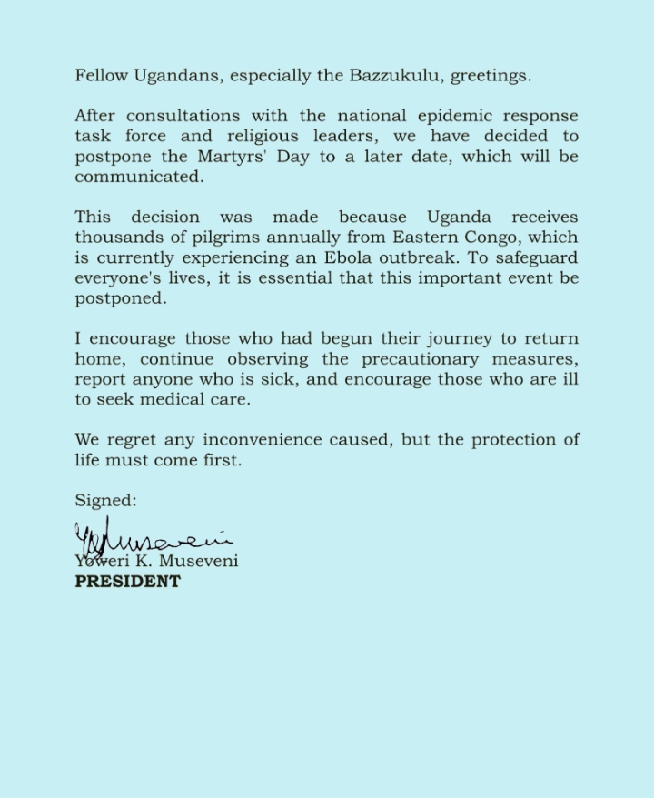
“After consultations with the national epidemic response task force and religious leaders, we have decided to postpone the Martyrs’ Day to a later date, which will be communicated,” the President stated.
Uganda receives hundreds of thousands of pilgrims every year from across East and Central Africa, including large numbers from Eastern Congo, where health officials are battling a fresh Ebola outbreak. Authorities fear that the massive movement of people into Uganda for the celebrations could accelerate cross-border transmission of the deadly virus.
“To safeguard everyone’s lives, it is essential that this important event be postponed,” Museveni added, urging pilgrims who had already begun their spiritual journeys to return home and continue observing public health guidelines.
The suspension marks one of the most significant interruptions in the modern history of Uganda Martyrs Day, an event that attracts Catholics, Anglicans, and international visitors from around the world.
The pilgrimage commemorates the Uganda Martyrs who were executed between 1885 and 1887 under Kabaka Mwanga II for refusing to renounce their Christian faith. The annual gathering at Namugongo has long stood as a symbol of faith, sacrifice, and unity across denominations and nations.
For many believers, the pilgrimage is more than a religious ceremony. Pilgrims often walk for weeks across borders to reach the holy shrine, seeking healing, thanksgiving, spiritual renewal, and annual blessings.
Hotels, transport companies, vendors, and local businesses also depend heavily on the event, making the postponement both a spiritual and economic blow.
Health experts, however, have welcomed the decision as a necessary preventive measure.
Ebola, a highly infectious viral disease spread through direct contact with bodily fluids of infected persons or contaminated surfaces, has historically posed severe public health threats across Central and East Africa.
Uganda has previously battled multiple Ebola outbreaks and remains on high alert because of its proximity to the Democratic Republic of Congo.
President Museveni urged citizens to remain vigilant, report suspected cases, and encourage anyone showing symptoms to seek immediate medical attention.
“We regret any inconvenience caused, but the protection of life must come first,” the statement concluded.
Religious leaders across Uganda have since called for prayers, calm, and cooperation with health authorities as the nation balances one of Africa’s most sacred religious observances against the urgent realities of epidemic prevention. For now, the roads that usually fill with praying and singing pilgrims heading toward Namugongo may remain quieter than usual, but the spirit of the martyrs, many believers say, remains unshaken even in postponement.