



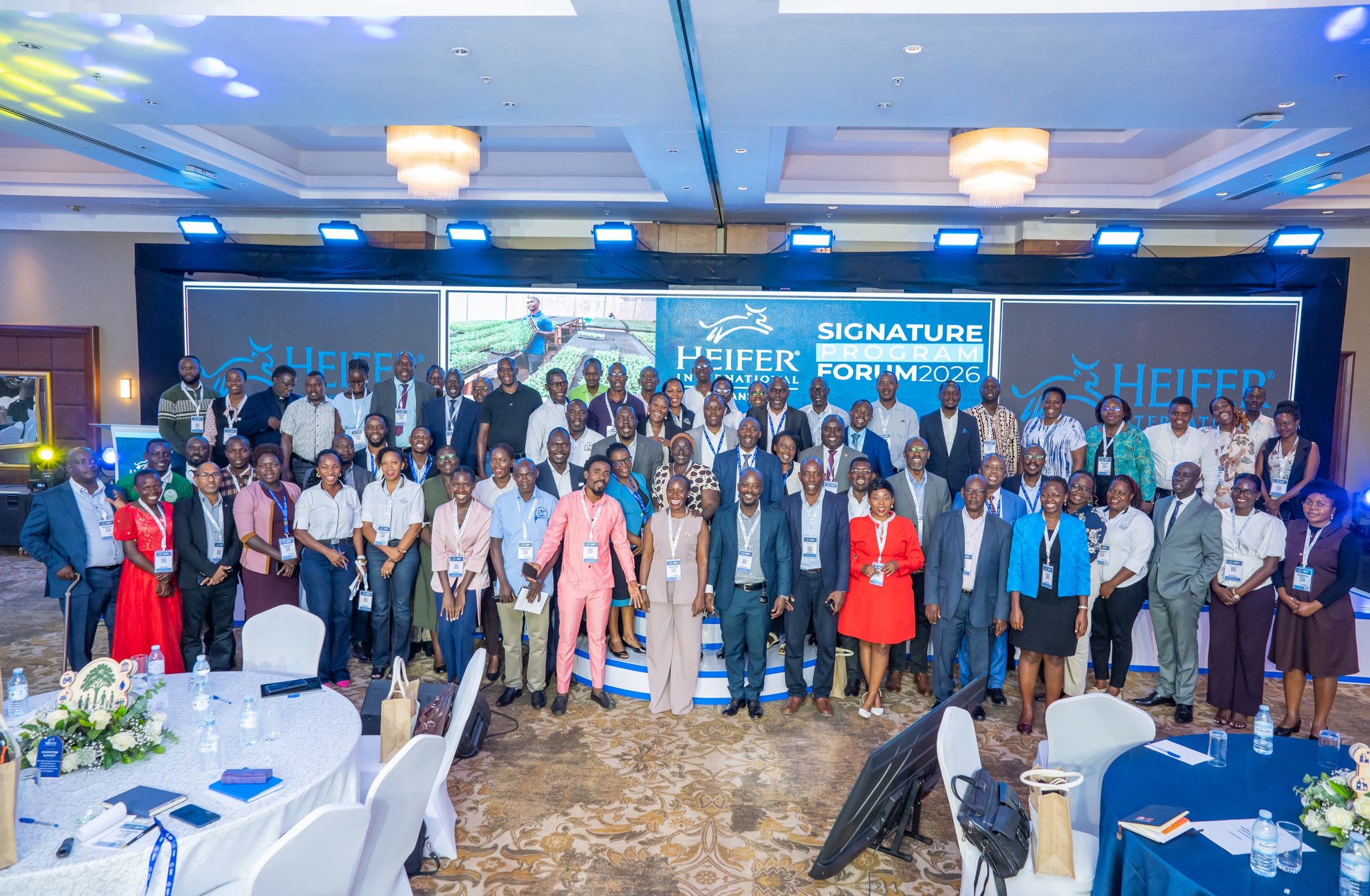
The Government has reaffirmed its commitment to strengthening partnerships with agriculture-based organisations to transform Uganda’s agricultural sector into an inclusive, climate-resilient and commercially competitive industry capable of creating jobs, increasing household incomes and driving long-term economic growth.
The commitment was made by the Minister of State for Animal Industry, Hon. Lt. Col. (Rtd) Bright Rwamirama, while officiating at the Heifer International Uganda Signature Programme Forum 2026 held at the Sheraton Kampala Hotel on Thursday.
The forum was held under the theme, “Celebrating Progress, Sharing Lessons, Shaping the Future of the Agri-food Sector,” and brought together policymakers, farmers, agribusinesses, financial institutions, development partners, researchers, innovators, youth and women entrepreneurs to review progress and explore new partnerships for strengthening Uganda’s agri-food systems.
Rwamirama said partnerships between Government, development organisations, farmers and the private sector are critical to moving Ugandan agriculture from subsistence production to a modern, profitable and sustainable business.
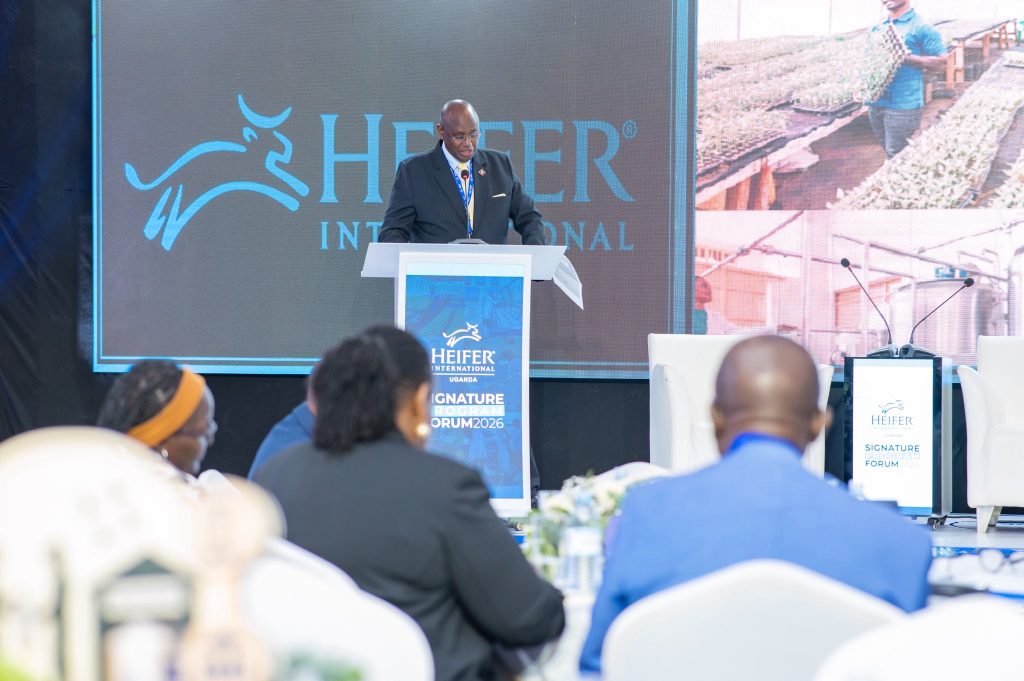
He said Government values its longstanding partnership with Heifer International, which has operated in Uganda since 1982, supporting farming households and contributing to the development of agricultural value chains.
“Government remains committed to working with Heifer International and all stakeholders represented here to build an agricultural sector that is productive, competitive, inclusive, climate-resilient and capable of providing sustainable incomes for Uganda’s farming households,” Rwamirama said.
He said the Government’s agricultural transformation agenda is closely linked to the Fourth National Development Plan (NDP IV), covering the financial years 2025/26 to 2029/30, whose broader objective is to achieve higher household incomes, employment, wealth creation and sustainable socio-economic transformation.
Under the Agro-industrialisation Programme, NDP IV prioritises agricultural value addition, improved production and competitiveness, better harvesting and post-harvest handling, specialised extension services, science, technology and innovation, farmer organisations and cooperatives, as well as measures to eliminate counterfeit and poor-quality agricultural inputs.
Rwamirama said these priorities are reflected in the work being undertaken by Heifer International and its partners across Uganda.
He noted that Heifer-supported initiatives such as the East Africa Dairy Development Project have helped strengthen dairy cooperatives and improve milk marketing, while the Green Dairy Investment Programme is promoting renewable energy, climate-smart technologies and stronger farmer organisations.
He also highlighted the Stimulating Agribusiness for Youth Employment (SAYE) Project, which is creating opportunities for young people in Busoga to pursue careers in agribusiness, and the AYuTe Africa Challenge, which promotes technology and innovation as tools for making agriculture more attractive and profitable for the youth.
The Minister further commended Heifer International for promoting innovative financing models that connect farmers and cooperatives to financial institutions, enabling them to invest in productive assets, renewable energy, value addition and enterprise development.
He said such interventions complement Government’s efforts to increase agricultural productivity while improving the resilience and competitiveness of farming households.
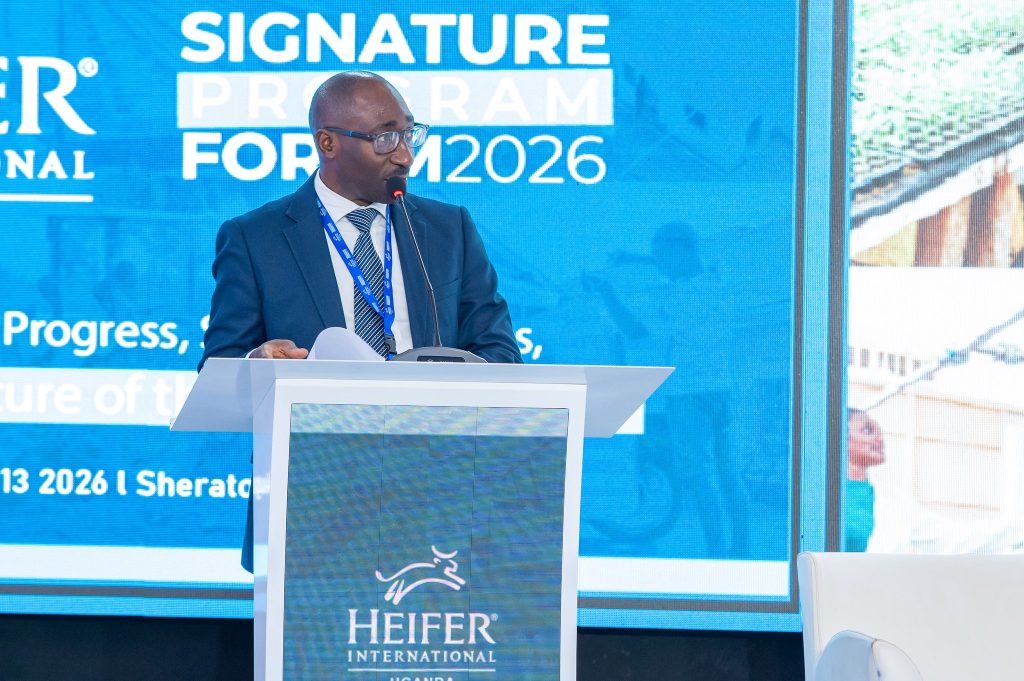
Meanwhile, Heifer International Uganda Country Director William Matovu said agricultural transformation cannot be achieved by one organisation or institution working alone, but requires coordinated efforts from all actors along the value chain.
Matovu said Heifer International has worked in Uganda for 44 years, evolving from supporting vulnerable farming households with livestock to strengthening agricultural value chains, farmer organisations, agribusinesses, markets and rural livelihoods.
He said the organisation currently works across five key value chains—dairy, beef, poultry, horticulture and oilseeds—while integrating technology, access to finance, renewable energy, insurance, mechanisation and market development.
According to Matovu, Heifer International and its partners have reached more than five million smallholder farmers, created more than 400,000 agribusiness jobs and supported over 100,000 enterprises, many of which are led by women and young people.
He said the organisation’s future focus will go beyond increasing agricultural production to building resilient and thriving farming households.
“We commit to work with partners to engage 1,000,000 smallholder farming households by 2030 to build thriving, resilient lives by advancing regenerative, farmer-led food systems,” Matovu said.
He said Heifer International will continue investing in women and young people by promoting innovation, technology and commercial opportunities that can make agriculture more attractive as a source of employment and income.
Matovu also expressed concern about the impact of climate change on farmers, saying unpredictable weather patterns are increasingly threatening agricultural investments and livelihoods.
He said Heifer plans to accelerate interventions in climate-smart agriculture, renewable energy, water management and climate-risk solutions such as agricultural insurance to help farmers withstand climate-related shocks.
He urged stakeholders to focus on improving access to technology and innovation, affordable finance, knowledge and information, quality agricultural inputs and reliable markets.
“Transforming Uganda’s agriculture requires collaboration. Government, farmers, the private sector, financial institutions and development partners all have critical roles to play. Our collective responsibility is to bring these strengths together,” Matovu said.
The forum also provided an opportunity for stakeholders to reflect on how Uganda can increase agricultural production and productivity while protecting the environment and creating dignified employment opportunities for women and young people.
Participants were also expected to explore ways of strengthening partnerships around technology, innovation, financing, market access and knowledge as part of efforts to achieve the country’s agricultural transformation goals.
Rwamirama urged stakeholders to ensure that agricultural interventions translate into tangible improvements in the lives of farming households through higher productivity, better-quality products, stronger enterprises, more employment opportunities and increased incomes.
“Let us transform agriculture from subsistence into a modern business,” he said.
He added that Government’s ambition is to position Uganda as a leading producer, processor and exporter of high-quality agricultural products, noting that achieving this goal will require sustained collaboration among Government, farmers, the private sector, financial institutions, development partners, researchers and innovators.
The Heifer International Uganda Signature Programme Forum therefore served as a platform to celebrate achievements made over more than four decades, identify lessons from past interventions and strengthen partnerships that can shape the future of Uganda’s agri-food sector.