


FORT PORTAL, Uganda — The drums of Tooro have fallen silent.
In the hills and valleys of western Uganda, a kingdom is entering nine days of mourning for a king whose life began in extraordinary circumstances: he inherited the throne as a three-year-old child and grew into one of Africa’s best-known traditional monarchs.
King Oyo Nyimba Kabamba Iguru Rukidi IV died on 27 August 2026 at the age of 34, bringing to an end a reign that lasted more than three decades.
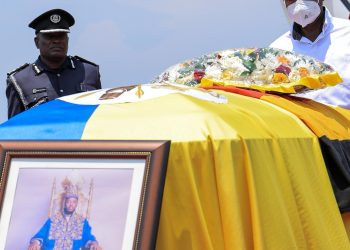
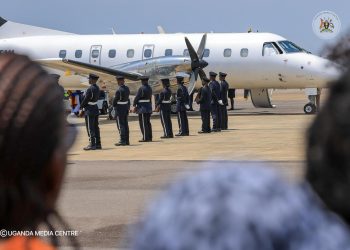
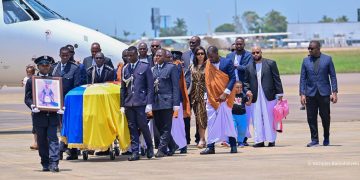
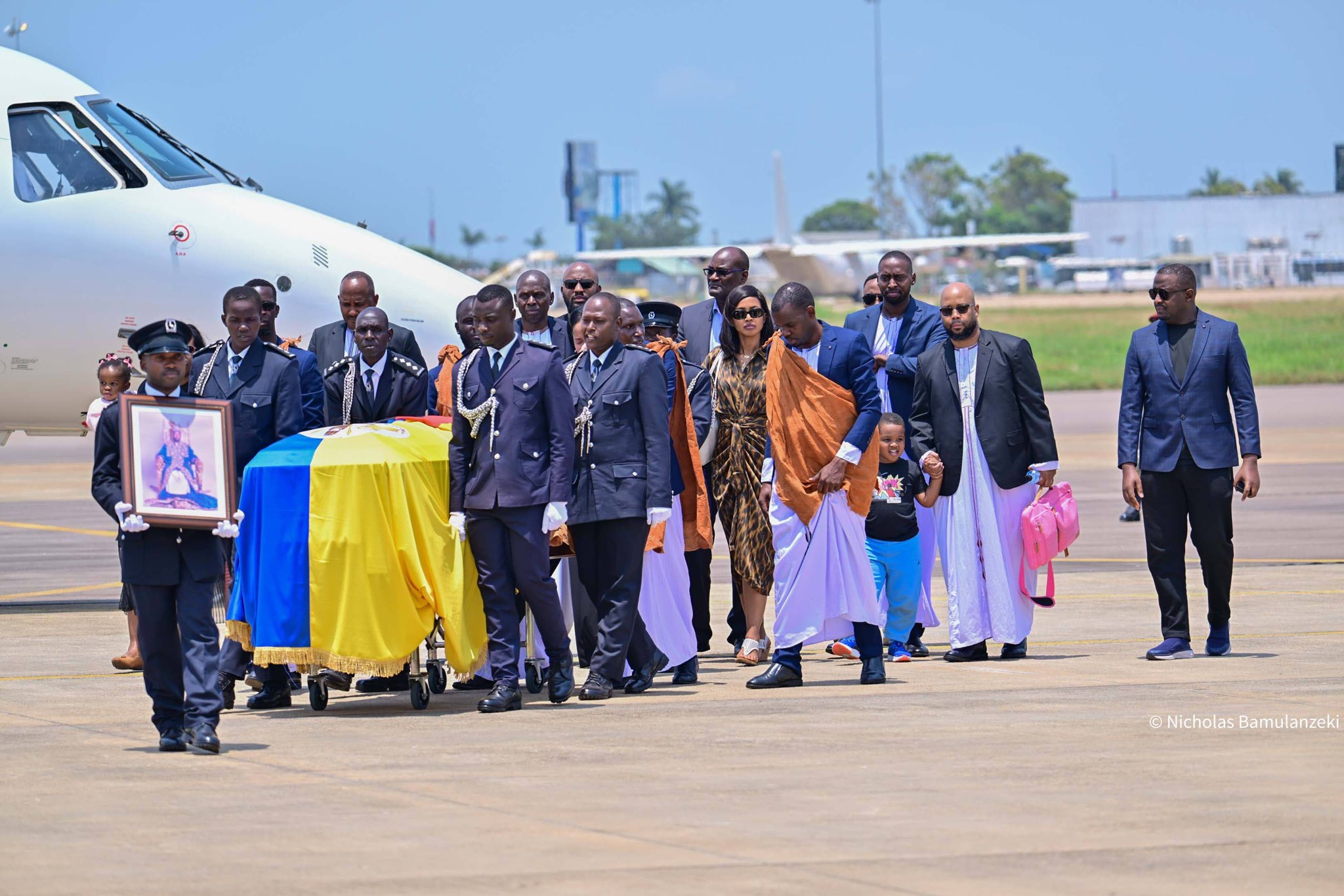
His body has now returned to Uganda, where it was received before being taken to Karuziika Palace, the traditional home of the Omukama in Fort Portal.
The arrival of the body marks the formal beginning of the kingdom’s nine-day mourning period.
It is a moment of grief, but also one of ceremony and reflection for the Batooro, whose cultural identity remains closely connected to the institution of the Omukama.
The king is due to be buried on 12 September.
A child became king
Oyo’s story was unusual from the beginning.
When his father, Omukama Patrick Matthew Kaboyo Olimi III, died in 1995, Oyo was just three years old. He was proclaimed king while still a toddler, thrusting a young child into an institution carrying centuries of Tooro history.
His early years as king were therefore unlike those of most monarchs.
Adults around him helped administer the affairs of the kingdom while he went to school and grew up under an unusual level of public attention.
As he matured, Oyo gradually assumed a more visible role.
His coronation in 2010 marked an important transition: the child king had become an adult monarch.
For many people outside Uganda, Oyo remained best known for becoming one of the world’s youngest reigning monarchs.
Inside Tooro, however, his significance was more personal.
He represented continuity.
The monarchy itself no longer wielded the political powers it once held. Uganda’s traditional kingdoms were abolished in 1967 and restored in 1993 as cultural institutions.
But the restoration did not erase their importance.
The Omukama remained a symbol of Tooro’s history, customs and unity.
Oyo inherited that responsibility at an age when most children were only beginning primary school.
From palace ceremonies to development campaigns
As an adult, Oyo sought to give the traditional institution a modern public role.
He became involved in initiatives focused on young people, education, health, environmental conservation and economic development.
His public engagements increasingly reflected the concerns of a younger generation in western Uganda.
That helped reshape the image of the monarchy.
Oyo was no longer simply the boy king whose photographs appeared in international newspapers. He became a young African monarch navigating the space between tradition and a rapidly changing society.
The Tooro Kingdom’s development ambitions were also framed around longer-term plans, including Vision 2045, an effort to connect the cultural institution with social and economic progress among its people.
For his supporters, that was part of Oyo’s legacy: keeping the monarchy relevant without abandoning its traditional roots.
The final days
Oyo’s death came after a period of medical treatment in the United States.
The kingdom announced his death on 27 August, sending shockwaves through Tooro and prompting messages of condolence from across Uganda.
He was 34.
Reports have subsequently identified cancer as the cause of death, although the initial announcement from the kingdom focused primarily on confirming his passing and informing the public.
For a king who had lived much of his life in the public eye, the news marked a strikingly private ending to an unusually public story.
Within days, preparations began for his return home.
The journey back to Tooro was itself laden with symbolism.
Oyo had spent much of his reign travelling, studying and representing his kingdom in Uganda and abroad.
Now he was returning to the palace for the last time.
Nine days of mourning
At Karuziika Palace, grief is being expressed through tradition.
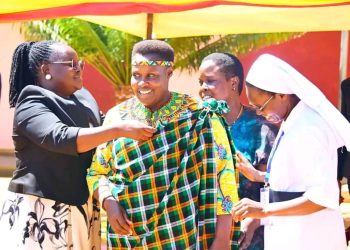
The nine-day mourning period is a time for subjects, relatives, cultural leaders and the royal family to gather and pay their respects.
The kingdom has announced restrictions on activities considered incompatible with mourning, reflecting the seriousness with which the period is being observed.
For many Batooro, the palace is more than a physical building.
It is the centre of an institution that has survived political upheaval, the abolition of Uganda’s kingdoms and their eventual restoration.
The death of an Omukama therefore carries a meaning that extends beyond the individual.
It is a moment when a community confronts both loss and continuity.
People will mourn Oyo as the man they knew, but they will also mourn the end of an era.
He was the king who grew up before them.
They watched him move from childhood ceremonies to adulthood, from the fascination surrounding the world’s youngest monarch to the responsibilities of a cultural leader.
The kingdom looks ahead
Oyo’s death inevitably raises the question of what comes next.
The Tooro monarchy is hereditary, and questions surrounding succession will eventually have to be addressed through the kingdom’s established cultural and royal structures.
But those discussions are not the immediate priority.
For now, Tooro is saying goodbye.
The nine days provide a pause between the death of one king and the beginning of whatever comes next.
They also offer an opportunity to reflect on Oyo’s extraordinary journey.
He inherited a crown before he could understand its significance.
He carried it through childhood, adolescence and adulthood.
He became a symbol of Tooro at home and a familiar figure abroad.
And now, at only 34, his reign has ended.
As the kingdom observes its mourning rites, the story of King Oyo is moving into its final chapter.
For nine days, Tooro will remember its king.
Then the mourning will end.
The crown, however, will remain.