


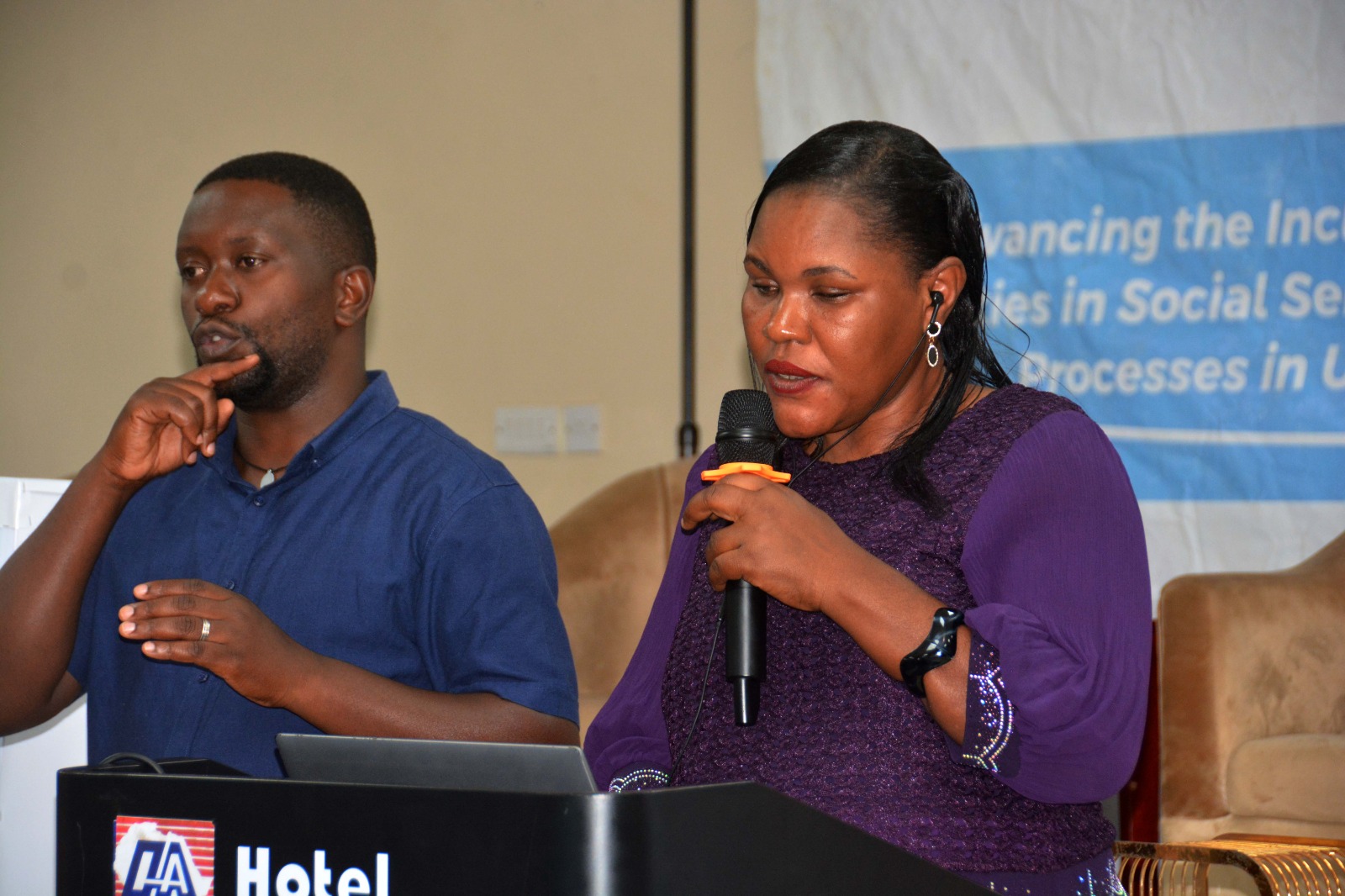
The National Union of Disabled Persons of Uganda (NUDIPU) has called on the government to increase budget allocations for disability inclusion across all sectors to ensure persons with disabilities have equal access to social services and opportunities.
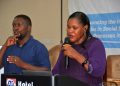
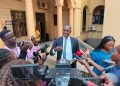
NUDIPU Chief Executive Officer Esther Kyozira said disability inclusion should not be treated as the responsibility of only the Ministry of Gender, Labour and Social Development, but should be integrated into the budgets, programmes and plans of all government institutions.
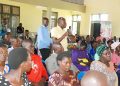
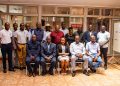
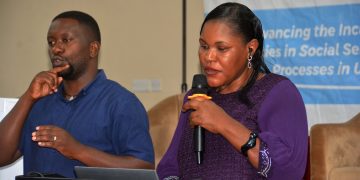
Kyozira made the remarks during the National Stakeholders’ Convening on Disability Inclusion in Social Services and Decision-Making Processes, which started on Wednesday and ends today at Hotel Africana in Kampala.
The two-day meeting has brought together government representatives, organisations of persons with disabilities, civil society organisations, development partners, district leaders and private sector representatives to discuss ways of strengthening disability inclusion.
“Disability inclusion cuts across education, health, justice and all the other sectors. If we are to get the best results, we want to see budget allocations to persons with disabilities,” Kyozira said.
She also called for technical support and training for government officials and other service providers to equip them with knowledge and skills to respond to the needs of people with different categories of disabilities.
“There is a need to do technical assistance to all stakeholders within government and outside government to ensure that they understand the different disability categories and their needs and how to support them,” she said.
Kyozira said that even where services are available, some persons with disabilities continue to face barriers because service providers lack adequate understanding of their specific needs.
She further called for increased participation of persons with disabilities in decision-making, saying representation in Parliament and local governments alone is not enough.
She said persons with disabilities should also be represented in the technical arms of government where policies and programmes are designed and implemented.
Kyozira said Uganda has made progress through the enactment of disability-related laws and policies and the representation of persons with disabilities in Parliament, but implementation remains a major challenge.
“The issue is around implementation of the policies. So the implementers are the ones that are making us miss on having full inclusion,” she said.
She also raised concerns about the implementation of Uganda’s competency-based curriculum, urging the National Curriculum Development Centre (NCDC) to strengthen consultations with organisations of persons with disabilities when developing and adapting learning materials.
According to Kyozira, learning materials should reflect the needs of learners with different categories of disabilities to ensure that the new curriculum promotes inclusive education.
“We want to see that in all the stages that we are going through, persons with disabilities are taken into consideration,” she said.
Government calls for mainstreaming disability inclusion
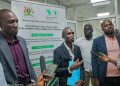
State Minister for Disability Affairs in the Ministry of Gender, Labour and Social Development, Joyce Achan, said disability inclusion should be mainstreamed across all sectors, programmes, policies, plans and budgets.
Achan said disability inclusion is a matter of rights, equality, justice and development and should not be left to one ministry or institution.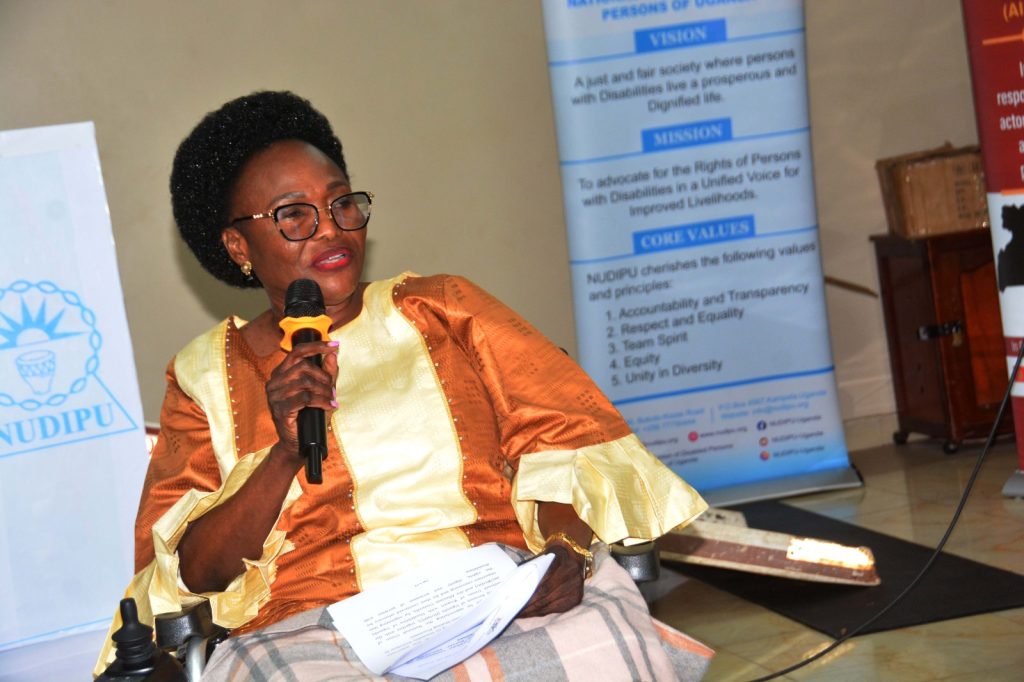 “Disability inclusion is not a favour to persons with disabilities. It is a matter of rights, equality, justice and development,” she said.
She said government is pursuing a twin-track approach in which disability is mainstreamed across government programmes while targeted interventions are maintained to address specific needs of persons with disabilities.
Achan also stressed the need for meaningful participation of persons with disabilities in planning, implementation, monitoring and evaluation of programmes.
“The principle of ‘Nothing about us without us’ should guide our work,” she said.
She urged stakeholders to identify specific actions, resources and timelines needed to improve disability inclusion and called on ministries, local governments, development partners and the private sector to strengthen their efforts.
Partners pledge support
Jill Clements, Deputy Head of Mission at the Embassy of Ireland, said development partners supporting disability inclusion should work alongside government, communities and organisations of persons with disabilities.
Clements said Ireland, Denmark, Sweden and the Netherlands are working together under the PACER programme to promote disability inclusion across their programmes.
She said the partners were proud to work with NUDIPU and other organisations to elevate disability inclusion and promote the participation of persons with disabilities in society.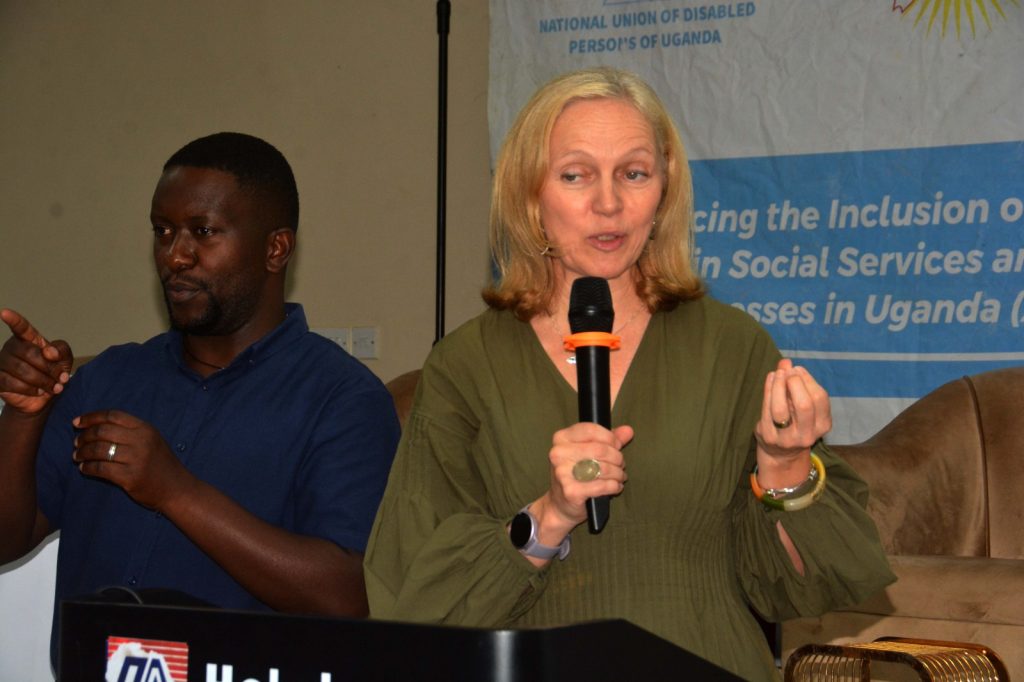 “This is not a development challenge. This is a societal challenge to ensure that people with disabilities live with dignity and are engaged as productive members of society,” Clements said.
She said persons with disabilities contribute to society as entrepreneurs, parents, teachers, activists, government officials and leaders and should be supported to participate fully.
Clements said about 150 representatives from different sectors were attending the convening to discuss ways of improving support, advocacy, budget allocations and access to services for persons with disabilities.
She called for collective action to ensure that people with disabilities receive the resources and services they need to live with dignity and respect.
The stakeholders’ convening is expected to generate commitments and recommendations aimed at strengthening disability-inclusive social services and increasing the participation of persons with disabilities in decision-making processes.