


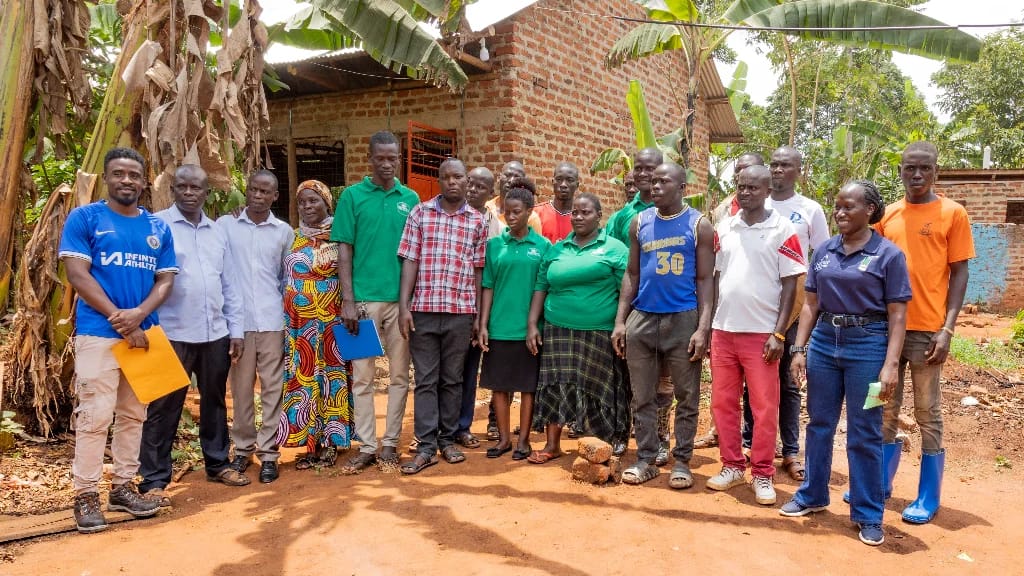
For many young people in Uganda’s Busoga sub-region, agriculture has long been associated with subsistence, poverty and limited opportunities. But three years into the Stimulating Agribusiness for Youth Employment (SAYE) project, a growing number of young people are beginning to see farming differently, as a source of income, employment, dignity and a future.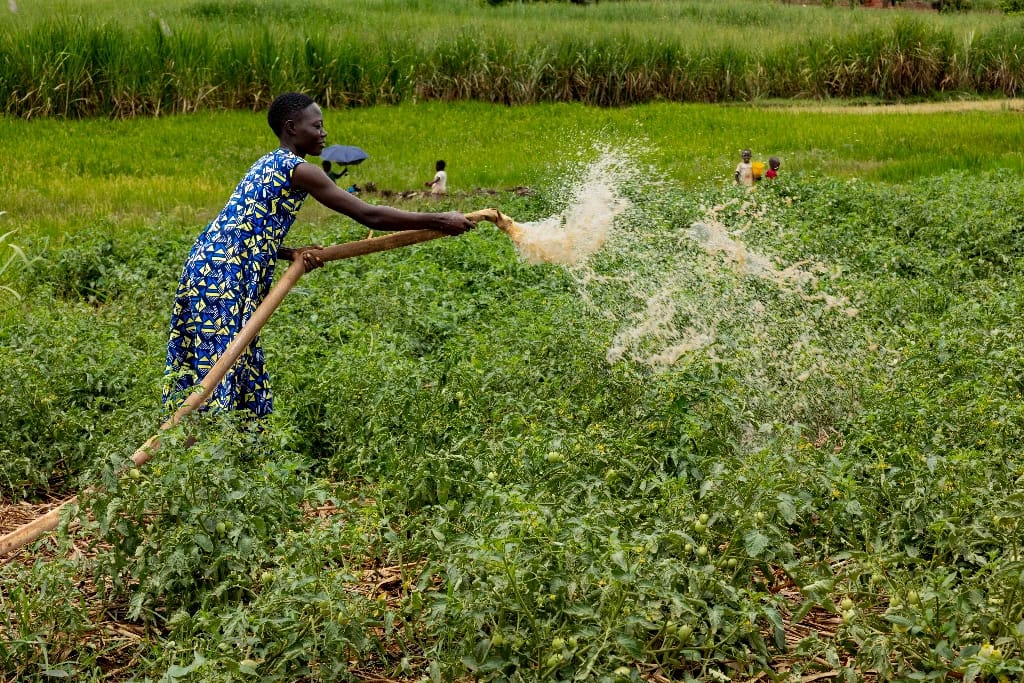 The $48 million, five-year SAYE project, running from 2023 to 2029, is being implemented by Heifer International in partnership with the Mastercard Foundation and other partners ASIGMA, CURAD, Federation of Small and Medium Enterprises and Financial Sector Deepening Uganda, to support young people to engage in profitable Agribusiness and create employment opportunities across Busoga.
As the project marks three years this September, the youth farmers say the intervention has gone beyond training and agricultural support. It has helped youth to organize themselves into cooperatives, develop businesses, access finance, adopt better farming practices and, in some cases, employ other people.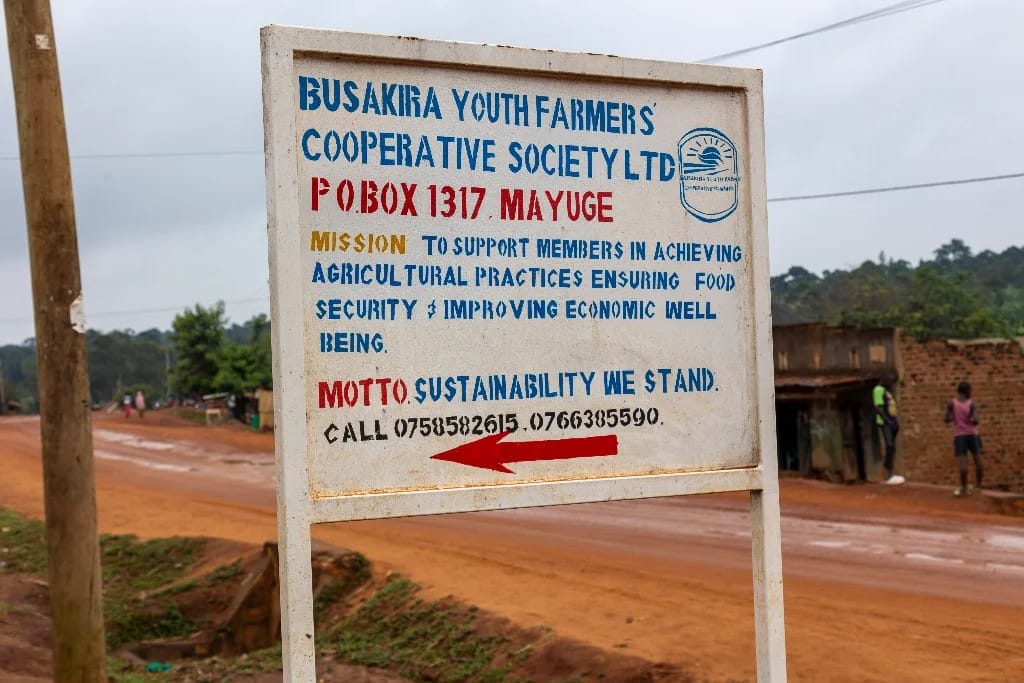 One of the agrihub supported is the Busakira Youth Farmers Cooperative in Mayuge District, which has grown from a small self-help group into a sizeable community organisation.
From 25 members to nearly 800.
According to the cooperative’s chairperson, Kilwi Peterson, the group started last year with only about 25 members.
Today, the cooperative has 786 registered members, with women making up about 400 of the membership.
Peterson says the rapid growth is partly a result of the business management capacity building sessions organized by the project.
“Through SAYE, we have received different trainings and knowledge sharing sessions on good farming practices,” Peterson says.
Membership requires a subscription of Shs20,000, while members also pay Shs20,000 for one share.
For Peterson, however, perhaps one of the most important changes has been the way young people handle money.
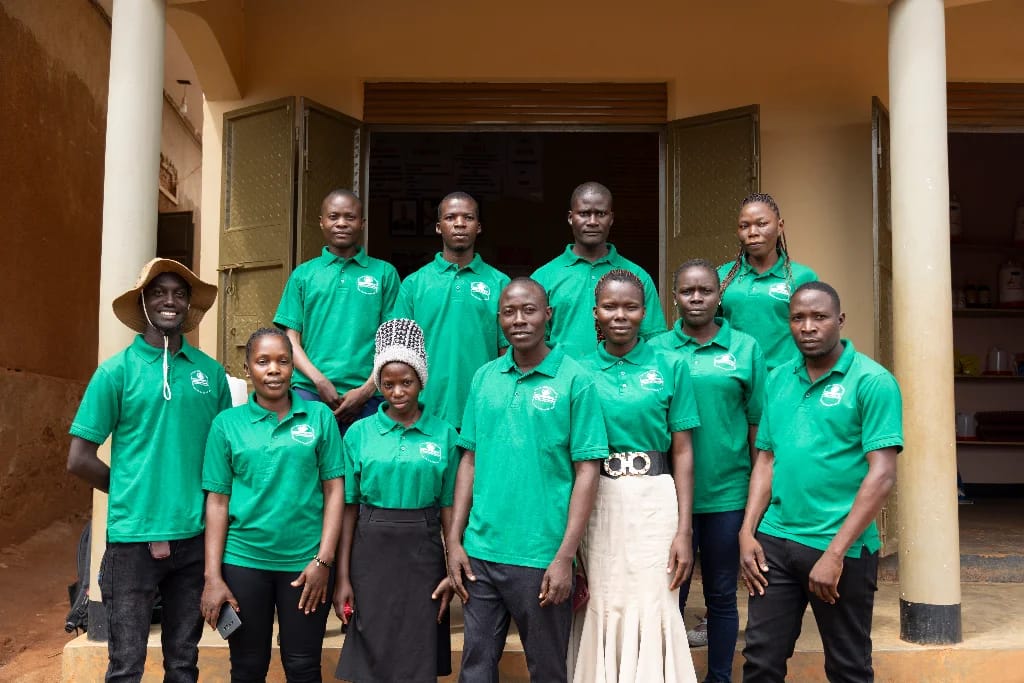
He says many members previously kept their savings in tins under their beds, but have now embraced saving through the cooperative.
“People have learnt financial discipline and saving,” he says.
The cooperative has also started generating employment. Peterson says it currently employs around six young people, creating jobs within the community.
Agriculture becomes a business
Members of the cooperative are involved in several agricultural enterprises, including poultry, passion fruit and tomato growing.
For poultry farmers, the cooperative has established a partnership with Jeka Company, through which members can access one-day-old chicks.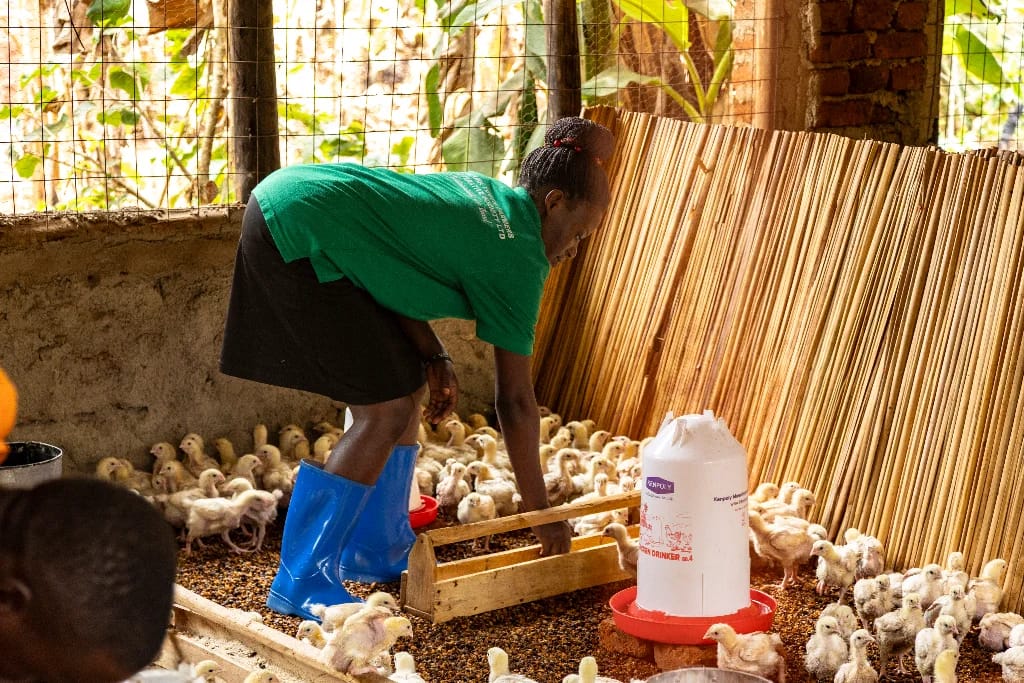 A member buys a chick at Shs3,500, while the cooperative obtains it from Jeka at Shs3,200. The Shs300 difference helps support the operations of the cooperative.
The cooperative has also established a veterinary shop to bring agricultural inputs and veterinary services closer to farmers.
Peterson says the veterinary shop generates about Shs750,000 in profits every week, helping strengthen the cooperative’s financial base.
He estimates that the cooperative is now worth about Shs18 million.
The organisation has also embraced inclusion, with people living with disabilities among its members.
Peterson says the cooperative has provided them with a platform to participate in economic activities and improve their livelihoods.
Moving away from sugarcane
Before joining the project, many of the young people were mainly involved in sugarcane farming.
Peterson says the shift towards diversified agricultural enterprises has changed the way many young people view farming.
The cooperative is now targeting 2,000 members ahead of its annual general meeting, reflecting the growing interest in organised agribusiness among people in the area.
Poultry becomes a source of income
Within the cooperative are smaller groups pursuing specific enterprises.
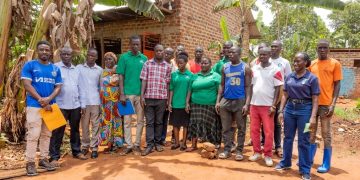
One of them is Step by Step, a poultry group led by Wilson Batibwe.
The group began with 25 members, including 11 women, and has expanded its poultry enterprise from an initial 400 chicks to 800 birds.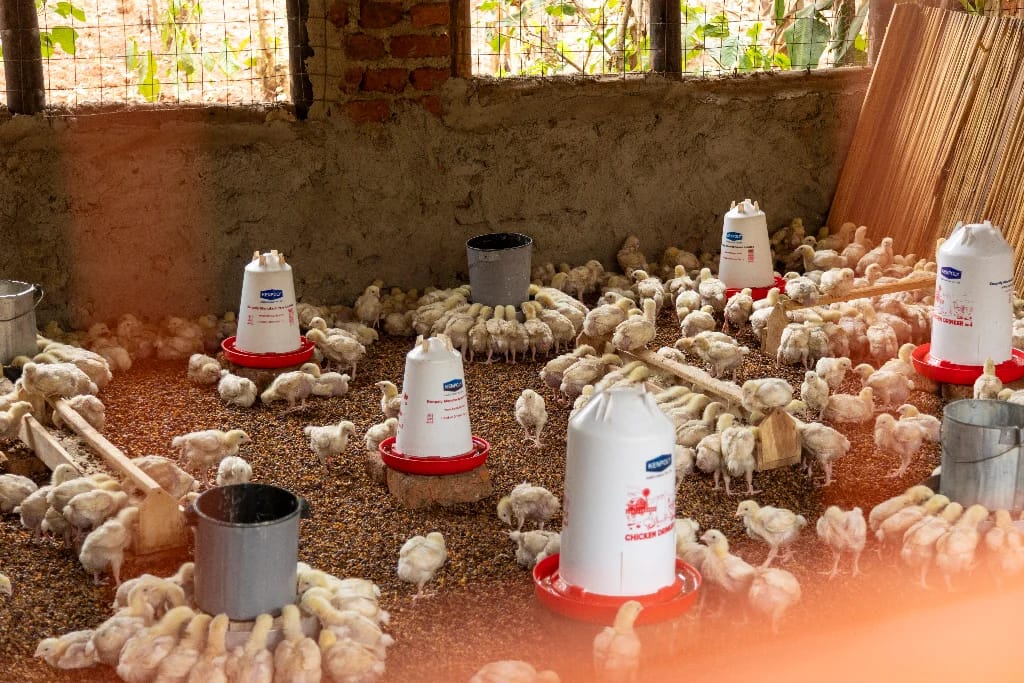 Batibwe says the group’s experience demonstrates how training, access to finance and linkages to suppliers can help young farmers expand.
“When Heifer International came to our community, they trained us after finding that our members were engaged in different agricultural activities, including sugarcane and coffee farming,” he says.
The group was profiled, particularly focusing on young people aged between 16 and 35, and members were trained in poultry production and management.
The initial 400 chicks provided an opportunity for the group to test its new knowledge. Batibwe says proper management enabled the group to make profits, encouraging them to expand the business.
From the proceeds, the group constructed a larger poultry house with a capacity of more than 1,000 birds.
He says Heifer also connected the group to SACCO financing, enabling them to borrow Shs5 million.
Part of the money was used to construct the poultry house, while the remaining funds helped them acquire another 800 chicks, which they are currently rearing.
Batibwe says the project has also helped the group access reliable suppliers of chicks and other poultry inputs.
Knowledge at the centre of transformation
Beyond financial support, project participants say technical knowledge has been one of the most important contributions of the SAYE project.
Batibwe is a member of Busakira Agrihub, an agricultural hub supported by Heifer International.
Through the hub, farmers have access to technical training and extension services.
Poultry specialists, he says, have trained them in poultry husbandry, disease prevention, feeding, housing and general flock management.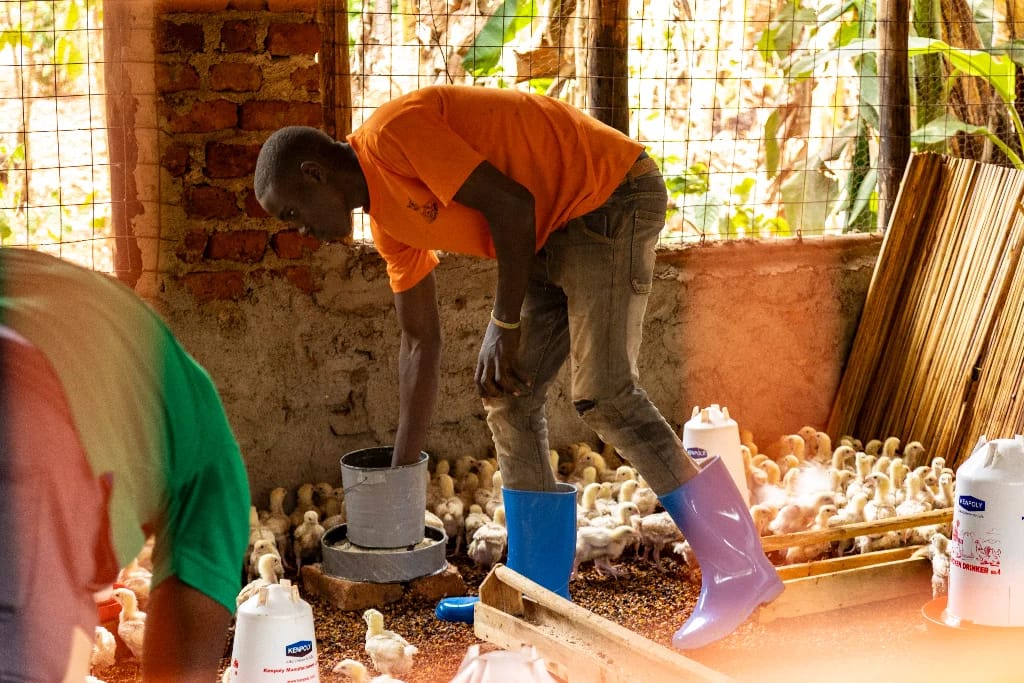 “This support has given us the knowledge and confidence to manage poultry as a viable agribusiness and to expand our production,” he says.
A feed business creates jobs
The transformation is also visible among young people who have established businesses serving other farmers.
Winnie Kiiza, who operates an animal and poultry feed business in Mayuge, says her enterprise was born out of an opportunity created through SAYE training.
Her business specialises in poultry feeds and feed ingredients, including concentrate, soya and cottonseed products, maize bran, broken maize, fish meal locally known as mukene, and crushed shells used as a source of calcium for poultry.
Kiiza also advises farmers on feed formulation and helps them address challenges related to poultry nutrition.
Where a farmer presents a problem requiring veterinary intervention, she says she links them to veterinary professionals or suppliers of veterinary medicines.
She has also introduced a flexible arrangement for farmers facing temporary cash shortages.
Under the arrangement, a farmer who cannot immediately pay for feed can provide eggs equivalent to the value of the feed.
The arrangement enables farmers to continue accessing feed while maintaining their businesses.
From a training opportunity to a business
Kiiza says her entry into the agribusiness sector was unexpected.
She learnt about local feed formulation through a SAYE-supported boot camp.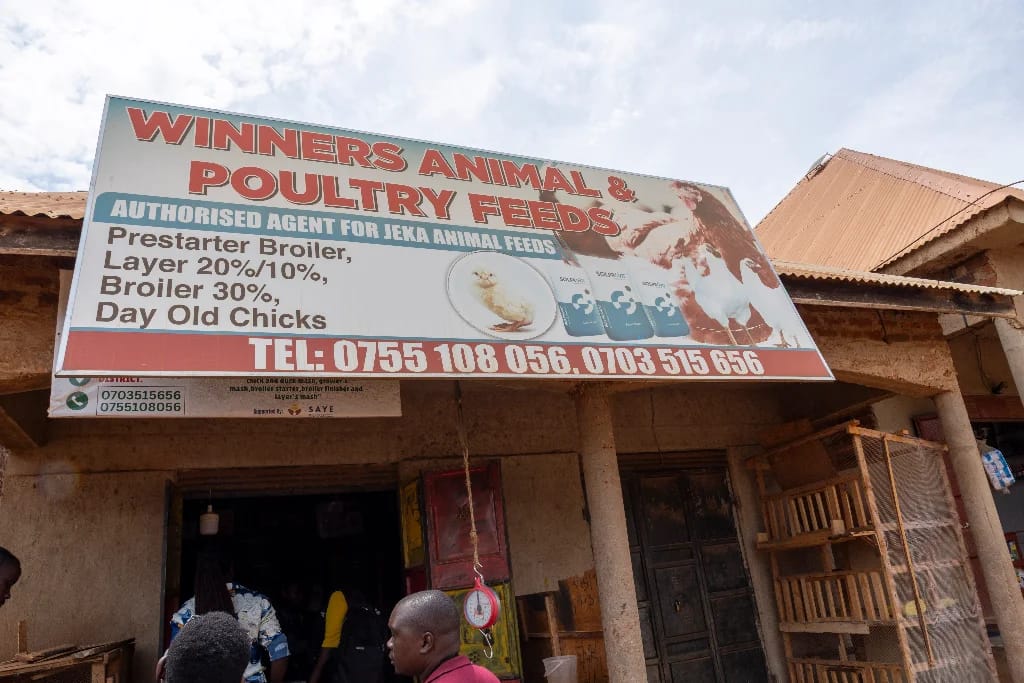 Initially, she says, she was not particularly interested in attending the training but was lured by a friend. However, after attending the boot camp, meeting other young people and learning about the available opportunities, her interest changed.
“We were profiled, trained and later supported to establish our businesses,” she says.
SAYE provided initial inputs, including broken maize, silage and sunflower, enabling the group to establish the feed business.
The group initially operated collectively, but members lived in different areas, making joint management difficult.
They later agreed to allow members to operate businesses closer to their communities.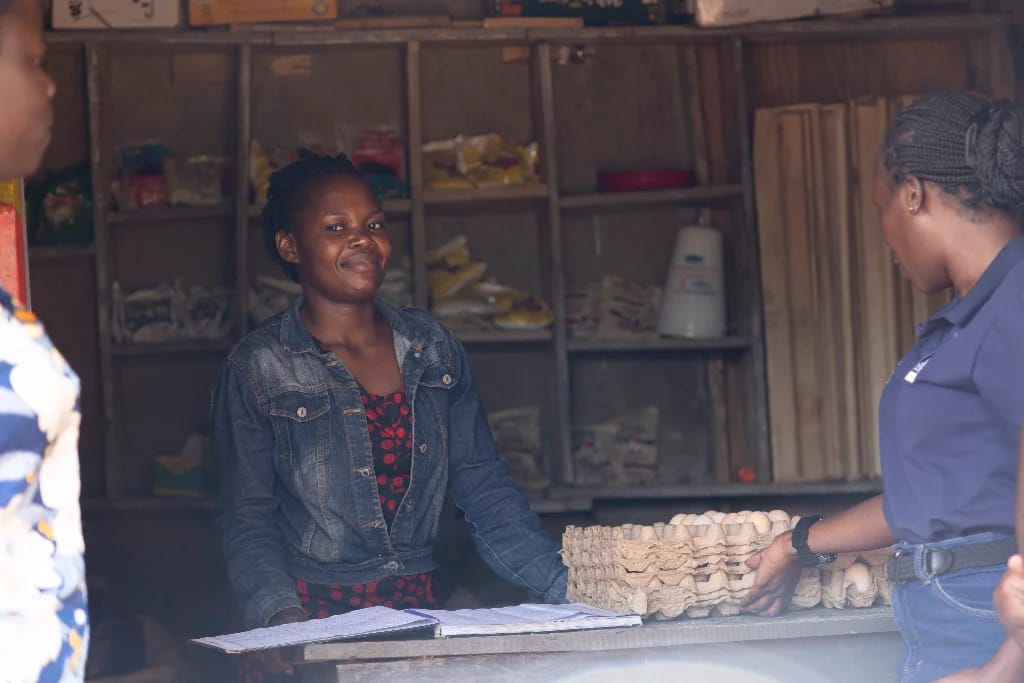 Kiiza and one other member continued with the particular outlet where she operates today.
A business that now employs others
What began as a small enterprise has now created employment for other people.
Kiiza says she currently works with four other people who help with transportation, loading and offloading feed bags and other day-to-day activities.
Some work full-time, while others work part-time.
The business serves individual farmers and keeps records of their feed requirements to ensure that supplies are available when they need them.
On busy days, the business can sell about 10 bags of feed, although sales vary depending on demand.
“I have built an identity for myself”
For Kiiza, the biggest transformation has not simply been the growth of her business, but the personal identity and independence it has given her.
She says the business has enabled her to move away from extreme poverty and build something she can call her own.
“One of my biggest achievements is that I have built an identity for myself through this business. I am no longer the same person I was before,” she says.
Her income has also enabled her to support children with education.
She currently supports about four children, in addition to helping her sisters’ children.
She says she also tries to support children in her community who are unable to attend school because of financial difficulties.
“Being in a position to help other children access education is one of the achievements I am most proud of,” she says.
Irrigation opens new possibilities
Another group under the Busakira Youth Farmers Cooperative is Busaala Tuseteyo Mixed Enterprises, which is involved in passion fruit, tomato and fish farming.
The group, also chaired by Peterson, started with 25 members.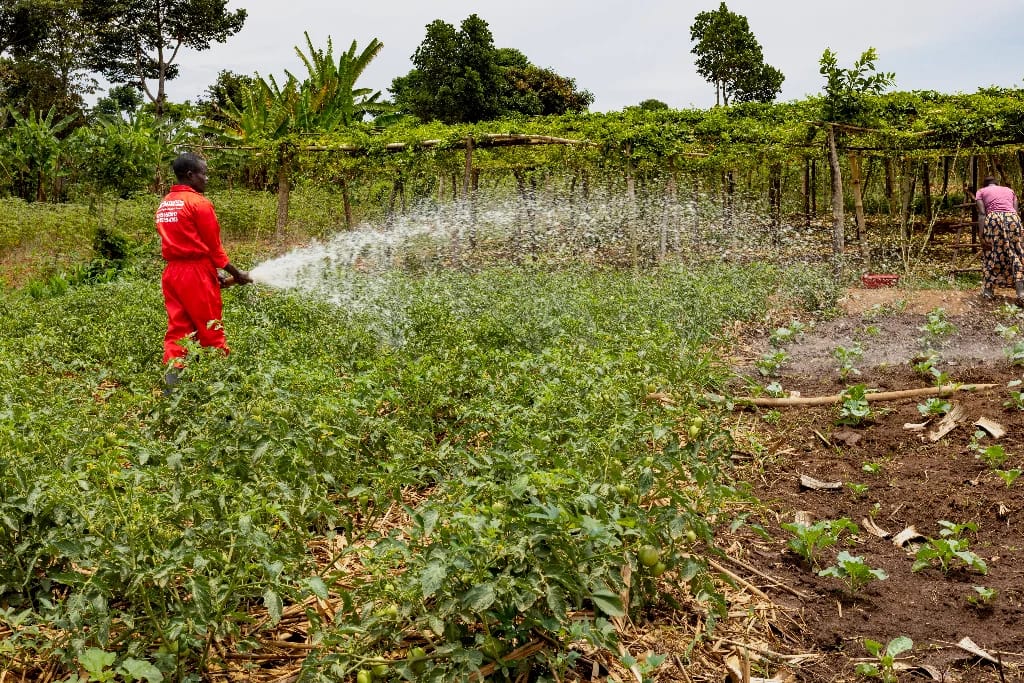 Its farmers grow Uganda Passion Fruit 12 and have diversified their production to reduce dependence on a single crop.
Peterson says climate change has made it increasingly difficult for farmers to rely entirely on rainfall.
Through a partnership with Trafford, the farmers have accessed water pumps for irrigation.
The pumps were provided on loan, with each farmer contributing Shs20,000 towards repayment.
The cooperative currently has four irrigation pumps, allowing members to continue farming during dry periods.
For the farmers, this means agricultural production is no longer completely dependent on the arrival of rain.
Tackling poverty and domestic violence
Peterson also believes the economic opportunities created through the cooperative are having an impact beyond farming.
He says cases of domestic violence among some members have reduced as household incomes improve and young people become engaged in productive activities.
According to him, poverty had contributed to tensions in some families.
With members now spending more time working, earning income and saving, he says some of those conflicts have reduced.
The cooperative’s experience illustrates how youth employment programmes can affect not only individual incomes but also relationships within households and communities.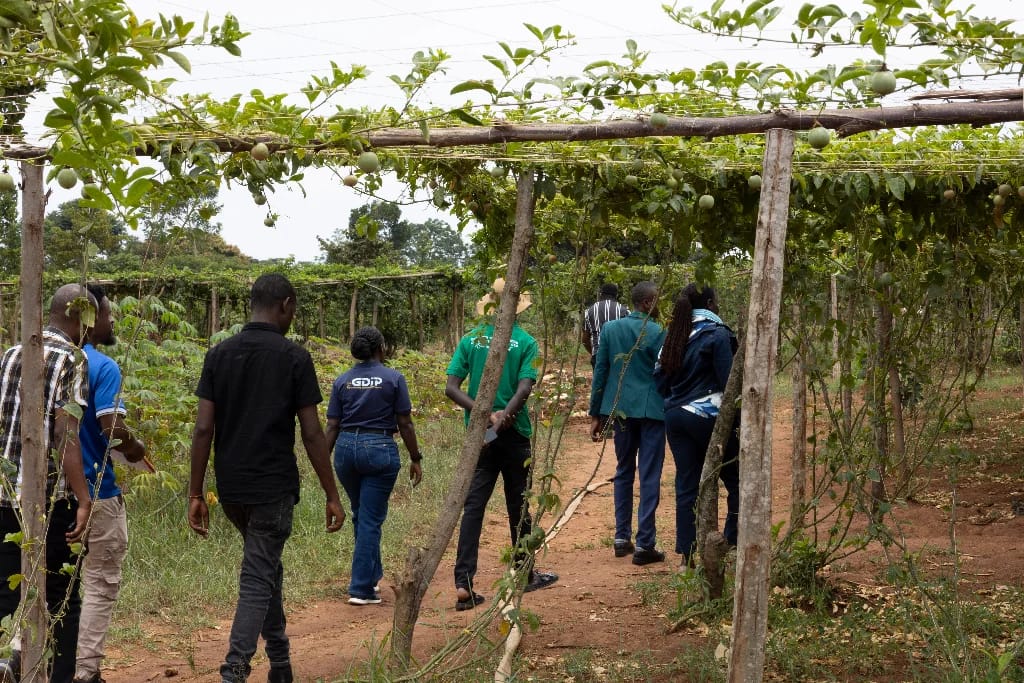 Three years of changing perceptions
The story of Busakira is one example of the changes reported by participants of the SAYE project across Busoga.
From poultry and animal feeds to passion fruits, tomatoes, fish farming, irrigation and cooperative savings, young people are increasingly being encouraged to look at agriculture as a business rather than simply a means of survival.
The project has also created linkages between young farmers and financial institutions, input suppliers, technical experts, agricultural hubs and markets.
For participants, these connections are important because agricultural success often depends on more than access to land.
Farmers need knowledge, capital, quality inputs, markets, financial discipline and the ability to manage risks.
At Busakira, the cooperative model is bringing many of these elements together.
The growth from about 25 members to 786 registered members in a relatively short period is a reflection of the growing interest in collective enterprise among farmers in the area.
As the SAYE project enters its fourth year, Peterson says the ambition is no longer simply to maintain what has been achieved.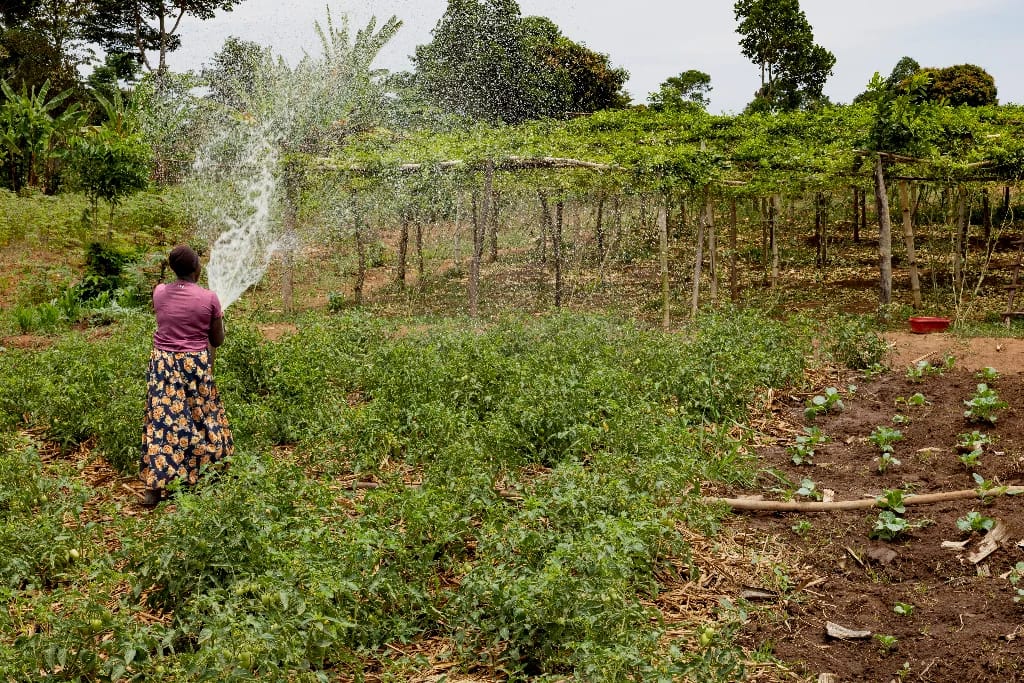 The cooperative wants to reach 2,000 members, expand its enterprises and create more opportunities for young people.
For participants such as Kiiza and Batibwe, the transformation is already personal.
They now see themselves not simply as young people looking for jobs, but as farmers, entrepreneurs, employers and members of organised economic communities.
And in Busoga, that shift in identity may be one of the most significant outcomes of the three-year journey of SAYE.