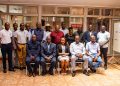
Ugandans have been urged to take an active role in promoting and protecting peace in their homes and communities instead of leaving the responsibility entirely to political and community leaders.
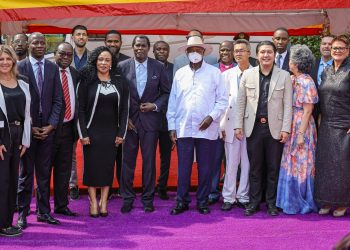
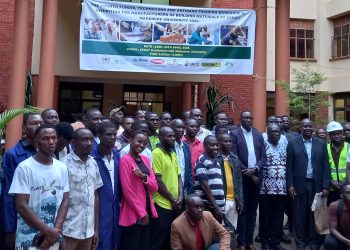
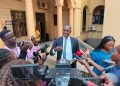
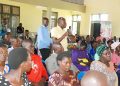
The call was made during a screening of The Great Legacy documentary organised by Heavenly Culture, World Peace, Restoration of Light (HWPL) at Hotel Africana in Kampala.
The documentary showcases efforts to promote peace and highlights how ordinary citizens and civil society actors can contribute to resolving conflicts and building peaceful communities.
Mupenzi Maene Adolph, the HWPL General Secretary, said the screening was intended to help Ugandans understand that peace is a responsibility shared by everyone.
He said the documentary demonstrates that some of the people who contributed to peace-building efforts were ordinary members of civil society rather than political leaders.
“Peace cannot only be achieved by other people, or peace cannot be only achieved by leaders. We ourselves as communities, we can achieve peace,” Maene said.
He urged Ugandans to value and protect the peace they currently enjoy, saying its continuation requires deliberate efforts from citizens.
“Today it does not mean because you have food, tomorrow you will also have food. This peace that we have in Uganda, we need to maintain it, and it can only be maintained by ourselves,” he said.
Maene said the documentary should not be viewed simply as entertainment but as a learning opportunity that can encourage Ugandans to become peace advocates and messengers in their communities.
Peace starts with ordinary citizens
Eng Nkoyoyo Elisa Kiwana, Assistant Chief Commissioner in charge of Innovation and Talent Development at the Uganda Scouts Association, said lasting peace begins with simple actions by individuals.
Representing Senior Presidential Mobiliser for Poverty Eradication and Women’s Recreation Pastor Mbabazi Robert, Kiwana said the documentary had demonstrated that peace is not built by leaders alone.
“What has touched me most is the demonstration that peace is not built by leaders alone. It is built when ordinary citizens decide to come together, care for one another and take responsibility for their communities,” he said.
Kiwana linked peace-building to the values of scouting, saying scouts are expected to help others and contribute positively to their communities.
He said helping a neighbour, listening to people with different opinions, protecting the environment, mentoring young people and bringing people together are all practical ways of promoting peace.
He called on Ugandans, particularly young people, to prepare themselves to become messengers of peace by being ready to listen, forgive, serve and build bridges between people.
“Let us not only talk about peace, let us do peace,” he said.
He also emphasized the importance of creating opportunities for young people through skills development, entrepreneurship, innovation and employment.
He said when young people have opportunities to work, establish businesses and contribute to their communities, they can develop a sense of purpose and belonging, reducing the risk of being drawn into destructive groups.
He urged citizens to begin promoting peace from their homes, schools and communities.
“Let the peace start in our home, our schools, our communities and in the choices we make every day,” he said.
Peace requires addressing causes of conflict
Dr Livingstone Sewanyana, Executive Director of the Foundation for Human Rights Initiative (FHRI), commended HWPL for its efforts to promote peace globally.
Sewanyana said the documentary was particularly relevant at a time when several parts of the world continue to experience armed conflicts.
He cited conflicts involving Russia and Ukraine, Israel and Palestine, and the conflict involving Iran, Israel and the United States, as well as conflicts in Yemen, Western Sahara and Cameroon.
He said peace should not simply be understood as the absence of fighting, but should involve addressing the underlying causes of conflict.
“Peace actually requires all of us to eradicate the root causes of conflict,” Sewanyana said.
He said conflicts can occur at individual, community, national and international levels and require different approaches to address them.
At community and national level, Sewanyana identified issues such as injustice, lack of fairness, unemployment, mistreatment of communities and poor governance among factors that can contribute to conflict.
He also called for greater respect for international law and the principles of the United Nations Charter, particularly the requirement for states to resolve disputes peacefully.
Sewanyana further raised concern about the continued threat of nuclear conflict, arguing that greater international commitment to disarmament and the prohibition of nuclear weapons is necessary for lasting global peace.
Lessons from Mindanao
Sewanyana also highlighted the peace process in Mindanao in the Philippines as an example of the importance of dialogue and mediation in resolving conflicts.
He said the conflict involved issues of self-determination and religious differences, particularly between Christian and Muslim communities.
According to Sewanyana, bringing conflicting groups together to listen to one another was an important part of the peace process.
He said peace-building requires people with the conscience and willingness to bring conflicting parties together for dialogue.
“When that is done, then most likely we all become winners, and peace becomes the dividend,” he said.
Peace must be planned and worked for
Kamese Geoffrey, Deputy Director of HWPL, said the documentary demonstrated to him that peace does not happen by accident.
He said communities need deliberate plans and strategies to achieve and maintain peace.
“I have learned that actually peace does not come by accident. You must have a plan for peace. You must have strategies that help you attain peace,” Kamese said.
He said communities are generally willing to live peacefully but need guidance and opportunities for peaceful engagement and conflict resolution.
Kamese also said peace should not be associated with a particular religion because people of different religious backgrounds can work together to create peaceful communities.
He called for similar peace-building activities to be extended to more communities, saying continuous learning is important in strengthening peaceful relationships.
He also proposed the development of community agreements outlining shared principles that people can commit to observing.
He said such agreements could serve as a “constitution” for peaceful communities by establishing common values despite differences among members.
“Peace is planned for and peace is worked for,” Kamese said.
The speakers at the event emphasized that peace-building requires participation at every level, from individuals and families to communities, civil society organisations, governments and international institutions.
They encouraged Ugandans to make peace a daily practice and to pass a culture of dialogue, tolerance, service and responsibility to future generations.