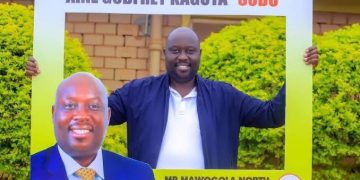



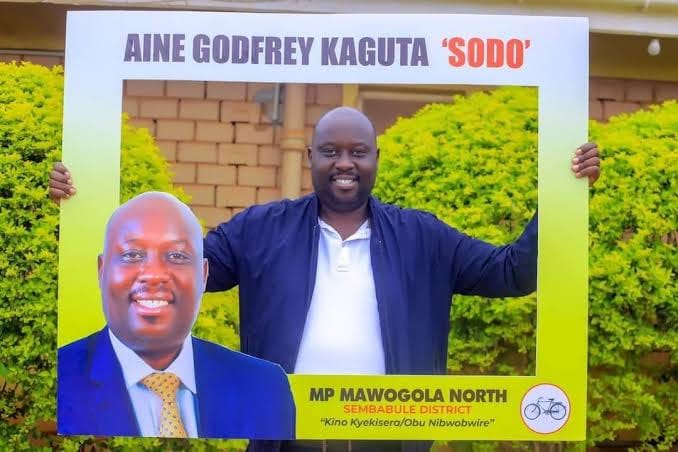
KAMPALA, Uganda (UGNEWSLINE) – Mawogola North MP Aine Godfrey Kaguta, popularly known as Sodo, and his election challenger, lawyer Jet John Tumwebaze Ndamagi, have rejected a proposal to settle their election dispute through mediation, paving the way for a full hearing of the petition.
The two parties rejected the proposal made by High Court Judge Bernard Namanya during proceedings on Tuesday, insisting that the court should determine the petition challenging Kaguta’s victory in the January 15, 2026 parliamentary elections.
The judge had asked the parties to consider Alternative Dispute Resolution (ADR) before their next court appearance, but both maintained that they were not ready to pursue an out-of-court settlement.
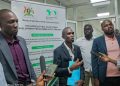
Kaguta questioned why he should negotiate a settlement when it was Tumwebaze who had taken him to court. He expressed confidence in the judicial process and said he preferred the matter to proceed to a full hearing.
He also welcomed the possibility of transferring the case from Masaka to Kampala, saying regular journeys to Masaka were inconvenient and that he was comfortable appearing before any judge in Kampala.
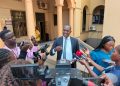
Tumwebaze, on the other hand, argued that mediation was not appropriate given the alleged violence and intimidation surrounding the election.
He claimed that several of his supporters, polling agents and election coordinators had been assaulted, detained and injured during the electoral process, with some still receiving medical treatment.
Tumwebaze cited incidents in Mabindo, Mitima and other parts of Mawogola North, including the alleged severe beating and detention of his campaign coordinator.
He said reconciliation would be difficult before the affected individuals had recovered from their injuries and the alleged abuses had been addressed.
The petition challenges Kaguta’s election after he was declared the winner with 15,923 votes against Tumwebaze’s 6,955.
Meanwhile, Justice Namanya reserved his ruling on a pending application challenging Tumwebaze’s participation in the proceedings both as a petitioner and a lawyer representing himself alongside other advocates.
Kaguta’s lawyer, Robert Bautu, asked the court to determine the application, arguing that it had already been argued and that the respondents had not been served with documents explaining Tumwebaze’s participation as counsel.
However, Tumwebaze’s lawyer, Maxim Mutabingwa, asked court to allow the application to be withdrawn, describing it as frivolous.
The proposal was opposed by lawyers representing the respondents, who argued that Tumwebaze should choose whether to participate as a petitioner or represent himself as an advocate.
Lawyer Kandeebe Ntambirweki argued that allowing Tumwebaze to occupy both positions could complicate the proceedings, particularly because he is expected to testify as a witness and may subsequently be cross-examined.
Eric Sabiiti, representing the Electoral Commission, also urged Tumwebaze to make a choice between acting as an advocate and participating as a petitioner.
However, Mutabingwa maintained that there was no law preventing an advocate who is a party to a case from representing himself.
Justice Namanya said he would deliver his ruling on the application on November 23, 2026, through email communication to the parties.
The substantive petition raises questions about Kaguta’s academic qualifications and alleged electoral malpractice.
Tumwebaze contends that Kaguta did not possess the required academic documents when he was nominated, claiming that he lacked the relevant Primary Leaving Examination, Uganda Certificate of Education and Uganda Advanced Certificate of Education certificates.
He also faults the Electoral Commission and the returning officer for accepting Kaguta’s nomination without the required documentation.
Kaguta has dismissed the claims, maintaining that he completed the minimum required education and that his qualifications were verified by the Uganda National Examinations Board.
He relies on UNEB verification letters for his UCE and UACE qualifications and says differences in the names appearing on his academic documents were addressed through a deed poll.
His lawyers have also argued that the academic qualifications complaint should have been raised before the election rather than through a petition after the results were declared.
On electoral malpractice, Tumwebaze accuses Kaguta and individuals allegedly associated with his campaign of involving armed Uganda People’s Defence Forces personnel in the election.
He alleges that soldiers intimidated voters, assaulted polling agents and supervisors, and interfered with voting at several polling stations.
Other complaints include ballot stuffing, multiple voting, voting by unregistered persons, bribery and discrepancies in declaration of results forms.
The petitioner identifies polling stations including Kyolola Trading Centre, Rwekishugi C.O.U., Mabindo, Kasansa Trading Centre, Kiwuula Playground and Kabarekeera Primary School as areas where the alleged irregularities occurred.
Kaguta denies the allegations, insisting that the election was conducted lawfully and that the results declaration forms accurately reflect the votes cast.
He also denies deploying or directing soldiers to interfere with the election, bribing voters or authorising his agents to engage in electoral malpractice.
He argues that Tumwebaze has not demonstrated that any alleged irregularities substantially affected the election outcome and wants the petition dismissed with costs.
The court directed the parties to file replies to new affidavits by November 16, 2026, and any rejoinders by November 20.
They are also required to file a joint scheduling memorandum, lists of witnesses and agreed issues for trial by November 23.
The substantive hearing is scheduled for November 24–27, 2026, unless the parties reach an agreement before then.