


A religious movement that promised its followers a path to salvation ended in one of Kenya’s most devastating tragedies, with children among those who died in a remote forest after being subjected to extreme fasting. Now, its leader is facing a prison sentence that stretches across two centuries.
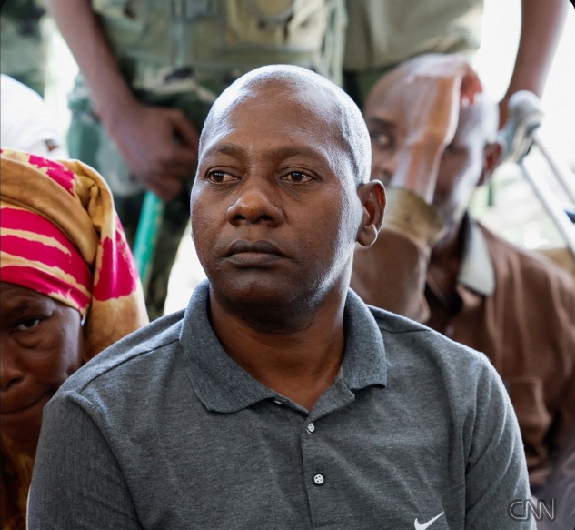
A Kenyan court has sentenced controversial preacher Paul Nthenge Mackenzie to 200 years in prison for his role in the deaths of 191 people, including 190 children, in the Shakahola massacre, bringing a dramatic new chapter to a case that exposed the deadly consequences of religious indoctrination and the exploitation of spiritual authority.
The sentence was handed down on Friday, November 6, 2026, by Lady Justice Diana Kavedza Mochache at the High Court in Mombasa, where the preacher was held responsible for murders committed within the forest settlement associated with his Good News International Ministries.
Mackenzie’s punishment followed his conviction on October 19, alongside 28 co-accused, after the court found that prosecutors had established their involvement in all 191 murder counts beyond reasonable doubt.
The judge imposed two consecutive 100-year prison terms, separating the murders attributed to starvation from those involving direct acts of homicide. The first category involved 183 victims, comprising 182 children and one adult, while the second involved eight children whose deaths were attributed to direct violence.
The distinction was significant. The prosecution case was not simply that people had died after choosing to stop eating.
The court found evidence of a coordinated system in which religious teachings, intimidation and violence were used to direct and enforce deadly fasting.
Mackenzie, whom prosecutors identified as the central figure in the movement, had persuaded followers that abandoning food and other earthly attachments would prepare them to meet Jesus. The teaching took on a particularly devastating dimension when children became the first targets of the fasting instructions, followed by young people, women and men.
In its judgment, the court rejected the suggestion that the deaths were merely the consequence of voluntary religious devotion. It found that the vulnerable followers were subjected to an organised process of indoctrination and coercion, with some victims suffering violence when they resisted or attempted to escape.
Medical and forensic evidence presented during the proceedings established that starvation was responsible for many of the deaths, while post-mortem examinations also documented victims who had been strangled, suffocated or killed through blunt-force injuries.
The sentencing marked the culmination of a murder trial that has drawn international attention since the discovery of mass graves in Shakahola Forest, in Kilifi County, in 2023.
Investigations into the settlement revealed a scale of devastation that extended far beyond the 191 murders covered by the latest convictions.
More than 400 bodies have been exhumed from the wider Shakahola site, making the discovery one of the most disturbing episodes of mass death in Kenya’s recent history.
Many of the victims were children, while the identification of remains and the search for answers have presented enormous challenges for investigators and grieving families.
The tragedy first attracted widespread attention after authorities began uncovering graves in the forest, exposing the activities of a religious group whose followers had been drawn away from ordinary community life and into an isolated settlement.
The subsequent investigation brought together witness accounts, forensic examinations, digital evidence and testimony from survivors. Prosecutors argued that Mackenzie exercised authority over the settlement and that his teachings were central to the events that unfolded there.
The court also considered the different roles played by the 28 people convicted alongside him. Their prison terms ranged from 10 to 160 years, reflecting the judge’s assessment of their respective involvement in the killings.
Mackenzie’s deputy, Smart Deri Mwakalama, received a 160-year sentence, while other members of the group were punished according to their individual levels of responsibility.
The prosecution had sought the death penalty for Mackenzie, arguing that the scale and brutality of the killings justified the harshest possible punishment. However, the court opted for a lengthy custodial sentence instead.
The decision has left a profound question surrounding the meaning of justice for families who lost children, spouses and entire households in the forest. For some survivors, no prison term can adequately compensate for the destruction of their families.
Kenya’s Shakahola tragedy has also reignited difficult questions about the regulation of religious organisations, the protection of children and the responsibility of authorities to intervene when spiritual teachings are used to justify dangerous practices.
The case has become a stark warning about the consequences of unchecked religious authority, particularly where vulnerable people are isolated from their families, education, medical care and the institutions meant to protect them.
For Mackenzie, the 200-year sentence represents the legal consequences of a movement whose promise of reaching heaven became inseparable from the deaths of its followers.
But beyond the courtroom and the extraordinary length of the punishment lies a much larger human tragedy: children who never had the opportunity to grow up, families left without their loved ones and a forest that became the centre of a national reckoning.
The court has delivered its sentence. For the families still searching for answers, however, the road to closure remains far from over.