


KAMPALA, Uganda (UGNEWSLINE) – Trade union leaders have warned that low wages, rising taxes, increasing food prices and poor working conditions are pushing Ugandan workers deeper into poverty, calling on government to introduce a realistic national minimum wage and strengthen labour protections.
The leaders, under the IndustriALL Global Union National Coordinating Council (INCC) Uganda, said many employees in the manufacturing and service sectors were struggling to meet their basic needs despite working long hours in factories, hotels, restaurants and other workplaces.
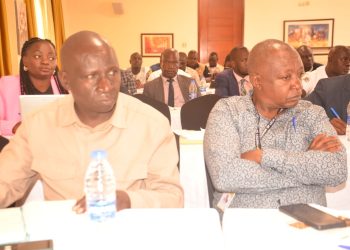
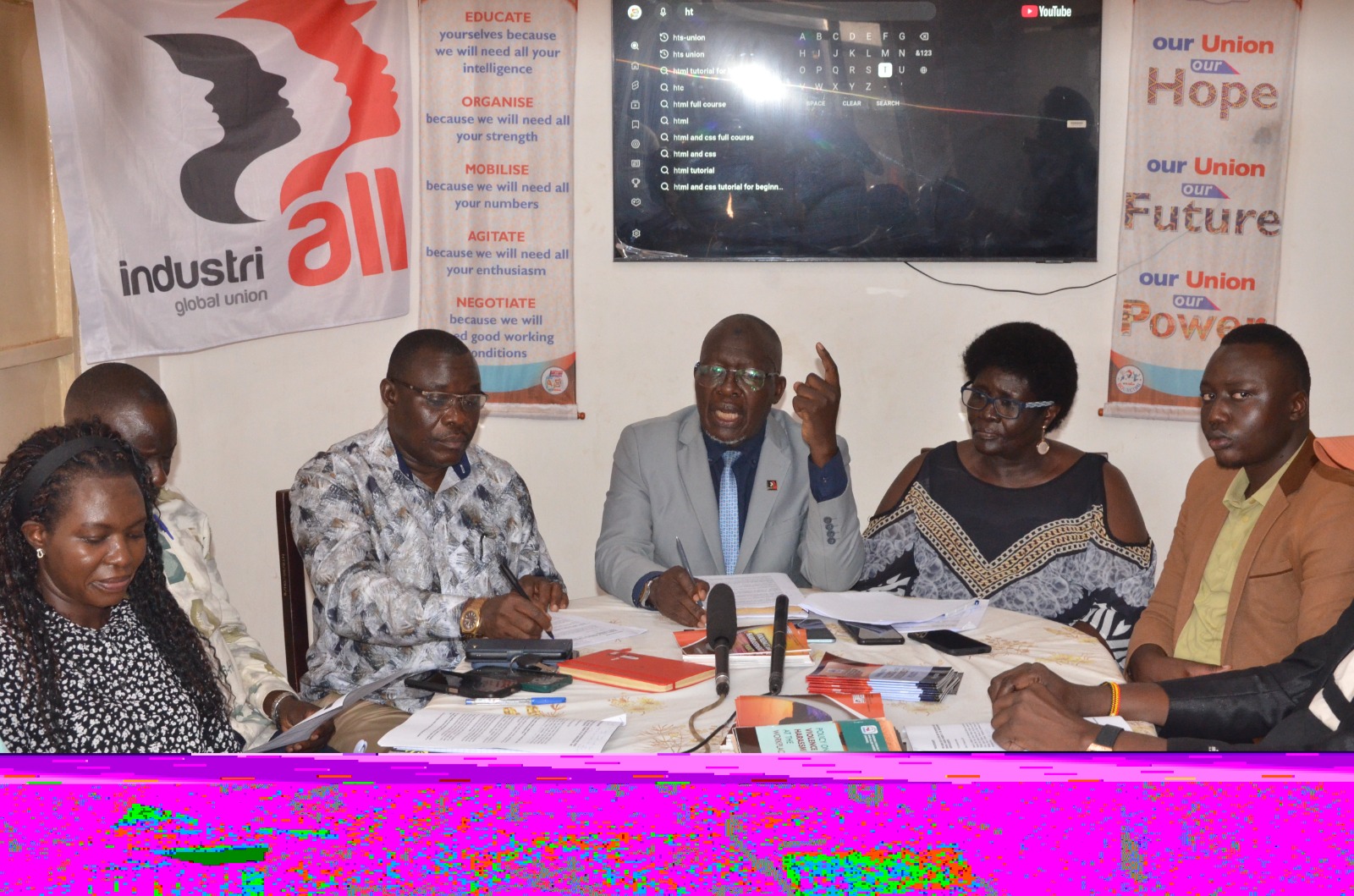
They raised the concerns during a press conference held at the HTS offices in Wakaliga, Kampala, on Saturday, November 21, where they accused some employers of paying workers as little as UGX 5,000 to UGX 10,000 a day amid the rising cost of living.
INCC Chairperson Alhaji Sempebwa Twaha said the earnings of many workers were no longer sufficient to cover basic expenses such as food, transport and rent, urging government to urgently establish a minimum wage that reflects the current economic situation.
“Workers are earning between UGX 5,000 and UGX 10,000, yet the cost of living keeps going up. How can somebody work throughout the day and fail to afford food, transport and rent? Government must urgently introduce a minimum wage that reflects the economic situation today,” Sempebwa said.
He argued that the absence of an effective minimum wage framework had left low-income earners, particularly casual workers, vulnerable to exploitation.
Sempebwa also challenged employers to improve salaries for Ugandan employees, questioning why some expatriates receive significantly higher remuneration while local workers performing essential duties remain poorly paid.
He further expressed concern over the treatment of women at workplaces, citing sexual harassment, rape and molestation as some of the challenges affecting female employees.
According to Sempebwa, economic hardships have left some women vulnerable to exploitation as they struggle to supplement their earnings and meet family responsibilities.
He called on government to strengthen laws protecting women and ensure employers provide safe and dignified working environments.
INCC General Secretary Moses Mauku called for stronger enforcement of occupational safety and health standards, particularly in factories, warning that inadequate labour inspections were exposing employees to dangerous working conditions.
Mauku alleged that about 90 per cent of companies operating in Uganda had never been visited by labour inspectors, raising questions about the effectiveness of workplace monitoring.
“Occupational safety and health is very important in factories. We want government to ensure that the Occupational Safety and Health Act is implemented because workers must be protected from dangerous working conditions,” he said.
He also called for greater respect for workers’ rights to join trade unions and participate in collective bargaining agreements, which he said were essential in negotiating better salaries and working conditions.
Citing Section 23(1) of the Labour Unions Act, Mauku said workers have a right to belong to unions of their choice but noted that some employers discourage union membership to weaken employees’ ability to collectively demand better treatment.
He urged government to intervene against intimidation and victimisation of workers seeking to join trade unions.
Meanwhile, Faith Irene Lanyero, Industrial National Women’s Committee Chairperson and a board member of the National Organisation of Trade Unions (NOTU), said women were bearing a disproportionate share of the effects of rising living costs and inequalities in the labour market.
Lanyero noted that although women provide a significant share of labour in the manufacturing industry, many continue to face low wages, heavy domestic responsibilities and limited opportunities for career advancement.
She said rising food prices had also affected workers’ access to adequate meals, with some employers reportedly reducing food provisions while employees struggled to afford alternatives.
“The cost of living is affecting women so much. Women are the backbone of many industries, but they also have responsibilities at home. When food prices increase and salaries remain low, it becomes difficult for them to provide for their families,” Lanyero said.
She cited a gender pay gap of 32.3 per cent, saying women continue to earn considerably less than men despite their contribution to the economy.
Lanyero added that rising rental costs and the displacement of people from affordable settlements, including areas around railway lines, had increased the vulnerability of low-income women workers, with some exposed to sexual exploitation.
She also warned that climate-related challenges and technological advancements were creating additional economic pressures, with some companies increasingly adopting machinery and systems that could replace human labour.
She raised concern that some pregnant employees reportedly fear losing their jobs, with some resorting to abortion because they believe pregnancy could jeopardise their employment.
Although government has introduced Technical and Vocational Education and Training (TVET) programmes, Lanyero said many women were unable to benefit fully because of domestic and childcare responsibilities.
To address the challenges, she proposed government-supported affordable housing for workers, the establishment of a resilient fund to help employees cope with economic shocks and stronger justice systems to address sexual harassment and other forms of workplace abuse.
She also urged government to advance the implementation of International Labour Organisation Convention 190, which seeks to eliminate violence and harassment in the world of work.
Lanyero welcomed provisions in the Employment (Amendment) Act, 2026, concerning breastfeeding mothers, describing them as an important step towards improving the welfare of working women.
On taxation, Robina Kagoy, Executive Director of Voices for Labour and legal representative of INCC Uganda, said multiple tax obligations were further reducing workers’ already limited earnings.
Kagoy argued that taxes introduced in the 2026/2027 financial year, alongside Pay As You Earn (PAYE), local service tax and taxes on consumable goods, had increased the financial burden on ordinary employees.
“Workers are paying taxes from their salaries through PAYE, and when they use the same money to buy goods and services, they are taxed again. Government needs to examine this burden because workers are contributing heavily while their earnings remain very low,” Kagoy said.
She questioned the disparity between the taxes imposed on ordinary workers and the incentives extended to investors, calling for a review of the country’s taxation approach to protect low-income earners.
Kagoy further called for better coordination of fiscal, wage and monetary policies, arguing that economic policies should ensure workers earn enough to meet their basic needs.
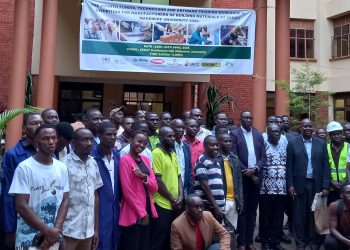
The press conference brought together representatives of several unions affiliated with INCC Uganda, including the HTS Union, Uganda Textiles, Garment, Leather and Allied Workers Union, Uganda Printers, Paper, Polyfiber and Allied Workers Union, Uganda Chemical, Petroleum and Allied Workers Union, and the National Union of Clerical, Commercial, Professional and Technical Employees.
In a joint statement, the unions called on government to establish an enforceable national minimum wage, strengthen labour inspections, protect casual and temporary workers, improve social protection and ensure safer workplaces.
They also urged employers to review workers’ salaries in line with the prevailing cost of living and embrace collective bargaining as a means of promoting fair remuneration and better working conditions.
“Workers cannot continue to produce Uganda’s wealth while being unable to afford the basic necessities of life,” the joint statement emphasised.