


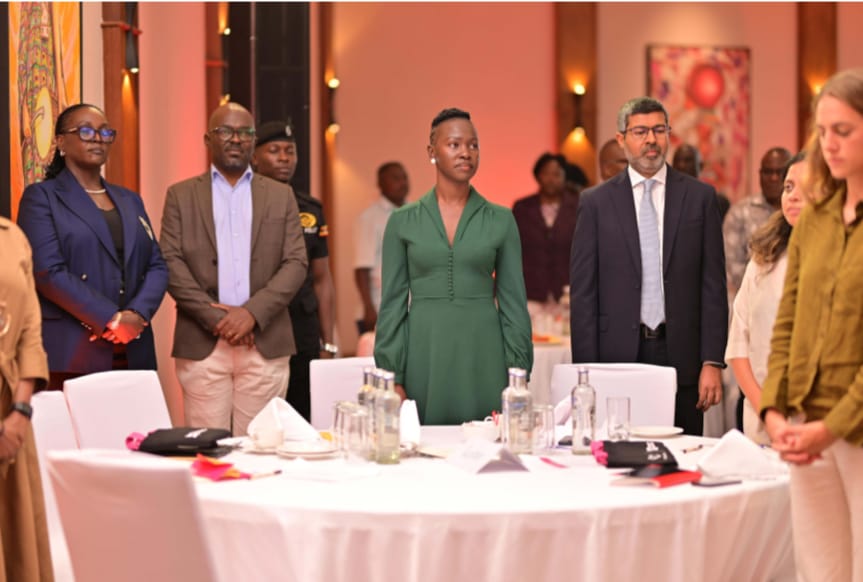
KAMPALA Uganda (UGNEWSLINE) – BRAC Uganda and the Danish -based LEGO Foundation have launched a five-year, 50-million-dollar global partnership aimed at improving early childhood development, education and wellbeing among children affected by humanitarian crises in Uganda and Bangladesh.
The initiative, dubbed ”Sustaining Play, Learning and Skills in Humanitarian Contexts (SPLASH)”, is expected to reach 400,000 children and adolescents in the two countries, providing opportunities for play-based learning, skills development and access to supportive environments despite the challenges associated with displacement and poverty.
In Uganda, the programme will directly reach 92,406 children in Rhino, Imvepi and Bidi-Bidi refugee settlements, alongside 44,500 caregivers and 906 play leaders.
Implementation will begin in Rhino and Imvepi in 2027 before expanding to Bidi-Bidi in 2028. The Hilton Foundation has also joined the partnership with an additional financial contribution towards the intervention.
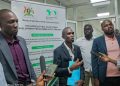
Speaking during the national launch, BRAC Uganda Programmes Manager Joseph Kabanda said the initiative builds on nearly a decade of the organisation’s experience in providing affordable and quality early childhood development services, particularly in refugee-hosting communities.
Kabanda said BRAC began implementing interventions in Uganda in 2016 and previously reached more than 5,000 children in Rhino and Imvepi settlements through its Humanitarian Play Lab model, with support from the Hilton Foundation.
He explained that the previous intervention helped children develop essential skills and prepare for transition into primary education, while BRAC also established 10 play labs in Rhino with support from the Eden Prize Foundation.
He said the new initiative would significantly expand the programme’s reach, with 42,000 children aged three to six expected to benefit from play-based learning, compared to the previous 5,000.
Another 5,000 children aged zero to three will benefit from a pilot intervention focusing on responsive caregiving, early stimulation, health and psychosocial wellbeing.
Kabanda emphasised that SPLASH is a genuine partnership involving joint learning and implementation between BRAC and the LEGO Foundation rather than a conventional funding arrangement in which an organisation receives money to execute activities and submit reports.
He said the two organisations would work together throughout the five-year period to strengthen interventions, assess their effectiveness and ensure that quality is maintained as the programme expands.
Supporting children beyond the classroom
Under the early childhood development component, the programme will establish and equip 150 Humanitarian Play Labs across the three settlements.
BRAC plans to start with 100 facilities in Rhino and Imvepi in 2027 before adding another 50 in Bidi-Bidi in 2028.
Kabanda said an engineering assessment of existing play facilities in the settlements and host communities was already underway to identify structures that can be repaired and equipped to support learning through play.
The play labs will provide children with safe and stimulating spaces to develop social and emotional skills, foundational literacy and other essential abilities.
The programme will also support children with disabilities to access inclusive learning opportunities and prepare for transition into primary education.
Kabanda said the intervention recognises that establishing play centres and training educators alone cannot guarantee children’s development if the conditions at home remain difficult.
He noted that children who return to households affected by hunger, poverty and domestic violence may struggle to benefit fully from the learning opportunities provided at school.
” You cannot support a child and leave the mother,” Kabanda said, explaining the importance of involving caregivers in children’s development.
Under the responsive caregiving pilot, Village Health Teams will support families with health and psychosocial services, screening, identification of children requiring specialised support, referrals and follow-ups.
The programme will also provide parent education to strengthen caregiving practices and early stimulation, promote health and nutrition education and improve connections between families and essential services.
1,000 households to benefit from livelihood support
Beyond children’s learning, SPLASH will adopt a two-generation approach targeting 1,000 vulnerable households to address the economic challenges that affect children’s wellbeing.
The first 500 households will be enrolled during the initial phase, with another 500 expected to benefit from 2028.
The approach will combine children’s development interventions with livelihood and economic empowerment support for their caregivers.
Kabanda said beneficiaries would receive enterprise development support, financial literacy training, assistance to strengthen income-generating activities and links to financial institutions, particularly Village Savings and Loan Associations.
The programme will also provide six-month consumption stipends to help households meet immediate needs and health subsidies to reduce financial pressures.
Home coaching will be another important component, with frontline workers providing continuous guidance to help vulnerable families move from extreme poverty towards improved economic stability.
The programme targets at least 70 percent of households enrolled under the two-generation model to transition from extreme poverty towards self-reliance.
Government calls for wider adoption of play-based learning
The Minister of State for Youth and Children Affairs, Dr Mercy Faith Lakisa, commended BRAC Uganda and the LEGO Foundation for investing in children affected by displacement, poverty and humanitarian vulnerability.
Lakisa said play is not merely recreation but an important part of children’s brain development, physical growth and emotional wellbeing.
She explained that through play, children explore their surroundings, develop social skills, build confidence, communicate and acquire abilities that shape their future.
She said the SPLASH initiative provides a holistic approach by combining play-based learning, responsive caregiving, psychosocial support, child protection and support for household livelihoods.
Lakisa said Uganda’s development aspirations, including those under Vision 2040, depend on investing in children, strengthening families and protecting vulnerable communities.
She noted that children affected by displacement often experience interrupted education, psychosocial distress, family disruption and limited access to essential services, challenges that can affect their development even after humanitarian emergencies have passed.
The minister said government recognises that the needs of refugees cannot be addressed through emergency assistance alone but must also include long-term development, social protection, access to services and economic self-reliance for both refugees and host communities.
She particularly welcomed the two-generation approach, saying children’s wellbeing cannot be sustainably improved without addressing the economic circumstances of their families.
Lakisa also urged development partners and non-governmental organisations to align their interventions with government programmes and strengthen existing national and local structures rather than establishing parallel systems that may collapse when project funding ends.
She challenged BRAC to ensure that the programme leaves lasting benefits that government institutions and communities can continue to sustain after the five-year partnership.
LEGO Foundation emphasises quality of children’s experiences
Tarek Alami, Head of Children’s Learning and Development at the LEGO Foundation, said every child deserves an opportunity to grow and develop regardless of where they are born or the circumstances in which they live.
He said the earliest years of life are critical in shaping children’s skills, confidence and relationships, with play providing an important foundation for learning and development.
Alami noted that children living in refugee settlements and conflict-affected communities often face uncertainty, family disruption and economic pressures that limit opportunities for learning and enjoying childhood.
“A child’s development does not wait until a crisis is over and neither should our efforts to support them,” he said.
He explained that the programme would support parents and caregivers of children aged zero to three through community health workers, helping families create nurturing home environments through everyday activities such as talking to babies, sharing stories and playing together.
Older children will benefit from Humanitarian Play Labs, where they can interact with others, explore their surroundings and develop skills in safe and welcoming environments.
Alami said the partnership would also focus on generating evidence about what works, strengthening the quality of learning experiences and identifying ways of expanding early childhood development services without compromising standards.
He said the ultimate measure of success should not simply be the number of children reached but the quality of their experiences and the difference the programme makes in their lives.
BRAC seeks lasting impact beyond the project
BRAC International Executive Director Abed Shameran said the organisation’s 20-year journey in Uganda had been shaped by partnerships with government, communities and development partners.
He said BRAC, which started in Bangladesh more than five decades ago, believes that poverty and inequality can be addressed when people are given opportunities and support to transform their own lives.
Shameran said the organisation’s experience had demonstrated the importance of addressing interconnected challenges through integrated interventions rather than fragmented programmes.
He noted that BRAC Uganda, which started operations in 2006, has reached millions of people through health, education, livelihood development, youth empowerment and financial inclusion initiatives.
On early childhood development, he said BRAC had worked closely with government over the past decade to strengthen early learning opportunities, including through its participation in the Network for Early Childhood Development Actors and the Education in Emergencies Sector Working Group.
He added that BRAC’s early childhood development curriculum, approved by the National Curriculum Development Centre, provides a foundation for quality delivery and alignment with national learning expectations.
Shameran said the SPLASH initiative would contribute to Uganda’s Fourth National Development Plan for the 2025/26–2029/30 period and the country’s long-term Vision 2040 ambitions.
He commended Uganda for maintaining an open-door refugee policy that provides displaced people with opportunities such as freedom of movement, access to land for cultivation, the right to work and access to financial services.
He said such an environment gives refugee families an opportunity to rebuild their lives, with children benefiting from the stability and opportunities created.
BRAC Regional Director Anne Muta said the programme combines lessons from the organisation’s Humanitarian Play Lab model and graduation approach, which have been implemented in Bangladesh and other settings.
She said the initiative would give children growing up in difficult circumstances an opportunity to enjoy childhood, explore their potential and develop skills that can shape their future.
Muta also noted that supporting children would contribute to improving opportunities for young mothers and women who face challenges balancing childcare with education, employment and economic activities.
She said Uganda would be the first African country to implement the Humanitarian Play Lab model under this new initiative, providing lessons that could inform its expansion into other African countries where BRAC operates.
The SPLASH partnership comes at a time when humanitarian needs are increasing while resources available to support displaced communities continue to shrink.
Uganda hosts more than 1.9 million refugees, the largest refugee population in Africa, with children accounting for more than one million of the displaced population.
Many of these children face barriers to education, protection and psychosocial support, making early childhood development interventions increasingly important.
Through SPLASH, BRAC and the LEGO Foundation hope to demonstrate how investment in play, caregiving and household resilience can help children affected by humanitarian crises build stronger foundations for lifelong learning and development.