



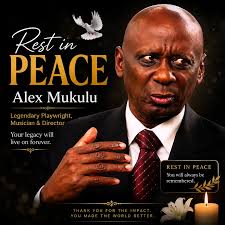
By Isaiah Katumwa
I first met Alex Mukulu in 1992, when I was a very young saxophonist finding my way as an artist.
At the time, I had the privilege of playing saxophone on a number of songs in Alex’s production, 30 Years of Bananas. It was one of the biggest and most successful theatrical productions in Uganda at the time. Uganda was celebrating 30 years of independence, and even the President attended the production.
One of the songs I played was “Masekela,” a tribute to the legendary South African trumpeter and musician Hugh Masekela.
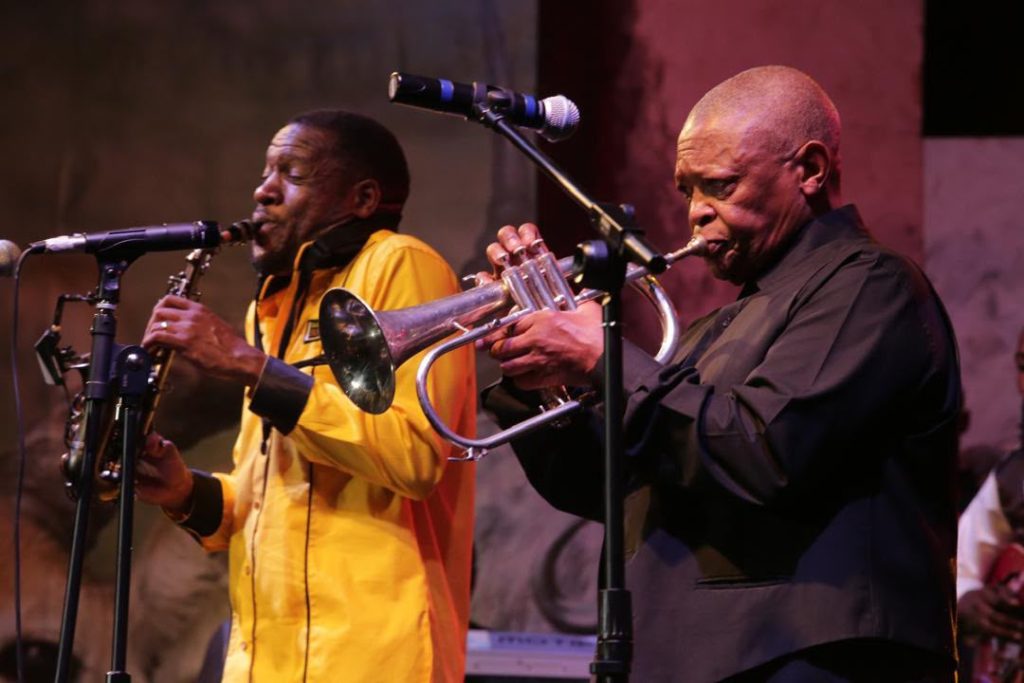
What makes that memory even more remarkable to me today is that, 25 years later, I would have the incredible honour of meeting Hugh Masekela himself—and eventually calling him a friend.
I could never have imagined that as a young saxophonist standing on that stage in 1992, playing a tribute to an artist I deeply admired, my own musical journey would one day lead me to meet that very legend.
For a young musician like me, being part of something of that magnitude was unforgettable. But what I did not fully appreciate then was how much the experience would shape me as an artist.
Alex was not simply an actor or playwright. He was a thinker. He had a way of looking beyond the obvious, beyond the borders and beyond what was considered the norm. As a young artist, I found that incredibly inspiring.
Over the years, our relationship continued. As I grew in my own musical journey, Alex remained someone with whom I could share ideas, laughter and those light moments that make friendships special.
One particular memory remains very dear to me.
In 2012, after my Isaiah Katumwa Live at Serena concert, Alex practically went looking for me. He came to my home simply to tell me how brilliant he thought the production had been. What struck me was not only the compliment, but the questions that followed.
He wanted to know what inspired my songwriting. He was genuinely curious about the creative process. He wanted to understand what was happening inside the mind of another artist.
That was Alex.
He was funny, thoughtful and wonderfully unconventional. He had a way of making you think differently without making you feel that he was trying to teach you something.
Looking back now, I realise that my first encounter with Alex happened at a very formative moment in my life. I was a young saxophonist playing in one of Uganda’s landmark productions. Years later, I was an established musician, and Alex was still taking the time to encourage me, ask questions and celebrate the work.
That is the kind of person he was.
Uganda has lost a remarkable artist, but I believe we have also lost something more difficult to replace—a creative mind that was never afraid to think beyond the boundaries.
For me, however, Alex will always be more than a cultural icon.
He will remain the man I first encountered as a young saxophonist in 1992; the artist who opened my mind to thinking beyond the borders; the friend who shared laughter with me through the years; and the thoughtful soul who came to my home in 2012 simply to tell me, I saw what you did, and it was brilliant.
Alex, thank you for the light you shared.
May you rest in peace, my friend. Your curtain may have fallen, but your story continues through all of us you inspired.