






NAIROBI — Kenyan Government has announced plans to fully fund higher education for all students admitted to public universities and colleges, marking a significant shift in education policy as countries around the world grapple with the rising cost of tertiary education and widening access to learning.
President William Ruto said proposed amendments before Parliament would introduce a universal financing model aimed at ensuring that every qualified student can pursue higher education regardless of their family’s financial circumstances.
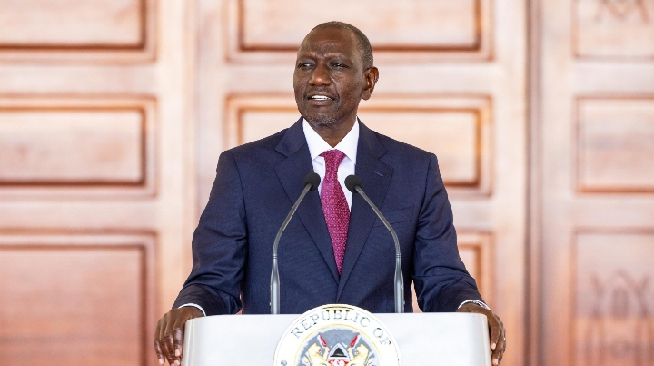
Speaking at State House in Nairobi on Monday, Ruto said previous funding approaches, including a differentiated financing model based on students’ economic backgrounds, had failed to deliver the intended results for both learners and higher education institutions.
“It will not matter the background of any child in Kenya, but how good they are,” the president said, adding that earlier reforms had struggled to provide sustainable financing for universities while maintaining equitable access.
Under the proposed system, every student admitted to a public university or college would have the full cost of their education covered by the state.
Parents who wish to contribute financially would still be able to do so voluntarily, while those unable to pay would receive government support.
The announcement represents one of the most ambitious higher education financing proposals in Africa at a time when governments worldwide are reassessing how to balance expanding university enrolment with mounting fiscal pressures.
Many countries have introduced or revised student loan schemes, targeted subsidies or tuition support in response to growing concerns over affordability and student debt.
Kenya’s proposed reforms also come after sustained public criticism and legal challenges over the country’s previous university funding model, which sought to allocate state support according to students’ assessed financial need.
The government argues that the new approach will provide greater certainty for students and institutions while protecting access to tertiary education.
The proposed legislation must still be considered by Parliament before the universal funding model can be implemented.