





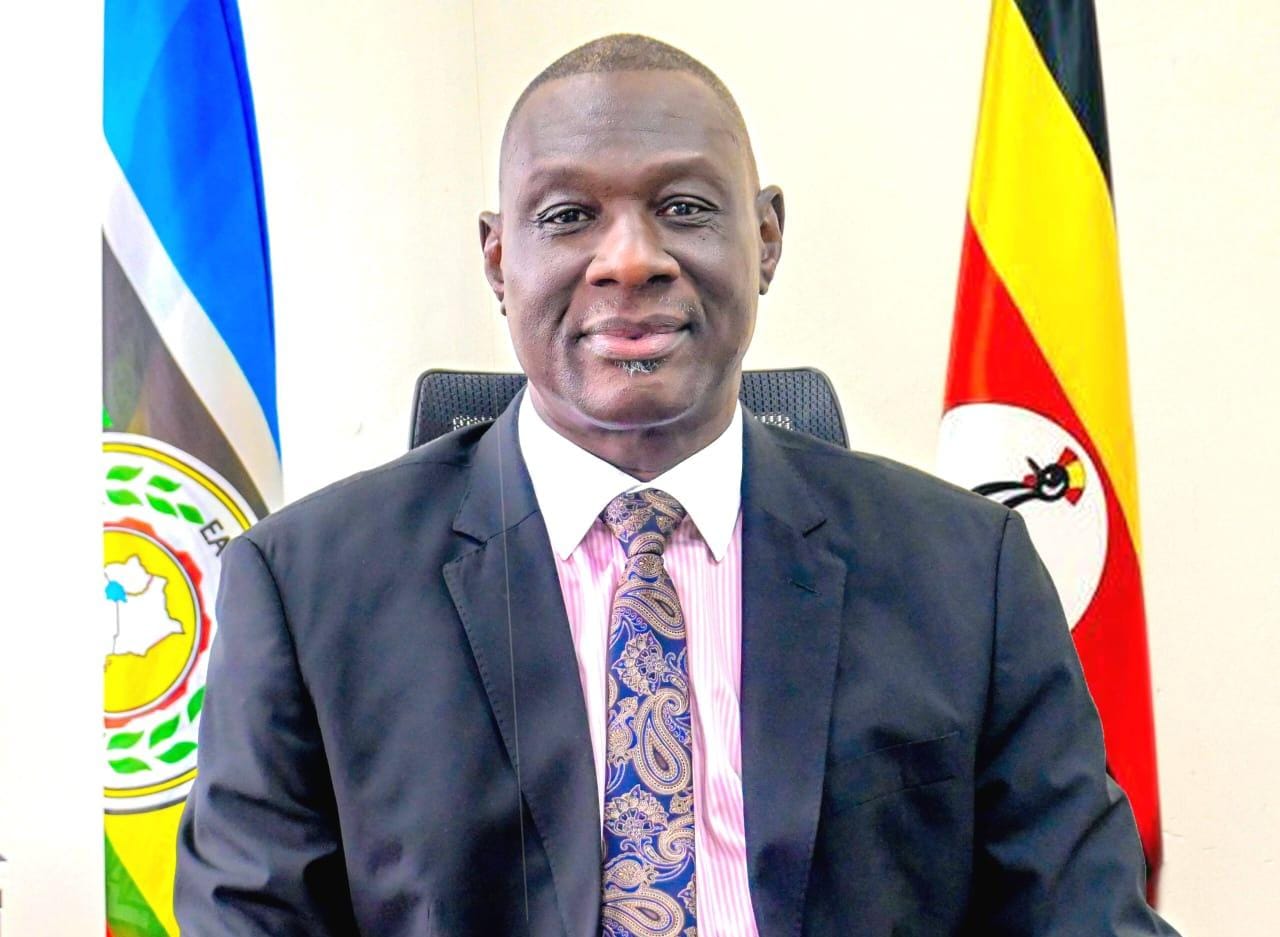
Fort Portal, Uganda — Professor Pius Coxwell Achanga, PhD (Cranfield), Vice Chancellor of Mountains of the Moon University (MMU), has been elected to represent Uganda’s public universities on the Executive Committee of the Inter-University Council for East Africa (IUCEA). The appointment places him among the regional body charged with steering higher education cooperation and quality assurance across the East African Community.
Reacting to the news, Prof. Achanga said:
“I am deeply honoured to have been elected to represent Uganda’s public universities on the Executive Committee of the Inter-University Council for East Africa (IUCEA). I sincerely thank my colleagues for the trust they have bestowed upon me. I look forward to advancing regional collaboration, strengthening higher education, and promoting excellence across East Africa.”
A Vice Chancellor Who Has Shaped the Institution He Now Represents Regionally
Prof. Achanga’s elevation to the IUCEA Executive Committee comes on the back of a leadership record that has already reshaped Mountains of the Moon University itself. Before becoming Vice Chancellor, he chaired the government task force that guided MMU’s transition from a private chartered institution to a fully public university — a process formalised when the Memorandum of Agreement was signed between the Government of Uganda and MMU’s Board of Directors in January 2022. He was appointed substantive Vice Chancellor in October 2022, becoming the steward of the very transformation he had helped design.

That shift from private to public status was more than an administrative change. It repositioned MMU within the national higher education system, expanding its access to public funding, oversight, and mandate — and setting the stage for the institutional growth that has followed under Prof. Achanga’s leadership.
Building MMU’s Niche: Agriculture, Tourism, Environment — and Science, Innovation and Technology
Under Prof. Achanga and his Top University Management team, MMU has sharpened its institutional identity around a distinctive niche: Agriculture, Tourism, and Environment, blended with Science, Innovation, and Technology. This positioning is presented by the university’s leadership as deliberately aligned with Uganda’s national development priorities, including the government’s 10-Point Programme for socio-economic transformation.
By anchoring its academic and research focus in areas that speak directly to the Rwenzori region’s economic base — agriculture, ecotourism around the Rwenzori Mountains, and environmental management — while layering in science and technology innovation, MMU under Prof. Achanga’s leadership has sought to position itself as a university whose research and training agenda serves both local livelihoods and national development goals.
Competency-Based Education: Positioning MMU as a Next-Generation University
A defining feature of Prof. Achanga’s tenure has been his emphasis on Competency-Based Education (CBE) — an approach that prioritises practical skills and demonstrable competencies over purely theoretical instruction. This focus is central to how MMU’s leadership frames the university’s ambitions: not simply to produce graduates, but to cultivate skilled, work-ready problem-solvers capable of driving community development and socio-economic transformation.
This CBE-driven approach, combined with MMU’s sector niche, is positioned by the university as placing it “at the curve” of becoming a next-generation university — one built for relevance to industry, community, and country alike.
A Regional Voice for Higher Education
With his election to the IUCEA Executive Committee, Prof. Achanga now carries this vision beyond MMU’s campus in Fort Portal into a regional platform. The Inter-University Council for East Africa coordinates higher education collaboration among partner states, and Prof. Achanga’s role there gives Uganda’s public universities a direct voice in shaping regional policy on quality assurance, academic mobility, and cross-border collaboration.
Colleagues in Uganda’s higher education sector have described him as a mover and thought leader — someone whose track record of institutional transformation at MMU offers a template for the kind of pragmatic, development-focused leadership that regional higher education bodies like IUCEA are seeking to champion.