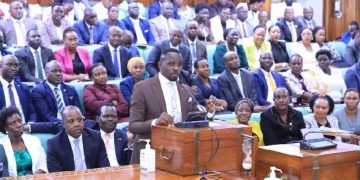



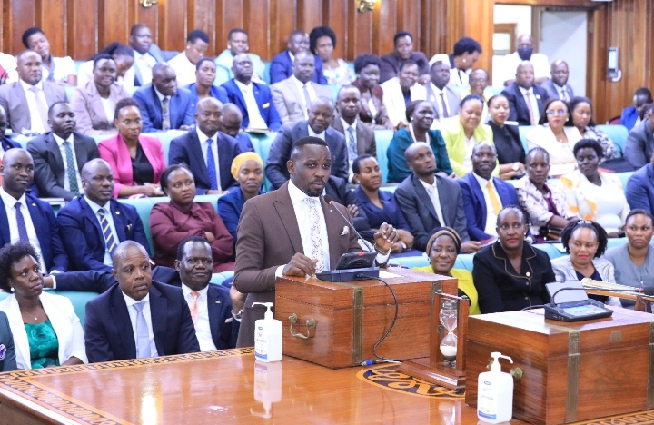
A tense exchange unfolded in Parliament on Thursday (June 10, 2026) after Leader of the Opposition (LoP) Joel Ssenyonyi criticized Prime Minister Robinah Nabbanja’s handling of critical national issues, before publicly praising Vice President Jessica Alupo for what he described as a more measured and respectful approach to government business.
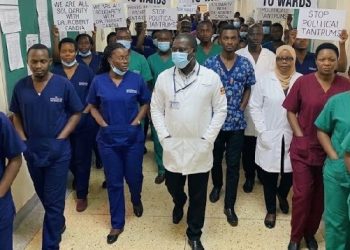
The confrontation emerged during discussions on the government’s controversial decision to scrap allowances for medical interns and the continued disappearance of Amuria District Woman MP Margaret Etilu.
Raising the matters on the floor of Parliament, Ssenyonyi demanded clear answers from the government, arguing that the decision to withdraw intern doctors’ allowances could have devastating consequences for Uganda’s already strained healthcare system.
The government recently announced plans to end the payment of allowances to medical interns as part of a policy shift that seeks to integrate internship training into university education.
The move has sparked criticism from health professionals and lawmakers who argue that interns play a critical role in delivering healthcare services, particularly in public hospitals facing severe staffing shortages.
Ssenyonyi urged the government to reconsider the proposal, suggesting that resources spent on organizing national celebrations and public holidays could instead be redirected to support intern doctors.
He warned that withdrawing the allowances would discourage young people from pursuing medical careers and could worsen the staffing crisis in public health facilities.
“These intern doctors are a crucial component of our healthcare system. Removing their allowances will not only demoralize them but could also create a national health crisis,” Ssenyonyi argued.
Uganda’s health sector has for years struggled with inadequate funding, shortages of medical personnel, limited equipment and overcrowded health facilities.
Medical interns often provide frontline services in referral and district hospitals, making them an essential part of the country’s healthcare workforce.
The opposition leader also pressed the government for answers regarding the disappearance of Amuria Woman MP Margaret Etilu, whose whereabouts have remained a subject of public concern.
Etilu reportedly went missing under unclear circumstances, triggering demands from both opposition and ruling party members for transparency from security agencies.
Her disappearance has become one of the most discussed political issues in recent weeks, with family members, legislators and human rights advocates demanding that authorities account for her whereabouts.
Ssenyonyi insisted that if the legislator had committed any offence, she should be produced before a competent court rather than being held incommunicado.
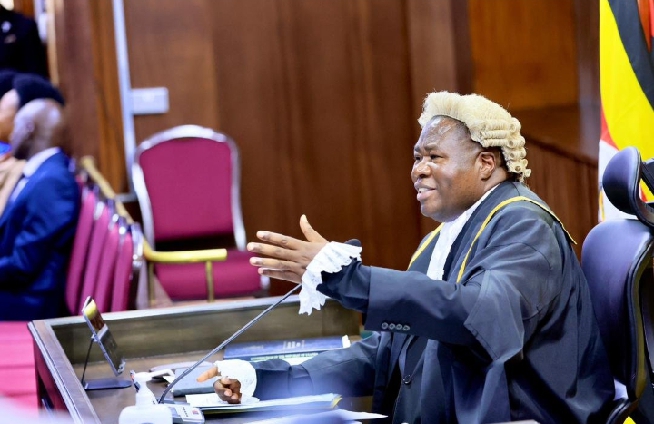
Following his submission, Speaker of Parliament Oboth Oboth, who was presiding over the House, invited Prime Minister Nabbanja, as leader of government business, to respond to the concerns.
In her response, Nabbanja defended the government’s position, noting that the payment of intern doctors’ allowances had originally been directed by President Yoweri Museveni but not the opposition. She said that matters concerning science education and training were policy issues under government review.
Her remarks, however, did little to satisfy the Ssenyonyi and others MPs who physically seemed dissatisfied in their body and facial expression.
The atmosphere shifted when Vice President Jessica Alupo was invited to address the same concerns.
Alupo informed Parliament that the issue of intern doctors’ allowances would undergo further review.
Regarding the growing concern over missing persons, she acknowledged that the matter affected all Ugandans regardless of political affiliation.
“We are all concerned because opposition members have relatives in NRM and NRM members also have relatives in the opposition,” Alupo said, adding that the Ministry of Internal Affairs would soon present a comprehensive report to Parliament.
On the specific case of MP Margaret Etilu, the Vice President revealed that she had personally followed up the matter with security agencies.
According to Alupo, security officials informed her that the legislator was in good health and would soon rejoin Parliament.
Her response drew commendation from Ssenyonyi, who contrasted her approach with that of the Prime Minister.
The opposition leader praised Alupo for responding calmly and respectfully to concerns raised by lawmakers before advising Nabbanja to emulate her style.
Ssenyonyi further urged the Prime Minister to consult Alupo more widely and adopt what he described as a more humble and engaging approach when addressing Parliament.
The exchange highlighted growing tensions between the opposition and government over accountability, and the handling of politically sensitive security matters, issues that continue to dominate debate both inside and outside Parliament.