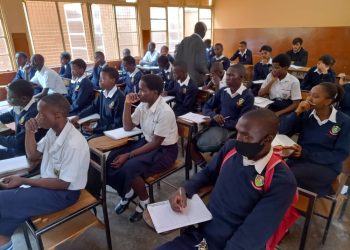



NAPAK DISTRICT — President Yoweri Museveni has urged school administrators, teachers and parents to guide students in selecting subjects that are relevant to the job market, particularly science and Information and Communication Technology (ICT).
“The students should be guided to select science subjects and ICT, which boost their chances of gaining employment in the private sector, the largest employer,” Museveni said.
 The President noted that science subjects equip students with creative and innovative skills needed in the private-sector job market.
“Therefore, I ask the parents and teachers to guide our children to pursue careers in science-related fields to address unemployment,” he said.
Museveni made the remarks in a speech delivered on his behalf by Vice President Jessica Alupo during celebrations to mark the Golden Jubilee of Kangole Girls Senior Secondary School in Napak District on August 8, 2026.
 The President said he was unable to attend the celebrations because of previously scheduled national engagements.
“I have not been able to attend the celebrations marking 50 years of the school’s existence due to earlier scheduled national engagements. I have asked H.E. Jessica Alupo, who is one of the old girls of Kangole Girls, to represent me and deliver my sincere congratulations to the administration, staff, parents and students,” he said.
Museveni thanked the Catholic Diocese of Moroto for establishing Kangole Girls to empower the girl child and enable girls to contribute to the welfare of their families, communities and the nation.
 “A society cannot develop if certain groups remain marginalised and oppressed. The key to development is giving everyone equal opportunities so that they cultivate their God-given talents and potential,” he said.
Museveni explained that when the National Resistance Movement (NRM) came to power in 1986, it observed that although women constituted more than half of Uganda’s population, their full potential was not being realised due to limited access to education and opportunities, chronic ill health and early death.
 “The women were trapped in a very disadvantaged position, despite being at the centre of the subsistence economy and providing at least half of the labour to produce the few cash crops,” he said.
The President said the NRM fought the suppression of women and other marginalised groups by introducing a number of reforms.
He cited universal access to education at the primary and secondary levels through Universal Primary Education (UPE) and Universal Secondary Education (USE) as one of the major interventions.
 “This created a level playing field between the girls and boys because once someone is educated, they cannot easily be suppressed. That was the real beginning of our reforms,” Museveni said.
He noted that in the past, families with limited resources often prioritised boys’ education over that of girls.
“When you educate a girl, you transform a family and ultimately society,” he said.
Museveni also highlighted the role of girls’ education in improving maternal and child health, saying educated mothers are more likely to understand the importance of vaccination, skilled birth attendance, breastfeeding, proper nutrition, safe water, treatment of diarrhoea, child immunisation and appropriate birth spacing.
 “Therefore, education and skilling of the girl child are effective means of empowering not only women but also entire families and societies,” he said.
Secondly, Museveni said the NRM introduced affirmative action in favour of women to increase their participation in leadership and public affairs.
“For instance, for university entry, we have the 1.5 additional points given to girls. Women are free to stand for any elected office. But they also have additional seats which they compete for. That way, we have been able to increase their numbers in public office,” he said.
Museveni also said women had demonstrated strong leadership abilities, recalling their participation in the struggle against past dictatorships.
 “During our resistance against dictatorships, we treated everyone equally; and I found the women to be much more resolute than many men,” he said.
To strengthen protection for women, Museveni said the government had introduced severe punishments for rape and defilement and fought cultural practices that undermine women’s dignity, including female genital mutilation (FGM), early marriage, wife inheritance and domestic violence.
The President emphasised that these reforms had contributed to the emergence of more powerful and resourceful women in government, the private sector and business.
Museveni commended Kangole Girls Senior Secondary School for its contribution to the empowerment of the girl child and urged students and other young people to avoid reckless and dangerous lifestyles, including drunkenness, sexual promiscuity and extravagant spending.
“Your parents and guardians are making big sacrifices to keep you in school. It will be great indiscipline if you waste away your lives in trivialities. Remain healthy, God-fearing and focused on your studies. That way, you will be able to contribute to the development and prosperity of your families and country,” the President said.
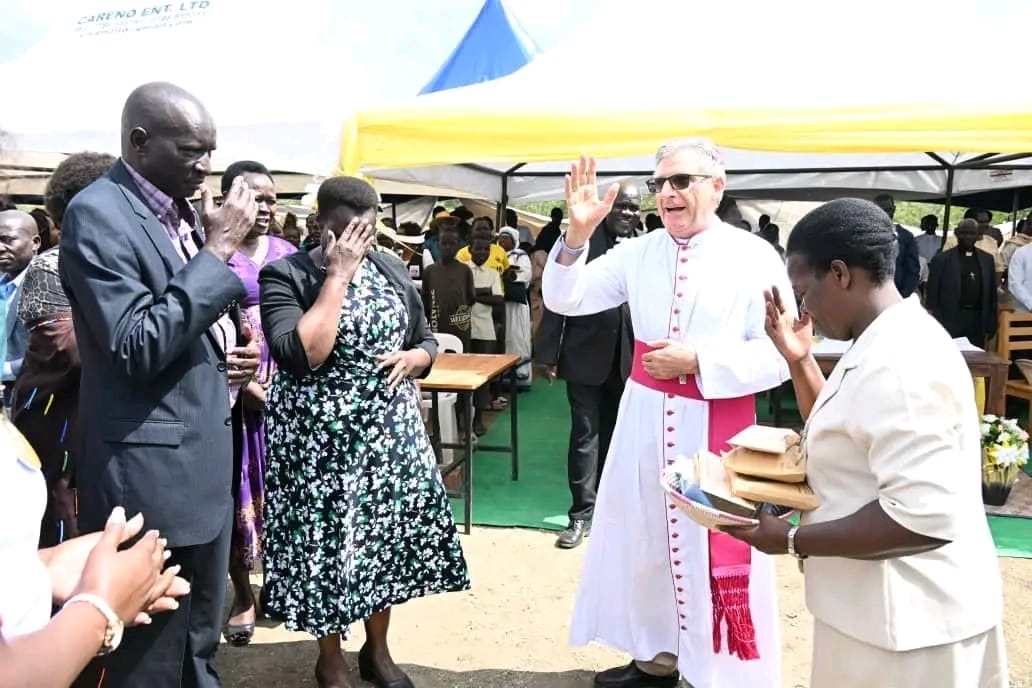
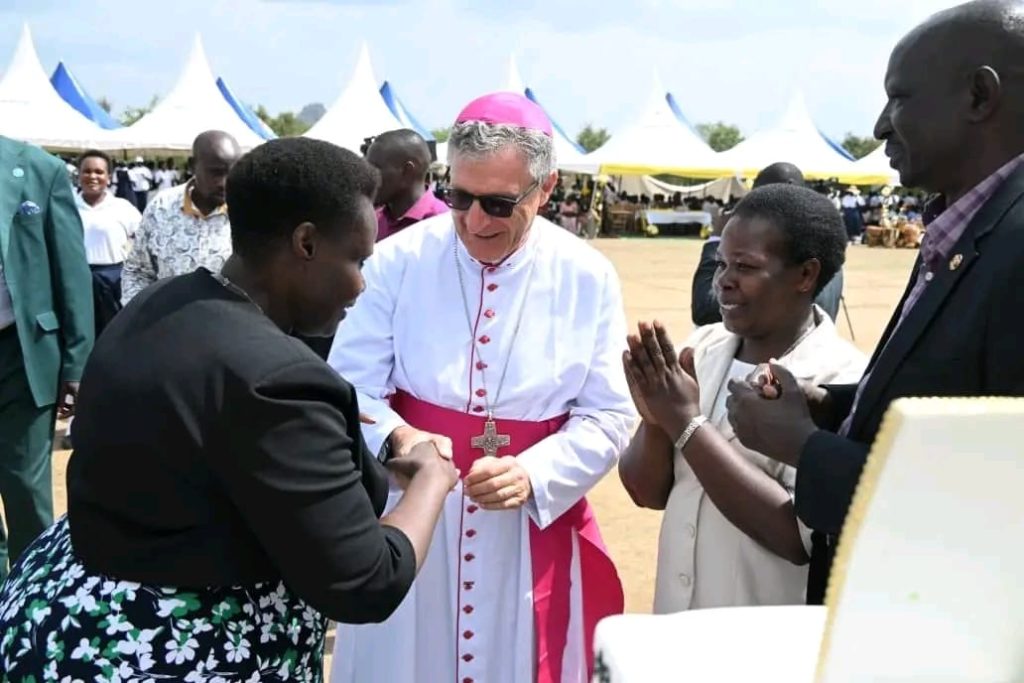
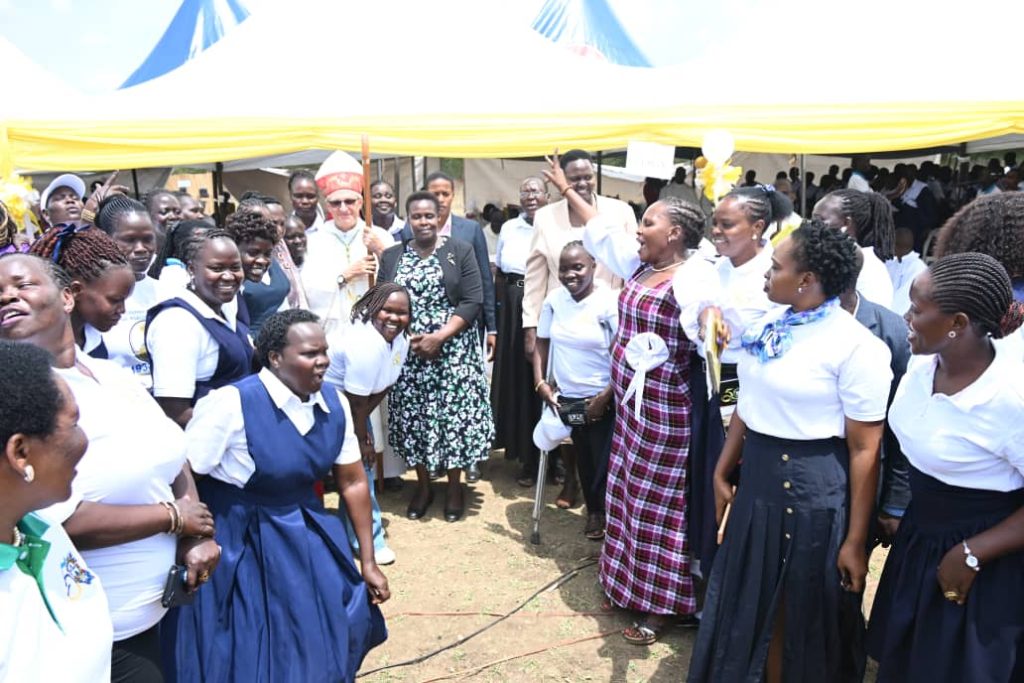
The celebrations began with a Mass led by the Bishop of Moroto Diocese, Damiano Guzzetti. They were also attended by the Minister of Ethics and Integrity, Akello Rose Lilly; the Minister for Karamoja Affairs, John Baptist Lokii; and other dignitaries.