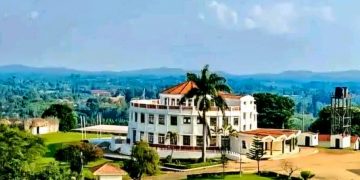


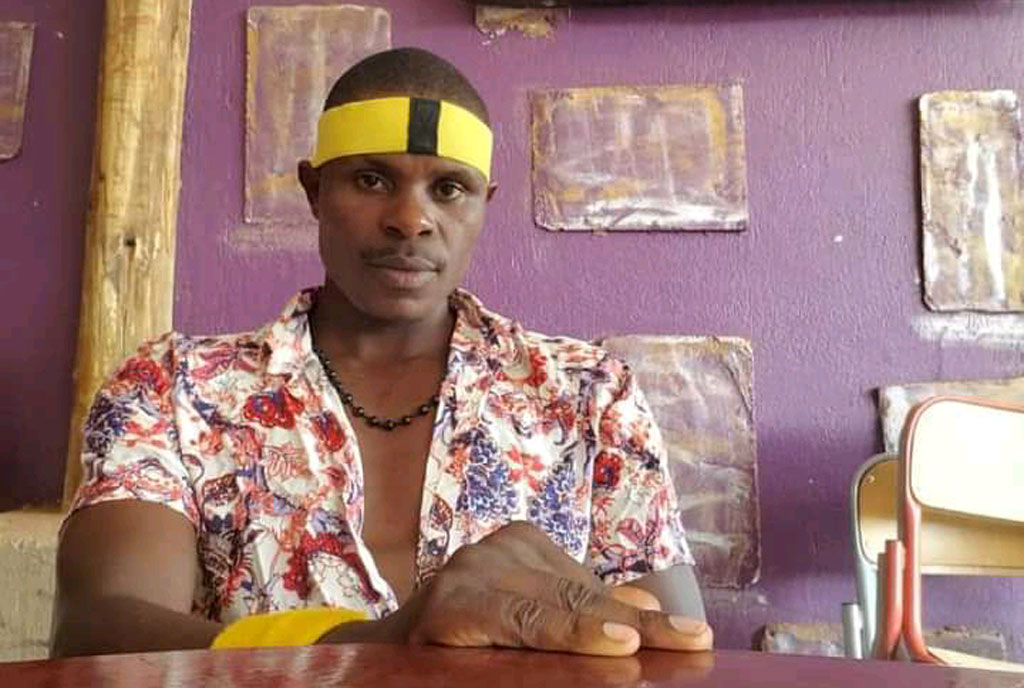



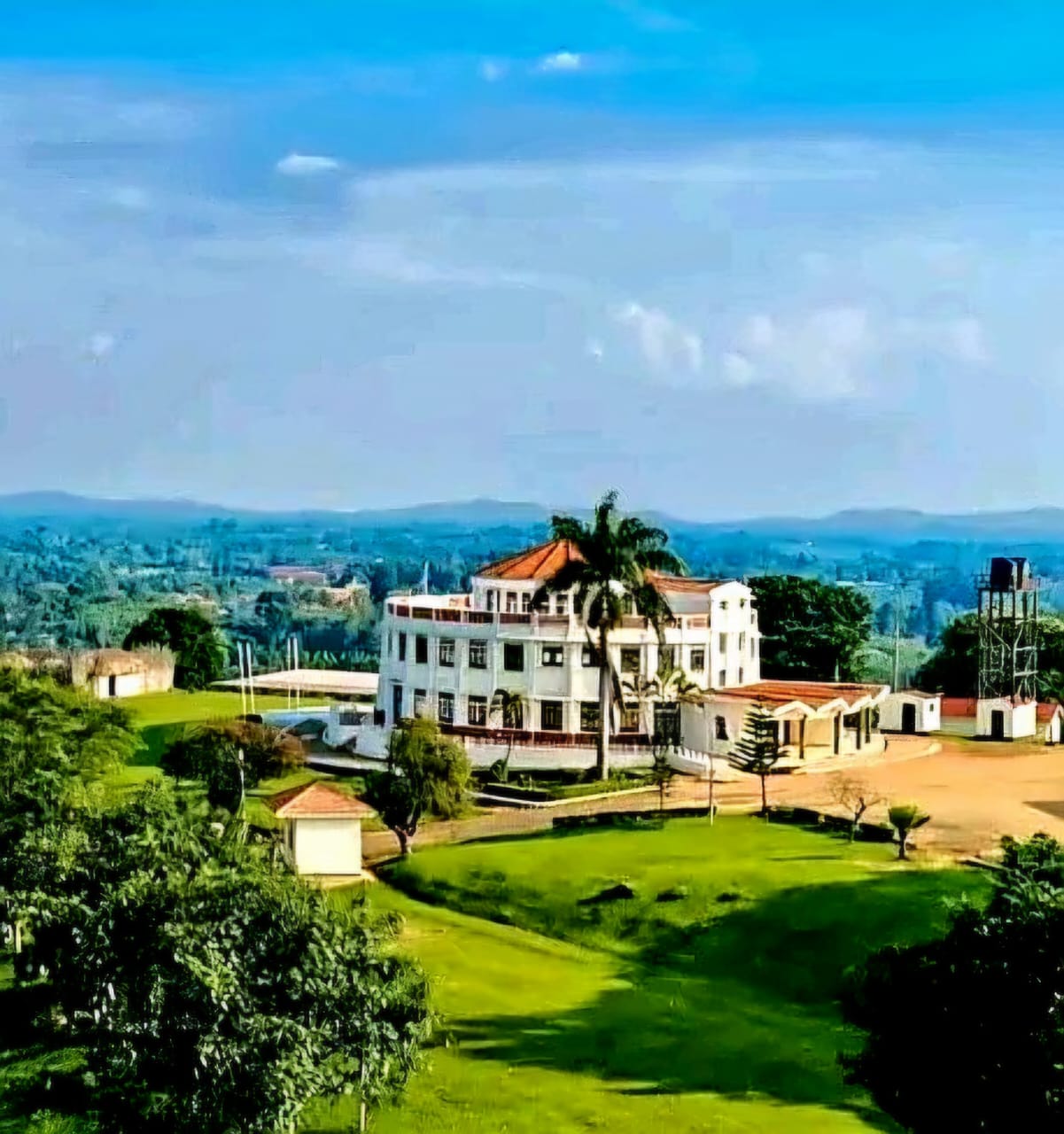
There is a particular kind of quiet that falls over Karuziika Palace in the early morning, before the counties wake and the courtyards fill. It is in that quiet, those who work closest to him say, that Rt. Hon. Calvin Armstrong Rwomiire Akiiki does his clearest thinking — not about the ceremony of office, but about the six months he is said to have promised his King he would need before the people of Tooro began to feel a difference in their daily lives.
That promise did not stay a private one for long. By the end of 2025, it had become something closer to a public reckoning — a year in which the Prime Minister’s Office set out, county by county, to prove that leadership could be measured not in speeches but in surgeries performed, ministries streamlined, chiefs installed, and children given back their mobility.
“We Are Late as Tooro”
It is a phrase that has followed the Prime Minister into cabinet rooms and community barazas alike: we are late as Tooro. It is not a phrase of despair. It is closer to an admission — the kind a leader makes when he has looked honestly at what other kingdoms and other nations have built, and decided that urgency, not comfort, must define his tenure.
That urgency showed itself almost immediately. In January 2025, before the King’s own Royal Tour of Counties — the Kujejeeza Omukama — had even begun, the Prime Minister’s Office was already on the road, moving from county to county, sitting with sub-county chiefs, clan elders, youth representatives, and religious leaders. It was not a ceremonial visit. It was reconnaissance for governance — a deliberate effort to surface the grievances and hopes of ordinary Batooro before the King himself arrived, so that when Rukirabasaija finally stood before his people in October, the Kingdom’s response could be informed, not improvised.
By the time the Royal Tour concluded, new county and sub-county chiefs had been appointed and installed, officiated by the King himself. It was the visible end of a process that had begun months earlier, in quieter rooms, with a Prime Minister determined that decentralization would not simply be a word in a policy document, but a lived reality at the grassroots. Rebuilding the House From the Inside
Institutional reform rarely makes for stirring headlines. Merging ministries, dissolving redundant offices, rationalizing structures — these are not the images that circulate on social media. But they are, arguably, the truest test of whether a leader is serious about accountability.
Under the Prime Minister’s direction, the Ministries of Education, Youth, and Sports were merged into a single, more coherent body. Culture and Clan Mobilisation were folded into Local Government, closing the gap between cultural identity and the machinery that administers it day to day. Ministries whose functions had drifted into overlap and duplication were dissolved outright. None of this was done for the appearance of austerity. It was done, by all accounts, so that the Kingdom’s limited resources could reach further, and so that when a citizen in a remote sub-county needed something from the Kingdom administration, there would be a clear door to knock on — not three.
A Birthday Measured in Children Who Can Walk
If there is a single image that captures the emotional register of the Prime Minister’s first year, it may be this: fifty-nine children, drawn from across Tooro and from neighbouring Kasese, Kagadi, Kisoro, and Kabale, walking — some of them for the first time in a way their bodies had not previously allowed — after undergoing corrective orthopedic surgery at Fort Portal Regional Referral Hospital.
The Amazaarwa Health Week, held to mark Rukirabasaija’s birthday on 16th April, could have been organized as a purely symbolic celebration. Instead, in partnership with the Ministry of Health and the Hands of Mercy Project, it became something more searching — a health outreach built around the most vulnerable children in the region, those whose deformities were correctable but who had, until then, gone without the surgery that could change the course of their lives.
It is difficult to overstate what this kind of initiative signals about a leadership’s priorities. Birthdays can be celebrated with music and spectacle. This one was celebrated, in part, in an operating theatre.
Play, Pride, and the Ball Games of a Kingdom
Sport, in Tooro, has never been incidental to identity — and under the Prime Minister’s watch, it was given new dimensions. The 2025 MTN Kabode Tooro Kingdom Amasaza Tournament introduced netball as a competitive discipline for the first time, a deliberate widening of the door for women and girls in a space long dominated by men. Prize money for winning teams increased, sharpening the competitive spirit across counties, and the tournament’s final — held at St. Paul’s National Major Seminary in Fort Portal — drew crowds whose energy, those present describe, felt less like spectatorship and more like communion.
It is easy to underestimate what a well-run tournament does for a kingdom’s sense of itself. But unity, in Tooro’s telling of its own story, is not only forged in palaces and cabinet rooms. It is forged on football pitches and netball courts, in the shared noise of a crowd cheering for a county that is, in the end, still home.
A Generation Finding Its Voice
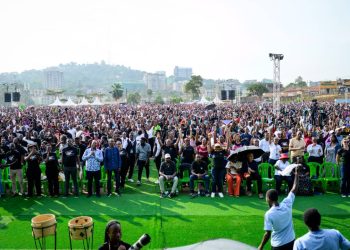
In July 2025, more than a thousand young Batooro gathered for the inaugural Tooro Kingdom Annual Youth Conference — organized by the newly merged Ministry of Education, Youth and Sports in partnership with Reach A Hand Uganda. The King himself graced the occasion. For a Kingdom whose own internal reckoning has included the uncomfortable acknowledgment that Tooro’s population is overwhelmingly young — the majority of its roughly 3.38 million people, by the 2024 census, are under thirty — this was not a symbolic gathering. It was closer to an act of institutional listening: a Prime Minister’s Office choosing to hand a microphone to the generation it will eventually answer to.
Panel discussions on entrepreneurship, technology, leadership, and cultural preservation ran alongside mentorship sessions — an attempt, however modest against the scale of the challenge, to give the Kingdom’s youth something more durable than good wishes: a foundation for sustained engagement.
Cleaning a City, One Month at a Time
Fort Portal was once known, locals will tell you with a mixture of pride and wistfulness, as one of the cleanest cities in the region. Under the Prime Minister’s Baragira Kiki campaign — a phrase that carries the weight of “what will people think,” a gentle but pointed appeal to collective self-respect — the city has begun reaching back toward that reputation. Monthly cleaning exercises have drawn together an unusual coalition: the UPDF, the Uganda Police, the Uganda Red Cross, Fort Portal City Council, and the business community, all converging on the same streets with the same brooms.
It is a small thing, cleaning a city. It is also, in a kingdom trying to rebuild its tourism identity, a foundational one. Fort Portal is not merely a town; it is a gateway — to the Rwenzoris, to Semuliki, to the tea estates and crater lakes that Tooro hopes will one day draw visitors the way Marrakech or Kigali now do. A campaign born from civic pride has, in the Prime Minister’s framing, become something closer to an economic strategy: you cannot sell a destination you have not first cared for.
Dinners, Diaspora, and the Language of Investment
Between July and August, two Royal Dinners — one in Fort Portal, one in Kampala — brought together community members, investors, and diaspora Batooro under a single shared question: what is The Tooro We Desire? These were not simply social occasions. They were an extension of the Prime Minister’s broader resource-mobilization strategy, one that recognizes what the Kingdom’s own internal reflections have long acknowledged — that Ugandans in the diaspora send home an estimated 1.5 billion US dollars annually (this figure comes from the Kingdom’s own strategic materials; readers seeking precision should verify against current remittance data from Bank of Uganda or the World Bank, as diaspora remittance figures shift year to year), and that a kingdom serious about development cannot afford to leave that channel untapped.
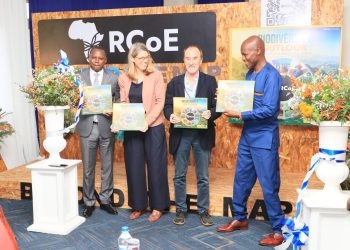
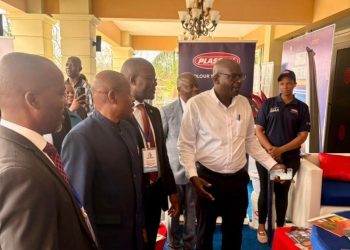
That same instinct — invite the investors in, then give them a reason to stay — shaped the Presidential CEOs Forum, which brought more than 500 business leaders to Fort Portal, culminating in a Royal Dinner at Karuziika Palace where the King himself made the case for investment in agriculture, tourism, and technology.
Thirty Years of a Reign, and a Kingdom Still Building
September’s Empango at 30 celebrations — marking three decades since Rukirabasaija’s coronation — gave the Kingdom a moment to look backward with pride even as its Prime Minister continued pushing it forward. Health camps, the Ekyoto Ha Mpango, the baptism of Princess Ruth Komuntale’s son, and a main celebration that drew the Speaker of Parliament and cultural leaders from across Uganda: it was, by any measure, a year of ceremony. But even amid the ceremony, the machinery of reform kept turning — new MOUs signed with Mountains of the Moon University, with Maarifasasa Ltd for a Digital Hub aiming to train 5,000 youth with 60% female participation, with Habitat for Humanity, with Housing Finance Bank Uganda.
A Promise Still Being Kept
Six months. That was the timeline the Prime Minister is said to have offered his King — a modest, almost audacious commitment given the scale of what Tooro faces: roads where nearly nine in ten kilometres remain in poor condition, electricity that reaches barely a fifth of rural homes, a tourism sector that Dr. Drake Patrick Mirembe, addressing the Kingdom’s own Strategic Cabinet Retreat in April 2025, warned remains constrained by “poor infrastructure, low product innovation, [and] inadequate human resources.”
No single year closes that gap. What 2025 offered instead was something more foundational: evidence of direction. A Kingdom administration that toured its counties before it governed them. A cabinet restructured for accountability rather than convenience. Fifty-nine children who can now walk. A thousand young people who were, for once, asked what they thought. A city choosing, one Saturday morning at a time, to clean itself back into pride.
It is not yet The Tooro We Desire. But under Rt. Hon. Calvin Armstrong Rwomiire Akiiki’s Prime Ministership, and under the reign of Rukirabasaija Omukama Oyo Nyimba Kabamba Iguru Rukidi IV, it is, unmistakably, a Tooro in motion — late, by its own admission, but moving with an urgency that suggests it intends to arrive.