


KAMPALA, Uganda – The Uganda Law Society (ULS) has announced a nationwide industrial action scheduled for Friday, June 26, coinciding with World Anti-Torture Day, in what it describes as a constitutional intervention aimed at defending the rule of law and protesting the growing prevalence of torture, arbitrary detention, and violations of fair trial rights in Uganda.
Under the theme, “When Torture Enters the Courtroom, Justice Leaves the Republic,” the legal fraternity’s action will see advocates across the country abstain from court appearances and ordinary legal work while engaging in public awareness campaigns against torture and other human rights violations.
Addressing members of the legal profession, justice sector stakeholders, civil society organizations, and the public, ULS leaders emphasized that the action is neither partisan nor a labour dispute but a response to what they described as a steady erosion of constitutional safeguards and the integrity of Uganda’s justice system.
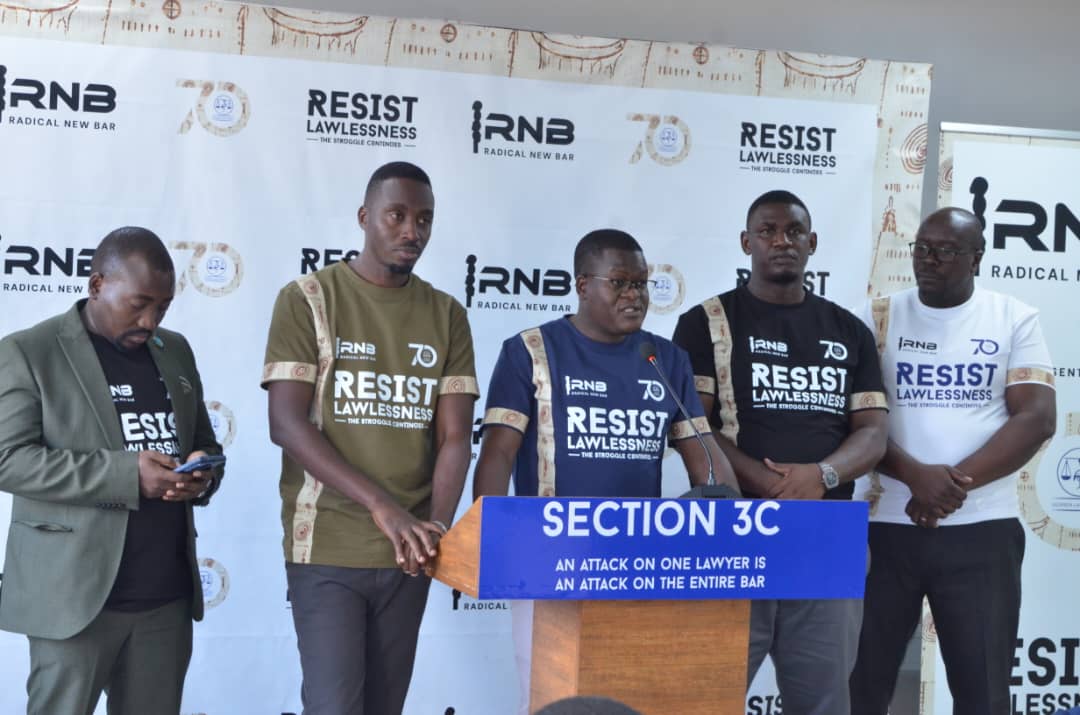
Speaking during the press briefing, Ssali Babu, Acting Secretary General of the Uganda Law Society, said the legal fraternity could no longer remain silent in the face of practices that undermine constitutional rights and the administration of justice.
“This is not a partisan action and it is not a labour dispute. It is a constitutional intervention. Our message is simple: no justice can be built on torture, no court should sanitise abuse, and no advocate should be punished for defending a client,” Babu said.
He added that the strike seeks to defend the foundational principles upon which Uganda’s justice system is built and to reaffirm the legal profession’s commitment to human dignity and the rule of law.
Defending Constitutional Principles
The Law Society said the strike is intended to draw national attention to concerns over torture-tainted justice, interference with the right to legal representation, intimidation of advocates, and arbitrary detention practices.
According to the Society, justice cannot be achieved through abuse and unlawful state conduct.
“The Bar does not strike against justice. The Bar acts so that justice is not built on torture,” Babu said.
As part of the action, lawyers have been directed to notify clients about the strike, explaining that it is being undertaken in solidarity with victims of torture and in defence of constitutionalism and the rule of law.
Legal chambers, firms, and offices were instructed to suspend ordinary operations beginning Thursday afternoon, with only emergency human rights-related cases permitted to continue.
Emergency Services to Remain Available
While advocates have been asked to abstain from regular court appearances and office work on Friday, the Society clarified that emergency legal services will remain operational for urgent matters involving threats to life, liberty, and property.
Such cases include unlawful arrests, torture allegations, detention, urgent child protection matters, domestic violence cases, imminent statutory deadlines, and applications affecting personal liberty.
Babu stressed that the action should not be interpreted as abandoning clients.
“This action is not directed against our clients. It is a defence of the justice system that protects their liberty, property, families, businesses and rights. Emergency legal services will remain available where life, liberty or fundamental rights are at immediate risk,” he explained.
Day of Mourning and Public Awareness
The Society has designated June 26 as a “Day of Mourning,” urging lawyers, law students, and supporters to wear black attire, black ribbons, black armbands, or approved campaign shirts as a symbol of solidarity with victims of torture.
Participants have also been encouraged to engage communities through public education campaigns, village discussions, media appearances, and social media advocacy highlighting the consequences of torture and arbitrary detention.
ULS leaders urged members to challenge misinformation surrounding the strike and to openly condemn any judicial or administrative processes perceived to be tainted by torture.
“Silence enables torture and the breakdown of the rule of law. There is no honour in neutrality when fundamental rights are under attack,” Babu said.
Broad Call for National Solidarity
The Law Society has extended invitations to civil society organizations, religious leaders, medical professionals, students, traders, and ordinary citizens to support the action.
Supporters are being encouraged to wear black, issue solidarity statements, host legal awareness sessions, report incidents of torture, and assist in documenting cases of abuse and intimidation.
Medical practitioners have been specifically asked to contribute by documenting torture-related injuries, raising awareness about the physical and psychological consequences of torture, and promoting ethical medical practices in human rights investigations.
Appeal to Journalists and Media Houses
ULS has also appealed to journalists and media organizations to provide accurate coverage of the strike and maintain focus on issues of torture, arbitrary detention, and access to legal representation.
The Society cautioned against reducing the action to partisan political debates and urged media practitioners to verify information through official ULS channels.
“Lawyers and journalists defend public truth from different desks. We urge the media to keep attention on torture, arbitrary detention and the right to counsel rather than political distractions,” Babu noted.
International Attention Sought
The Society is seeking support from regional and international legal associations, human rights institutions, and professional bodies.
These organizations have been requested to issue statements expressing concern about torture-related violations in Uganda, defend the independence of advocates, and call for stronger protections for fair trial rights and judicial independence.
ULS specifically welcomed solidarity from legal institutions across East Africa and beyond.
Continuing Rule of Law Campaign
The June 26 action forms part of a broader campaign by the Uganda Law Society aimed at strengthening constitutional governance, democratic accountability, and human rights protections.
Following the strike, the Society plans to publish a national participation report, document verified incidents arising during the action, engage Parliament and regional bodies, pursue strategic litigation, and continue public education on torture, arbitrary detention, and the right to counsel.
Babu said the campaign would continue beyond the one-day industrial action as part of wider efforts to safeguard constitutionalism in Uganda.
“On World Anti-Torture Day, Uganda’s lawyers are standing with victims of torture, with the Constitution, and with every citizen who may one day need the protection of the law. Justice must never be built on fear, coercion or abuse,” he said.