


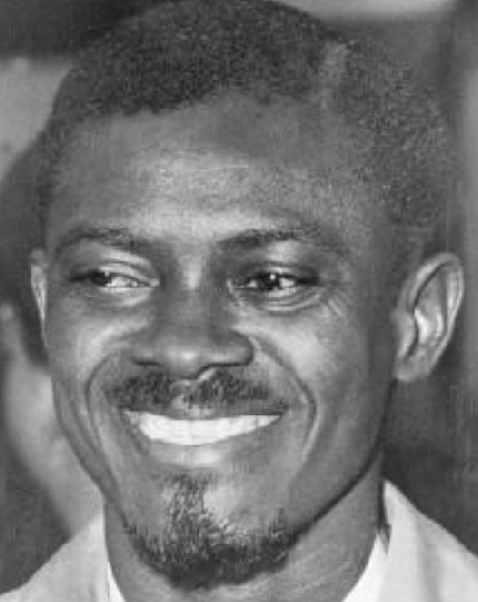
OPINION (UGNEWSLINE)- History remembers Patrice Emery Lumumba as a revolutionary, a Pan-Africanist and the first Prime Minister of an independent Congo. His name occupies a special place in Africa’s struggle against colonialism. Yet, beyond the political speeches, the revolutionary ideals and the historical accounts of his assassination, there was a human being whose story deserves equal recognition: a husband, a father and a man who carried the hopes of his family and an entire continent.
Perhaps the most moving reminder of this humanity is the letter he wrote to his wife, Pauline, while in detention, uncertain whether he would ever see her or their children again.
It was not merely a political statement. It was a deeply personal reflection on love, sacrifice, injustice and the future of a nation.
In that letter, Lumumba expressed his concern for the children he might never see again. He wanted them to understand that their father’s struggle had never been about personal glory or political power. It was about securing dignity, sovereignty and freedom for the Congolese people.
He wrote about the future of Congo with a conviction that even imprisonment, humiliation and the prospect of death could not extinguish.
There is something profoundly human about that moment. A man facing the possibility of death was still thinking about his wife, his children and the country he might never have the opportunity to see fully liberated.
That is the dimension of Lumumba’s story we must never overlook.
He was a father whose children would grow up without him. He was a husband whose final words to his wife carried the weight of an unfinished life. He was also a leader whose political vision extended beyond the borders of his country.
Lumumba understood that Congo’s independence could not be separated from Africa’s broader struggle for political and economic freedom.
His vision was larger than the transfer of political power from Belgian colonial authorities to African leaders. He wanted genuine independence: control over national resources, economic self-determination and the freedom for Africans to determine their own future.
His encounter with Ghana’s Kwame Nkrumah and the wider Pan-African movement reflected this conviction. He believed that Africa’s political fragmentation weakened its collective strength and that continental solidarity was essential to the liberation of African people.
But history took a devastating turn.
On January 17, 1961, Patrice Lumumba was assassinated in Katanga alongside Maurice Mpolo and Joseph Okito. His death was not simply the loss of a prime minister. It was a defining moment in the history of Congo and the wider African independence movement.
The circumstances surrounding his assassination remain among the darkest chapters of Africa’s decolonisation. The involvement of Belgian officials and the wider international political context have been extensively examined by historians and official investigations.
What makes Lumumba’s story particularly painful is the unfinished nature of his dream.
More than six decades later, Congo continues to confront profound questions about sovereignty, political stability, the management of natural resources and the relationship between its immense mineral wealth and the welfare of its people.
This does not mean that every challenge facing Congo can be traced to one assassination. History is more complicated than that. But Lumumba’s death undeniably marked a turning point in the country’s political trajectory and the struggle over who would determine its future.
His story also raises an uncomfortable question for contemporary Africa: What does independence mean when a country possesses enormous natural resources but struggles to translate that wealth into security, opportunity and prosperity for its citizens?
And what does Pan-Africanism mean if African nations continue to struggle to defend their shared economic and political interests?
Perhaps the greatest tragedy of Lumumba’s assassination is not simply that Africa lost a leader. It is that the continent lost a powerful voice insisting that political independence must be accompanied by economic dignity and genuine self-determination.
We should remember Lumumba not as a flawless man or a romanticised political figure, but as a historical leader whose ambitions, decisions, contradictions and ultimate fate deserve serious examination.
Most importantly, we should remember the human being behind the history.
The husband who wrote to Pauline. The father who worried about children he might never see again. The Congolese patriot who believed his country deserved dignity. And the African nationalist who imagined a continent capable of determining its own destiny.
They killed Patrice Lumumba, but they could not bury the questions his life raised.
Who owns Africa’s resources? Who determines Africa’s future? And when will political independence translate into genuine economic freedom for ordinary Africans?
Perhaps that is the unfinished conversation Lumumba left behind.
Africa has remembered his name for generations. The greater challenge is whether it will ever fully realise the ideals for which he lived and died.
By Johnson Kithi.
The article was first published on the African Integrated Think Tank (AfITT) platform!