


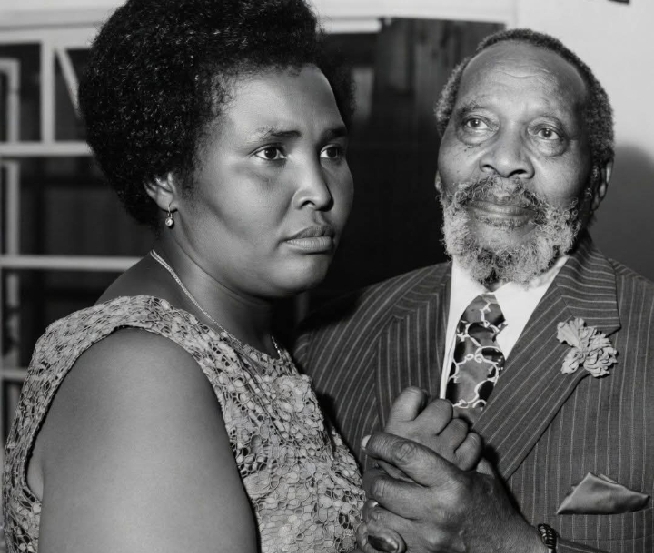
In the charged atmosphere of post-independence Kenya, power wasn’t only exercised in кабинets and rallies—it played out in ballrooms, handshakes, and even dances. For Lena Moi, one brief moment on a crowded dance floor would echo far beyond the music.
At the time, she stood beside Daniel arap Moi, then Vice President under the towering leadership of Jomo Kenyatta. Together, they embodied power, poise, and the promise of a rising political dynasty.
But in the 1970s, during a high-profile state function, that image cracked.
When Kenyatta reportedly invited Lena to dance, she declined.
In most settings, it might have passed unnoticed. But this was not most settings. In the rigid theater of State House protocol—where every gesture signaled loyalty, unity, or dissent—the refusal landed like a quiet thunderclap.
Whispers spread. Eyes turned. And what seemed like a personal choice quickly hardened into political symbolism.
To some within elite circles, the moment was more than awkward—it was seen as a public slight that cast a shadow over Moi himself.
Behind the scenes, the strain was already there.
Those close to the couple would later suggest that the marriage had been quietly fraying, long before the music stopped that night. But the incident crystallized what had been hidden, dragging private tensions into the harsh glare of public scrutiny.
After that, things changed.
Public appearances together grew rare. The once-united front began to dissolve. And as Moi’s political star climbed—eventually carrying him to the presidency in 1978—the personal cost became impossible to ignore.
By 1979, the marriage was over.
While Moi moved into State House as President, Lena stepped away from power entirely—retreating to a vastly different life in rural Baringo. In Kabimoi, she exchanged political prestige for quiet anonymity. No motorcades. No ceremonies. Just a modest life, far removed from the corridors she once occupied.
Their children were left navigating a divided world—some closer to their father’s seat of power, others maintaining bonds with their mother in the village. The separation left emotional fault lines that lingered within the family for years.
Meanwhile, Lena lived simply. Reports describe a woman who traveled by basic means, kept to herself, and endured long stretches of isolation—even from extended family.
It was a stark contrast: once married to the most powerful man in the country, yet living as an ordinary rural resident, largely forgotten by the public she once stood before.
Still, the story endured.
Over time, that single refusal—the dance that never happened—became legend. Retold as more than a social misstep, it evolved into a symbol: of defiance, of consequence, and of how fragile life at the top can be.
Whether history has amplified its significance or not, the moment remains etched in Kenya’s political memory as a turning point—where power, pride, and personal choice collided.
Lena Tungoi lived out the rest of her days in Kabimoi, passing away on July 22, 2004.
Her story is not just about a marriage that ended—but about how, in the world of power, even the smallest gesture can change everything.