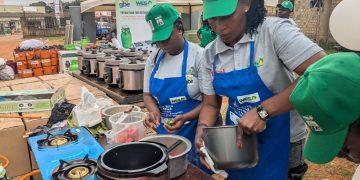



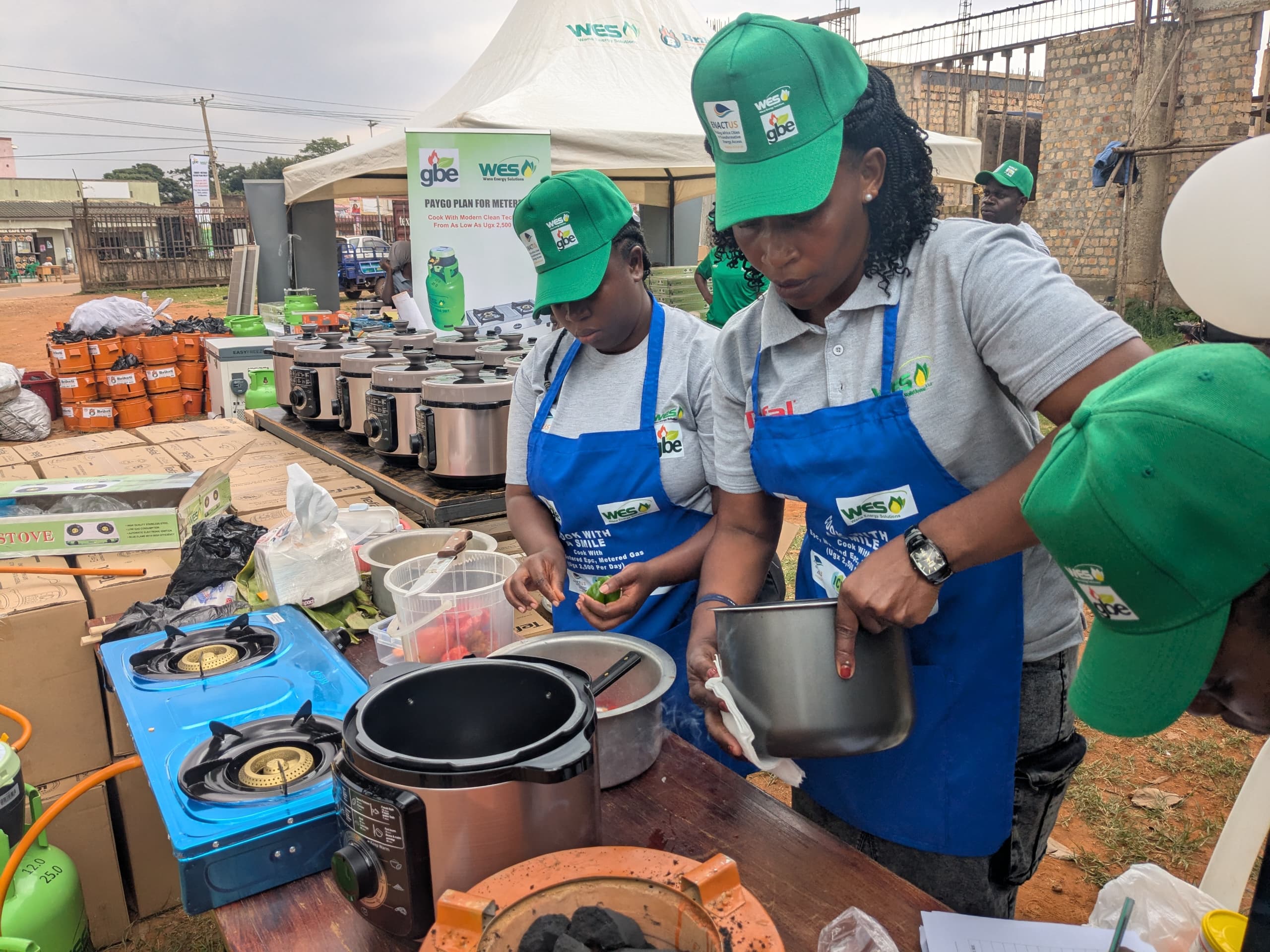
Kirinya, Wakiso District – In a major step toward reducing Uganda’s dependence on firewood and charcoal, Wana Energy Solutions, in partnership with ICLEI Africa, Uganda government, and Energrow Microfinance, has embarked on clean energy cooking sensitisation campaign that aims to transform green energy access across informal settlements in the Greater Kampala Metropolitan Area.
The initiative, under the “Pay-As-You-Go” (PAYGO) model, allows households to access modern, clean cooking technologies, including electric pressure cookers (EPCs), liquefied petroleum gas (LPG), and solar-powered appliances at affordable installment rates.
Bridging Energy Gaps with Innovative Financing
During a sensitization event held in Kirinya, Bweyogerere, Dr. Emmy Wasirwa, CEO of Wana Energy Solutions, emphasized the urgent need to transition Ugandans, especially those in informal settlements, away from biomass fuels like charcoal and firewood.
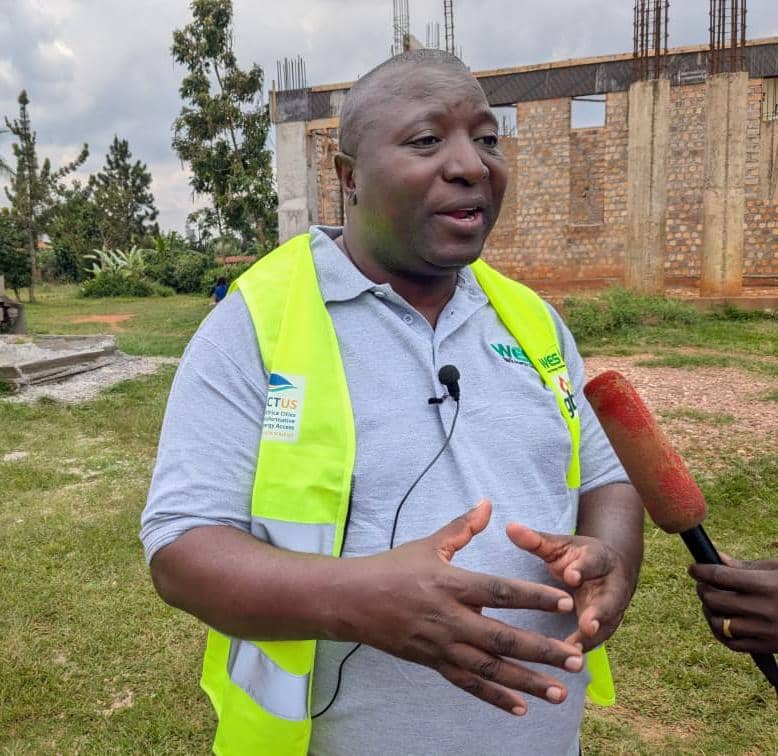
“Research shows that over 65% of households in Kampala still rely on charcoal for cooking, with many living on unstable incomes,” Dr. Wasirwa said. “Our PAYGO system is modeled just like mobile airtime. You pay what you have, when you have it—even as low as UGX 1,000 to access clean energy.”
The PAYGO system includes embedded GPS tracking for devices, allowing for mobility and ensuring customer accountability. Wana Energy has already reached over 8,500 households with EPCs, and more than 2,000 clients are actively using PAYGO EPCs. Another 500 households are on the PAYGO gas model.
To make these products even more accessible, result-based financing (RBF) subsidies from the World Bank and the Government of Uganda have reduced the cost of EPCs by 50% from UGX 300,000 to UGX 150,000 and LPG kits from UGX 500,000 to UGX 250,000.
Financing Made Easy with Energrow
According to Precious Bagambe, Head of Commercial at Energrow Microfinance, customers can acquire EPCs by making a cash deposit of UGX 65,000 and completing payment in three monthly installments of UGX 61,700.
“This flexible model enables even low-income earners to shift away from traditional fuels without the burden of large upfront payments,” Bagambe explained.
Community and Environmental Impact
Local leaders have welcomed the initiative, citing not only economic benefits but also health and environmental improvements. Indoor air pollution caused by charcoal and firewood smoke has long been associated with respiratory illnesses, particularly among women and children.
Clean Cooking for a Cleaner Future
Ben Odongo, Head of the Clean Cooking Center at ICLEI Africa, reinforced the urgency of transitioning from biomass fuels:
“The rate of deforestation is alarming, and the health implications of inefficient cooking methods are severe. Through this initiative, we aim to deliver cleaner kitchens, better health, and significant economic savings for households.”
ICLEI Africa is implementing the project dubedd “Enabling African Cities for Transformative Energy Access Uganda Scaleup (ENACTUS) Funded by UK Aid through Transforming Energy Access (TEA). The initiative supports five private sector companies, including Wana Energy, by de-risking their market entry into underserved regions.
Since the project began in April, over 3,000 households have already benefitted, with a goal of reaching 10,000 by December 2025.
Why Pressure Cookers?
Electric pressure cookers are a game-changer. They cut cooking time in half, preserve nutrients, enhance food flavor, and use far less energy compared to traditional methods. In high-density, low-income settlements, this efficiency translates into both time and money saved.
The Vision: A Charcoal-Free Uganda
Dr. Wasirwa envisions a Uganda where cooking with charcoal and firewood becomes obsolete:
“We want people to stop living in the past. We want men to be proud of eating food cooked on gas or an EPC, not clinging to the smoky aroma of charcoal-cooked meals. Change must happen.”