


Forum for Democratic Change (FDC) presidential flag bearer James Nathan Nandala Mafabi has pledged to overhaul Uganda’s credit system and slash the country’s soaring bank interest rates, calling them a direct threat to economic growth and local investment.
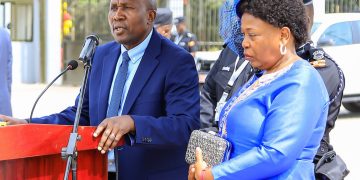
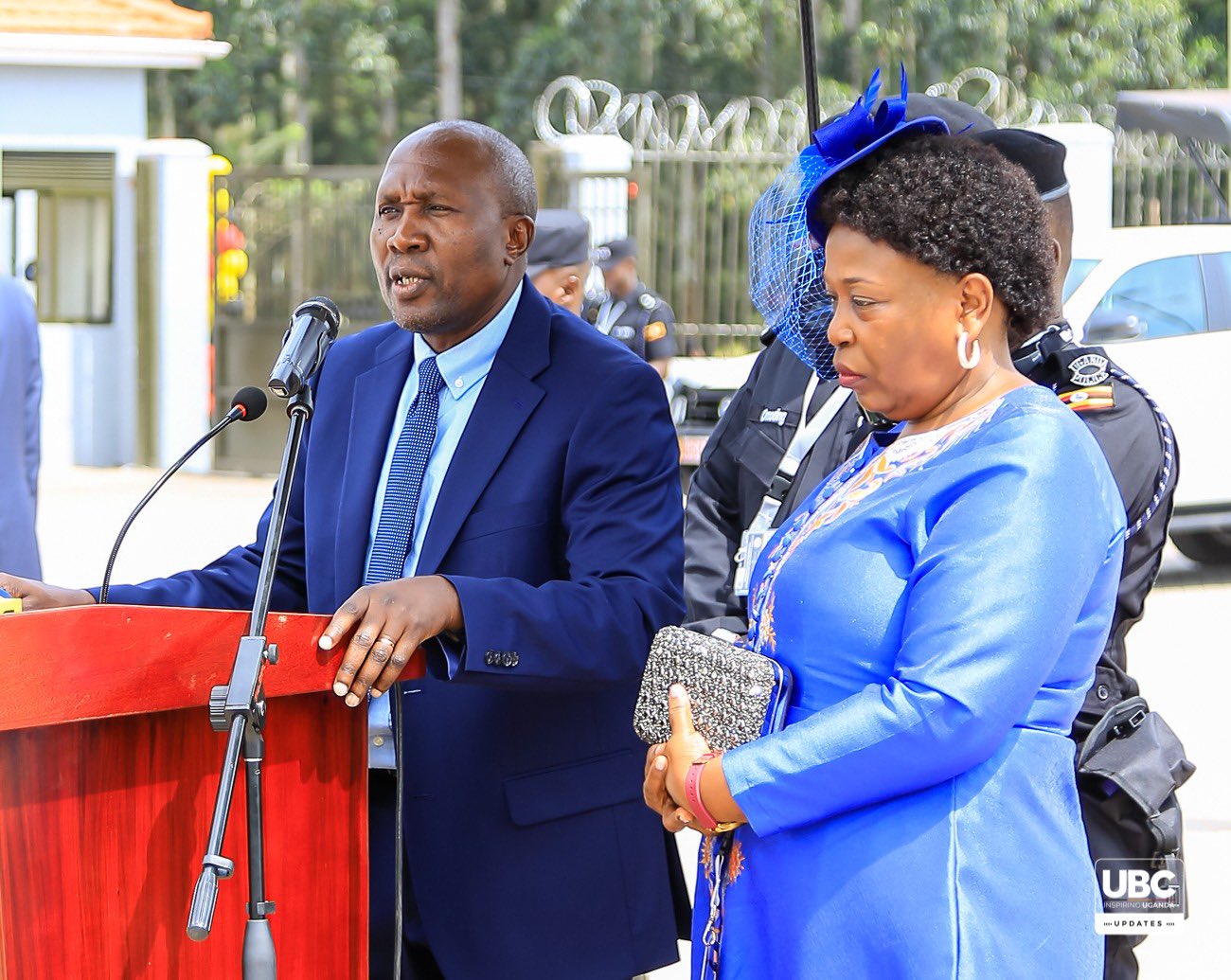
Speaking shortly after his nomination at the Electoral Commission headquarters, Mafabi, a seasoned economist and long-serving Member of Parliament, cast his economic vision as central to his presidential campaign, arguing that unaffordable borrowing costs are strangling Uganda’s business potential.
“The interest rates in this country are too high,” Mafabi said. “When Ugandans can’t borrow to invest, the economy suffers. We need a deliberate policy to empower local investors through affordable credit.”
Mafabi painted a vivid picture of how high lending rates create a ripple effect across multiple sectors.
Using agriculture as an example, he argued that prohibitive credit discourages entrepreneurs from setting up ventures like maize mills, thereby affecting the entire value chain, from farmers and processors to animal feed producers and food availability.
“If I fail to borrow money because of high interest, the people I let down aren’t just myself. It’s the farmer, the processor, the worker, and even the consumer,” he explained.
He strongly criticized what he called the government’s “misplaced priorities,” lamenting the preference for foreign investors who repatriate profits at the expense of domestic economic growth.
“Foreigners take their profits out. But when locals succeed, the money stays here and multiplies. That’s how you build a resilient economy,” he stated.
Mafabi’s economic platform is deeply rooted in agriculture and industrialisation. He called for revitalising cooperative societies and investing in agro-processing as tools to strengthen rural economies. He questioned why strategic coffee processing infrastructure was placed in Ntungamo instead of Mt. Elgon, a region renowned for its premium coffee and long-standing cooperative society, Bugisu Cooperative Union.
“Agriculture is our backbone. God gave us a good climate. What we lack is strategic thinking. Industrialising agriculture through cooperatives will change lives,” he said.
To support this vision, Mafabi proposed the creation of an agricultural bank and a cooperative bank to cushion farmers from weather and market-related shocks, noting that commercial banks are reluctant to finance farming due to perceived risks.
Turning to the digital economy, Mafabi called for urgent reforms to reduce the cost of internet access, describing it as another major barrier to growth. He said that in a digital world, cheap data is not a luxury but a necessity for employment, education, and business outsourcing.
“In many countries, internet is accessible on every street. Why is it still expensive in Uganda?” he asked. “We must digitalise. We must bring the cost of internet down.”
He vowed to ensure nationwide internet access, arguing that youth can benefit from online employment opportunities if given the right infrastructure.
Presidential Race Takes Shape
Mafabi’s nomination came on the same day as five other contenders were cleared to run in the 2026 general elections. Among them is incumbent President Yoweri Museveni of the National Resistance Movement (NRM), who is seeking a seventh term in office.
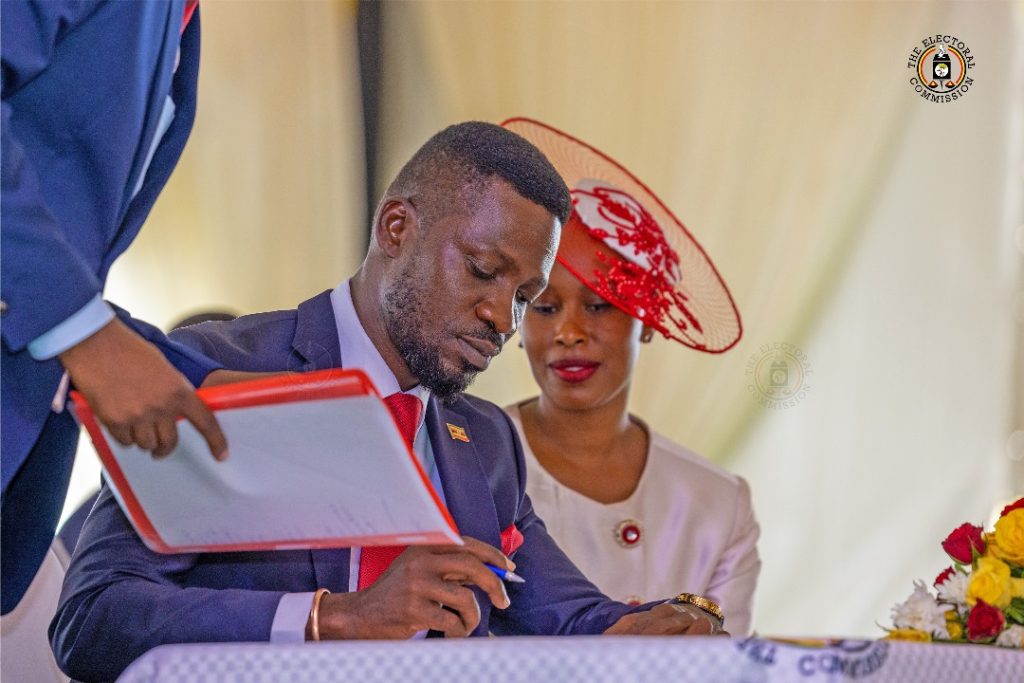 Also nominated was Robert Kyagulanyi, leader of the National Unity Platform (NUP), who will be making his second presidential bid following a high-stakes contest in 2021, where he emerged as Museveni’s main challenger.
“We are here to give Ugandans a real choice,” Kyagulanyi said after his nomination. “We are determined to build a government that serves all citizens and holds itself accountable.”
Adresing his supporters, Kyagulanyi Ssentamu, has announced that his run for president in 2026 is the start of a protest vote.
Kyagulanyi explained his idea behind the protest vote, saying it is a peaceful, legal, and constitutional way to stand up against years of unfair treatment, injustice, and poor leadership in Uganda.
“We are starting the protest now,” he told the crowd in a strong speech.
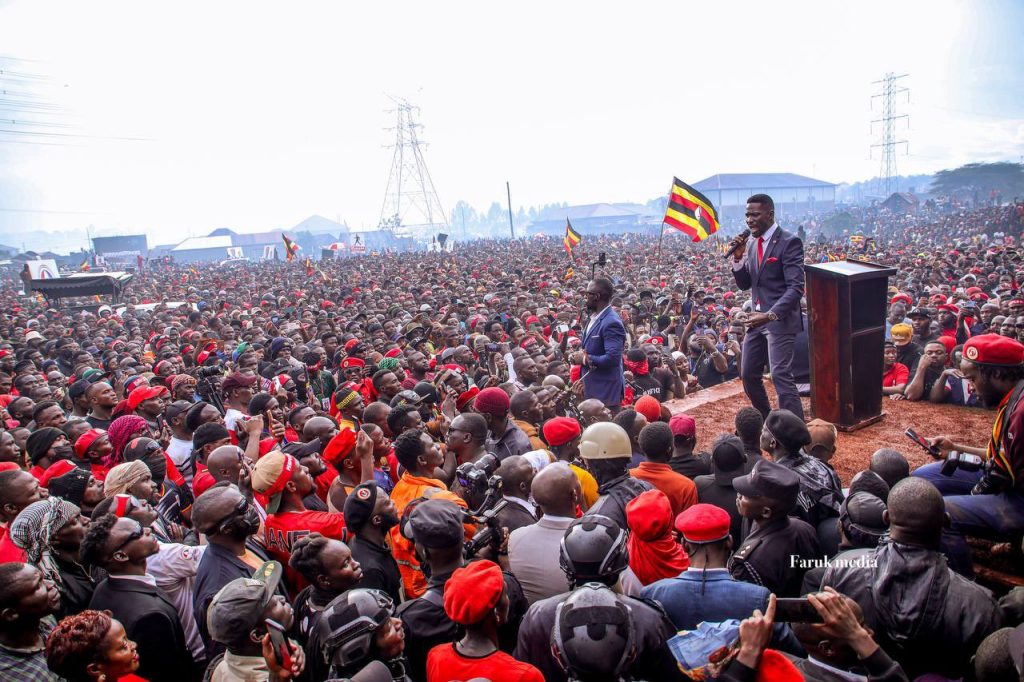
“This election is different. It is a protest against 40 years of oppression, injustice, and dictatorship. We are protesting legally. We are protesting peacefully. And we are protesting within the law.”
This is second attempt for Kyagulanyi to challenge President Yoweri Museveni, who has been in power since 1986.
He reminded people of the violence he and his supporters faced during the 2021 election, when many were jailed, tortured, or killed. However, standing at the nomination podium again in 2025, Bobi Wine said he would never give up.
Other confirmed candidates include Joseph Mabirizi of the Conservative Party (CP), Maj Gen. Mugisha Muntu of the Alliance for National Transformation (ANT), and Robert Kasibante of the National Peasants Party (NPP).
According to the Electoral Commission, 225 individuals initially picked up nomination forms. However, only 41 returned them, and just six met all requirements to appear on the ballot.
The official campaign period is scheduled to begin on September 29, 2025, setting the stage for what is expected to be one of Uganda’s most closely watched electoral contests in decades.