

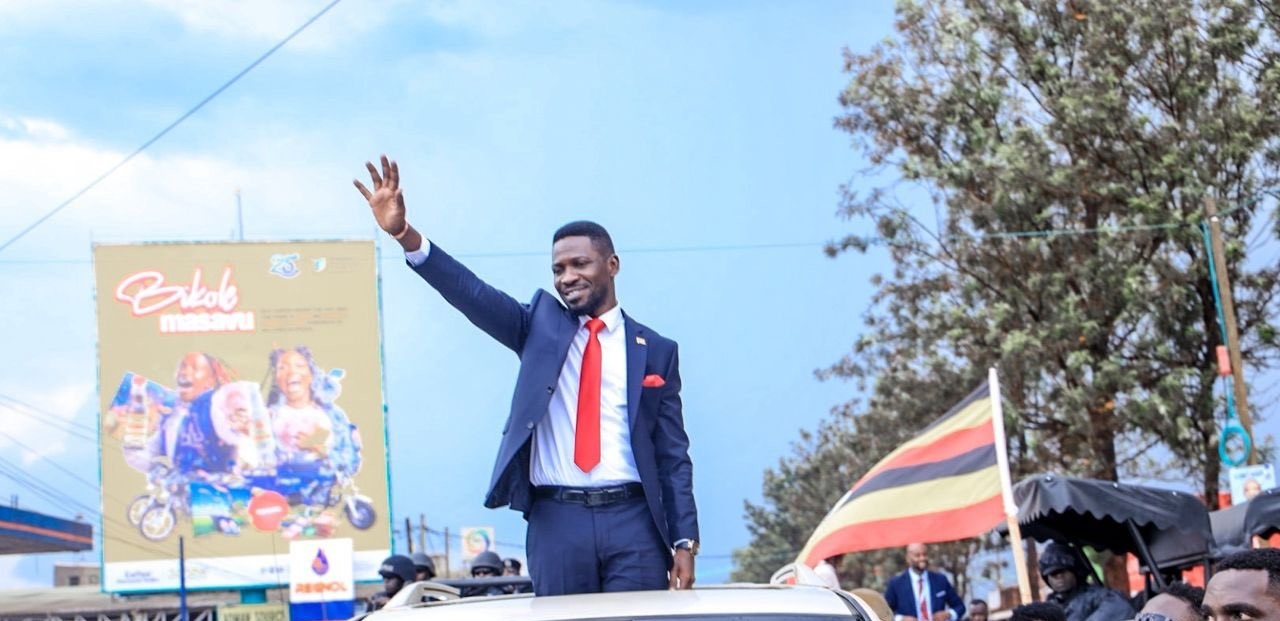
As Uganda approaches the 2026 presidential race, one name continues to ignite both hope and controversy: Robert Kyagulanyi Ssentamu, more widely known as Bobi Wine.
Once a chart-topping local artist, today he is a leading figure in Uganda’s political opposition and the head of the National Unity Platform (NUP).
Born on February 12, 1982, in Nkozi Hospital to Margaret Nalunkuuma and Jackson Willington Ssentamu, his early life unfolded in the gritty slums of Kamwokya, a Kampala suburb.
He is one of 34 siblings in an expansive family. From a young age, he found solace and purpose in music, a passion that would later evolve into a powerful tool for social change.
Wine pursued education with determination, completing secondary school at Kitante Hill School and Kololo S.S. He then graduated from Makerere University in 2003 with a diploma in music, dance, and drama.
His legal ambitions came later, beginning in 2016, and culminating in a law degree from Cavendish University in 2024.
Music with a message
Long before stepping into politics, Bobi Wine was the “Ghetto President” of Uganda’s music scene.
His songs, such as Ghetto, Kiwani, Obuyonjo, Tugambire Ku Jennifer, and Time Bomb, were not just hits; they were anthems for the marginalized.
He sang about real issues including: poor sanitation, child marriage, HIV/AIDS, domestic abuse, and corruption.
This unique blend of entertainment and activism laid the foundation for his later political success.
In 2016, his song Kiwani was featured in Disney’s Queen of Katwe, bringing his work to a global audience.
His activism through music turned into direct political engagement, and soon, Bobi Wine was no longer just criticizing leaders, he was preparing to challenge them.
Joining politics
In 2017, Bobi Wine made a dramatic entry into Uganda’s political arena by winning the parliamentary seat for Kyadondo East.
His grassroots campaign, built on personal interactions, not party machinery, shocked the political establishment and signaled a shift in Ugandan politics. Young, charismatic, and fiercely independent, he quickly became a national symbol of defiance against President Yoweri Museveni’s long-standing rule.
His popularity continued to surge as he supported other opposition candidates in subsequent by-elections, contributing to unexpected victories that rattled the ruling National Resistance Movement (NRM).
But fame brought friction. In August 2018, during a heated by-election in Arua, violence erupted.
Bobi Wine’s driver was shot dead, and he (Bobi Wine) was arrested and severely beaten while in military custody.
Initially charged with unlawful possession of firearms, a charge later dropped, he was re-arrested and charged with treason.
Protests erupted nationwide, and international pressure eventually forced the Ugandan government to grant him bail.
These events only intensified his resolve.
In July 2019, he announced his intention to run for president in the 2021 elections under the NUP party.
His campaign became a flashpoint for national frustration, especially among Uganda’s youth.
But on January 16, 2021, the Electoral Commission declared Museveni the winner with 58.6% of the vote. Bobi Wine rejected the results, citing widespread fraud and voter intimidation.
He filed a legal challenge but later withdrew it, accusing the judiciary of bias after the chief justice was seen in public with Museveni.
He starred in “The Ghetto President”, a local reality show chronicling his life, and featured in another 2022 documentary “Bobi Wine: The People’s President”, which received a Peabody Award and earned an Oscar nomination.
Though his 2021 presidential bid was unsuccessful, he comes again as the most formidable challenger to the incumbent Museveni.
From the slums of Kamwokya to the global stage, Bobi Wine embodies a new generation of African leadership: bold, grassroots-driven, and unwilling to accept politics as usual.
Whether he will succeed in unseating the president remains to be seen, but one thing is certain, his voice will not be silenced.