




KAMPALA, Uganda – Mental health experts and policymakers have called for the adoption of clear workplace mental health policies to promote safer, healthier, and more productive work environments across Uganda’s private and public sectors.
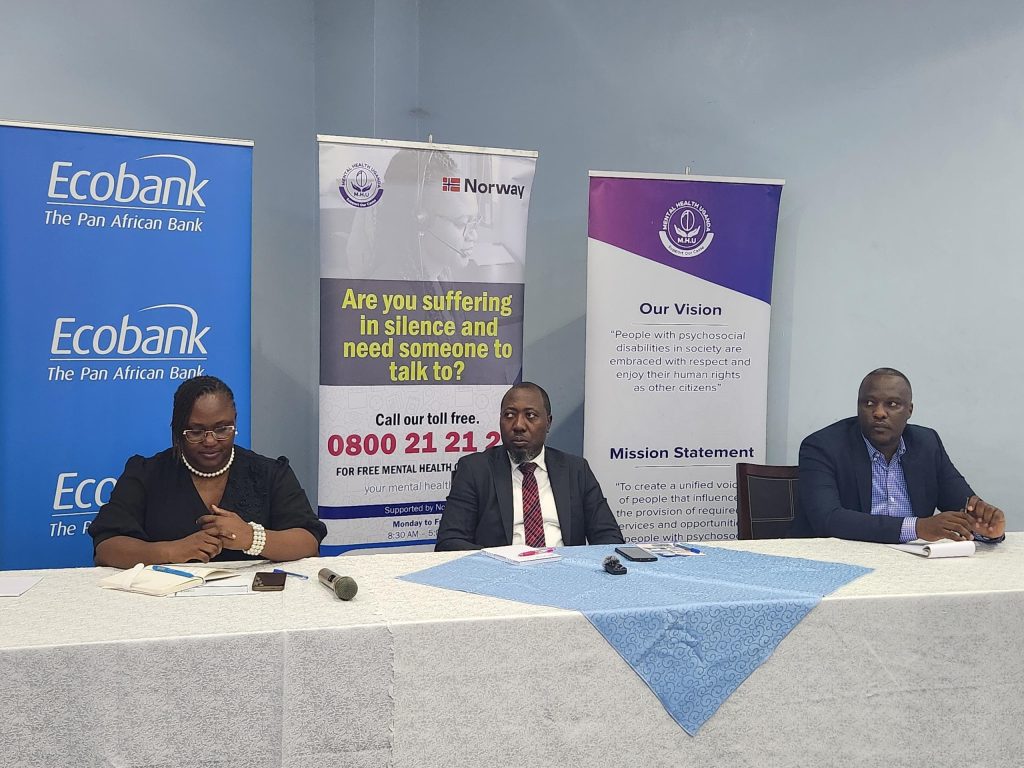
The call was made on Wednesday during a breakfast meeting held at the Imperial Royale Hotel in Kampala, organized by Mental Health Uganda in partnership with EcoBank Uganda and the Ministry of Trade, Industry and Cooperatives as part of activities to mark World Mental Health Month.
Derrick Mbuga Kizza, the Executive Director of Mental Health Uganda, said the absence of workplace policies on mental health has left many employees vulnerable to stigma, discrimination, and dismissal.
“The biggest solution for the employer is the policy,” Mbuga emphasized. “If I apply for a job and disclose that I have a mental health issue, what support am I entitled to? The problem is that many employers do not have these policies, so people choose not to disclose because there’s no framework to protect them.”
He explained that “reasonable accommodation” simple adjustments in the workplace that help employees with mental health conditions work effectively should be part of every company’s human resource framework.
“Reasonable accommodation means making moderate adjustments so that everyone, including those with mental health challenges, can do their work effectively,” he said, urging employers to provide health insurance and employee assistance programs.
Patrick Mugisha, the Commissioner for Business Development and Quality Assurance at the Ministry of Trade, Industry and Cooperatives, said government is taking steps to integrate mental health and well-being into national workplace policy.
“As the Ministry of Trade, we are opening a new chapter on what mental health and well-being mean in the private sector,” Mugisha stated. “We appreciate the role of the private sector in Uganda’s economic aspirations, and we want to support them through policy frameworks and strategies that promote mental health.”
Mugisha revealed that the Ministry plans to set up a help desk on mental health and well-being to support both civil servants and micro, small, and medium enterprises (MSMEs).
“We can’t just be profit-oriented and ignore the anguish behind the brands,” he said. “Let the happiness of the brand cascade to the happiness of the faces around it.”
He also disclosed that the Ministry, in partnership with Mental Health Uganda, will work toward developing a national standard on workplace mental health, to be certified by the Uganda National Bureau of Standards (UNBS), and integrated with existing labour laws.
“We may also need to look at human resource policies and define what a policy on mental health and well-being at work should look like,” Mugisha noted.
“Together with Mental Health Uganda, we shall define this and hopefully have a Uganda standard to guide enforcement.”
Gloria Nalubowa, the Head of Human Resource at EcoBank Uganda, said employee wellness should be seen as a smart business strategy that boosts retention, productivity, and brand reputation.
“You cannot speak about mental health in isolation of overall employee wellness,” Nalubowa explained.
“Investing in employee wellness delivers strong returns research shows that 89% of employees in companies with wellness programs recommend their employers.”
She called on organizations to establish employee assistance programs, flexible work arrangements, and financial wellness initiatives to reduce workplace stress.
“Let’s put some budget behind these initiatives the same way we do for marketing,” she urged. “If human capital is your greatest asset, then mental wellness should be a strategic priority.”
“We can’t talk about productivity, innovation, and competitiveness when workers are silently battling mental distress,” Mbuga said. “A mentally healthy workforce is a productive workforce.”