


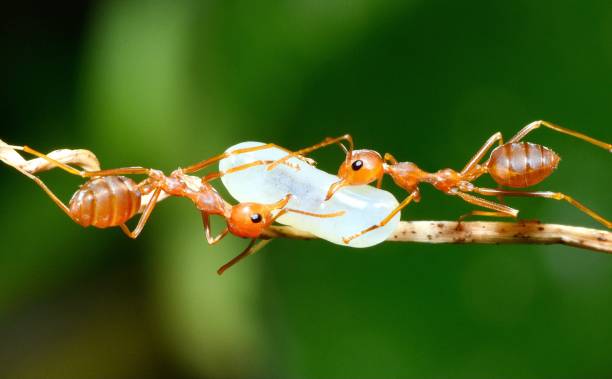
In a discovery that pushes the limits of self-sacrifice in the natural world, scientists have found that terminally ill baby ants actually ask their nestmates to kill them, an astonishing act of altruism that helps stop deadly infections from sweeping through the colony.
The study, published in Nature Communications, reveals that pupae of the invasive ant Lasius neglectus release a chemical distress signal when fatally infected. Instead of pleading for help, this signal is essentially a biochemical request for execution.
And their nestmates oblige.
The findings strengthen the idea of the ant colony as a “superorganism” a living collective that behaves less like thousands of separate animals and more like one coordinated body fighting to keep itself alive.
“Sick individuals often conceal their disease status,” the researchers note, whether to avoid being cast out or attacked.
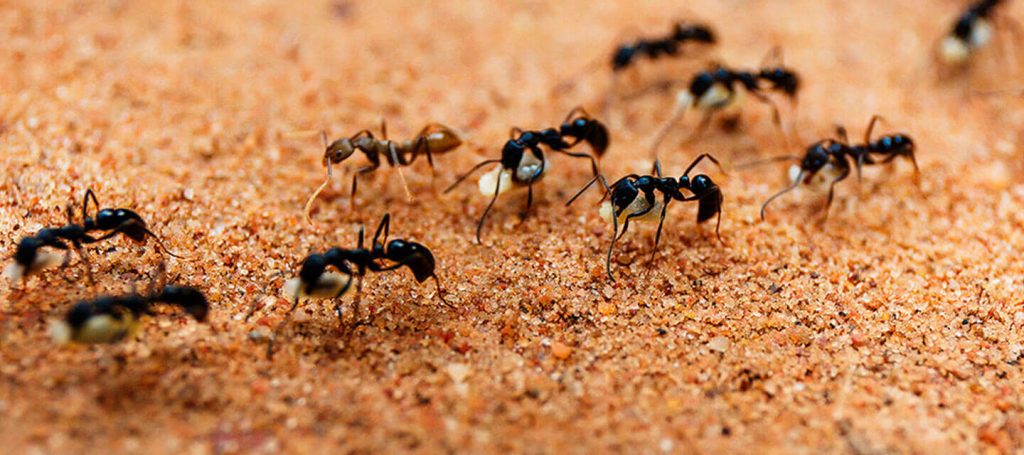
Adult ants, for example, often walk away from their colony to die in solitude, while others even practice a form of social distancing when exposed to pathogens.
But the helpless, cocoon-bound pupae can’t walk away. So, they take another path: they signal their nestmates to destroy them before they become a biological time bomb.
“Ant brood within the colony, like infected cells in tissue, are largely immobile,” said Sylvia Cremer the co-author of the study and group leader of the Cremer Group at the Institute of Science and Technology Austria (ISTA).
“They lack the option of distancing themselves, so they warn the colony instead,” she notes.
What happens next is brutal and efficient. Worker ants pull the diseased pupae from their cocoons, punch holes through their bodies, and inject them with formic acid, a powerful antimicrobial compound the ants produce themselves.
The process kills the pathogen… by killing its host.
For years, scientists knew workers culled sick pupae. What they didn’t know was that doomed pupae were asking to be culled.
The scent of death signal
In the new study, researchers infected ant pupae with a fungal pathogen. The sick pupae responded by changing their chemical “scent signature” a modified body odor detectable only at close range.
Critically, only pupae that were both sick and near adult ants emitted the death-request signal, suggesting the cue isn’t an immune by-product but an intentional chemical cry for removal.
When scientists artificially painted this smell onto healthy pupae, workers executed them too, solid proof that the chemical signal triggers the lethal response.
“The scent cannot just diffuse through the nest,” explained chemical ecologist Thomas Schmitt. “It’s made of non-volatile compounds that stick to the pupal surface.”
Every doomed individual must effectively mark itself.
A superorganism that mirrors our own bodies
The parallels to the human immune system are striking. Within an ant colony, queens act like germline cells, producing the next generation; non-reproductive workers act like somatic cells, maintaining the whole organism.
And, just like human cells infected beyond rescue, terminally ill pupae send “find-me and eat-me” signals to the colony’s clean-up crew.
What looks like individual self-sacrifice is actually genetic self-preservation: by protecting the colony, the pupae protect the survival of their shared genes.
“If a terminally ill ant pretended to be healthy, it could unleash a deadly infection. By warning the colony, they safeguard their relatives, and, indirectly, their own genetic future,” said first author Erika Dawson.
Queens don’t beg for death
One twist surprised researchers: queen pupae never emitted the death-request signal. Unlike worker pupae, they possess stronger immune defenses and can typically beat the infection themselves.
Workers, in contrast, struggle to contain the disease and instead sound the alarm.
Critically, pupae only send the signal when their infection becomes irrecoverable.
This prevents unnecessary killings and ensures workers intervene only when a real threat looms.
“This precise coordination between the individual and the colony is what makes this behavior so effective,” Cremer said. “It’s altruism sharpened by evolution.”